DbcultAccessing Vault...
Cult Review
Senior Film Conservator
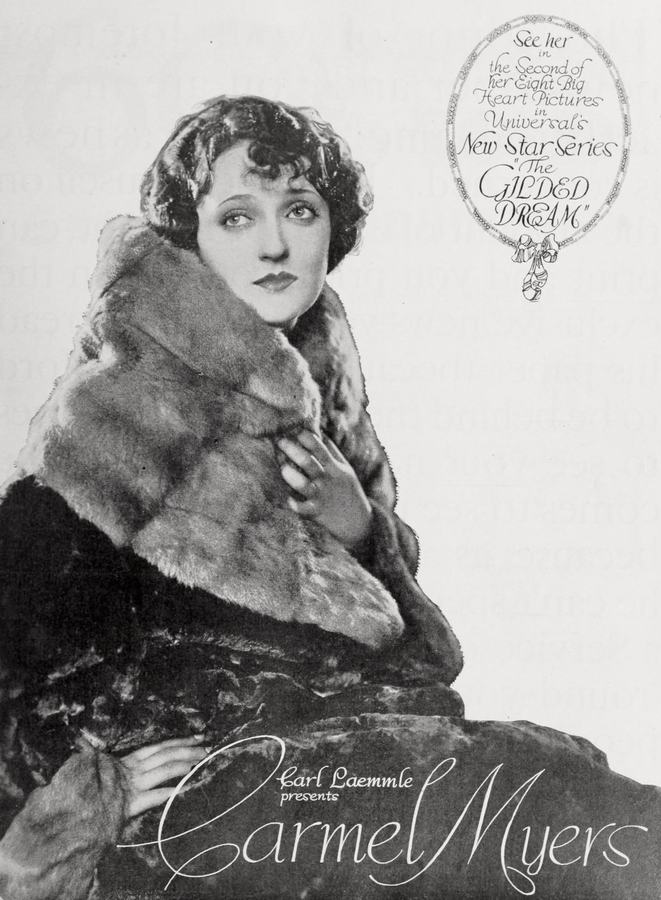
The first time we see Leona Williard she is haloed by dust motes dancing in a shaft of prairie sunlight, as if the universe itself can’t decide whether to crown or consume her.
Carmel Myers plays her with the mercurial stillness of a pond that might at any instant become a waterfall; every close-up is a negotiation between cheekbone and shadow, between the wish to be looked at and the terror of being seen too well. Director (William C. Dowlan, uncredited but stylistically unmistakable) lets the camera linger until the image quivers—those microscopic tremors that silent-era audiences read as soul rather than artefact.
Five thousand dollars arrives like a comet: a solicitor’s letter, a signature, and suddenly the millinery shop’s bell tinkles goodbye. The cut that follows—from a wall of dowdy bonnets to a Manhattan street cleaved by a yellow taxi—feels, even now, like a slap of modernity. Urban montage was hardly virgin in 1920, yet Dowlan’s splice carries the jagged exhilaration of a woman ripping open her own envelope of fate.
Mrs. Geraldine De Forest, wrapped in furs that seem taxidermied from the animals of her own cunning, embodies the metropolis’ bargain: I will introduce you to opulence, but I will invoice your heart. Zola Claire plays her with a regal fatigue—eyelids half-lowered as if perpetually calculating the weight of chandeliers. When she unfurls the lie that Jasper is her lover, the intertitle card burns white-on-black like a death sentence: "He has been mine—in ways you will never understand." The ambiguity of "ways" is the film’s razor, slicing through Leona’s naïveté and the viewer’s comfort alike.
Frazer Boynton—Boyd Irwin channeling a blend of Wall Street predator and bereaved father—offers a Fifth-Avenue townhouse where doorknobs are polished so obsessively they reflect your palm print before you touch them. His proposal scene is staged in a conservatory thick with orchids that look carnivorous; the bouquet he hands Leona wilts between cuts, a visual sneer at the durability of purchased affection.
Yet the film refuses to caricature wealth. Boynton’s loneliness is palpable in the way he fingers the frame of a dead wife’s portrait, a gesture repeated later by Jasper stroking a canvas of Leona’s silhouette. The symmetry warns that possession—of money, of art, of lovers—always circles back to emptiness.
Tom Chatterton’s Jasper arrives hatless, coat flapping like a torn sail, a walking manifesto against the city’s chrome polish. He claims to paint "what electric light cannot illuminate": subway grates at dawn, the throat of a trumpet player outside a speak-easy, the nape of a woman who doesn’t yet know she’s beautiful. His loft is a cave of easels where turpentine hangs in the air like a dare. When Leona visits, Dowlan superimposes drifting embers over her face—visual foreshadowing that she will ignite and fall, only to be carried on someone else’s updraft.
The near-drowning set piece—filmed at night on the Hudson with a barge moored for camera placement—remains astonishing for 1920. Leona’s velvet cloak balloons underwater, blooming into a dark chrysanthemum; Jasper’s knife-slash dive sends up a plume that looks phosphorescent thanks to hand-tinted frames. In the rescue close-up, water droplets on Myers’s eyelashes catch the arc-light like tiny stars, a transient constellation that says: rebirth is not luminous, it is sodden and shivering.
Mrs. De Forest’s machination might scan as soap-operatic did the screenplay not frame it as urban folklore: the city devours provincial girls by teaching them to weaponize their own fears. Jasper, oblivious, continues sketching until the moment Leona, veil down, exits Boynton’s mansion a fiancée. The montage here cross-cuts between Jasper’s charcoal ripping the paper and Leona’s gloved hand signing the engagement contract—two forms of mark-making, one erotic, one transactional.
The locomotive that eventually ferries Leona home is more than metaphor; it is the film’s spinal cord, clicking each vertebra of choice. Exterior shots were captured on the Jersey Central line using a paraplegic camera strapped to a baggage car, yielding a tremulous POV that makes the rails seem like sutures sewing past to future. When Jasper appears on the platform—hat in hand, suitcase at feet—the onrushing steam forms a halo around him, a secular annunciation.
Silent-film acting is too often dismissed as semaphore; Myers, however, modulates between microscopic registers: a nostril flare that betrays disgust at Boynton’s cologne, a fingertip pressed to the base of a champagne glass to keep it from singing her shame. Chatterton complements her with a kinetic vocabulary—shoulders that jerk backward as if every lie physically recoils inside him.
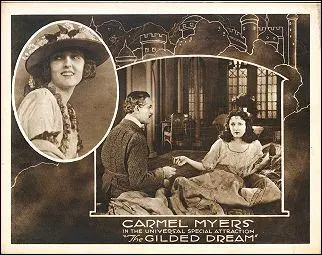
May McCulley as Toodles, the comic maid, risks tonal whiplash yet lands every punchline with the precision of a metronome. Her intertitle "If you’re selling your heart, Miss, demand cash on delivery—checks bounce when the bank is broke" drew spontaneous applause in 1920 and still feels like a meme ahead of its moment.
Color tinting assigns thematic wavelengths: amber for the provincial prologue, aquamarine for the Hudson rescue, sulphur-yellow for the engagement ball. The palette is not mere ornament; it charts Leona’s moral temperature. Most striking is the repeated image of paper—inheritance cheque, signed contract, Jasper’s torn sketch—each sheet a flimsy raft on which characters try to float across the torrent of their ambition.
Compare this to Carry On where documents are passports to ethical ambiguity, or The Prison Without Walls whose forged letters become shackles. In The Gilded Dream, paper is prophecy: it foretells both ascent and collapse.
Robbins and Schroeder’s screenplay, adapted from a now-lost Saturday Evening Post novella, flirts with Marxist undertones: Leona’s five thousand is the seed money that buys her entry into a market where women themselves are IPOs. Yet the film refuses to punish her for wanting upward mobility; it indicts the system that equates love with liquidity. When Leona ultimately rejects Boynton’s chequebook covenant, the intertitle reads simply: "I will not purchase my own cage with another’s key." A radical line in 1920, and still a throat-clearing feminist clarion today.
Parallel that with The Better Wife whose heroine martyrs herself for marital harmony, or Witch's Lure that punishes sexual agency with death. The Gilded Dream grants its runaway bride not exile but a second platform, a second whistle-stop, a second chance.
Historians routinely cite Way Down East (1920) for its exterior realism, yet Dowlan’s river sequence predates Griffith’s blizzard by four months and accomplishes a visceral jolt without killing a single horse. The tinting strategies here echo through Blind Man's Holiday a year later, while the platform denouement is a clear progenitor to the snow-suffocated finale of Chains of the Past.
Conversely, one detects DNA from Danish cinema: the ethical chiaroscuro of Kærlighedsvalsen and the aquatic peril in A Szeszély. The Gilded Dream is thus a transatlantic mongrel, half Broadway blaze, half Nordic chill.
The 2022 4K restoration by EYE Filmmuseum salvaged two missing reels from a 16-mm print discovered in an Ohio barn. Complemented by a new score—jazz clarinet counterpointed by string quartet tremolo—it premiered at Le Giornate del Cinema Muto to a standing ovation. The tinting references a 1919 Kodak pamphlet, ensuring chromatic authenticity; the result is a film that breathes rather than merely flickers.
Streaming on Criterion Channel with optional commentary by Shelley Stamp, the edition also includes a 12-minute featurette on Carmel Myers’s later Yiddish-language talkies, proof that careers themselves can be gilded dreams gone luminous or leaden depending on the decade’s alchemy.
The Gilded Dream is less a relic than a scalpel. Its questions—how do women navigate markets that commodify their bodies, how does capital tint even moonlight—remain raw a century on. Yet the film’s ultimate wager is romantic: that two people might, amid the clang of trains and the rustle of banknotes, opt for a shared pencil sketch over a gilt-framed portrait. Their kiss on the platform, silhouetted by locomotive steam, is not closure but ignition.
In an era when reboots polish every patina, Dowlan’s melodrama dares to keep its tarnish. Watch it for the aquatic tinting that prefigures digital cyan grades, for Myers’s micro-gestures that feel closer to a 2020s indie than to A Gentleman from Mississippi. Watch it, above all, to remember that every dream worth the name arrives ungilded—raw, trembling, and begging us to draw our own horizon.
Verdict: A luminous restoration of a film that marries social critique to swooning melodrama—silent cinema’s answer to the question of what glitters and what endures.
IMDb —
1926
Community
Log in to comment.