DbcultAccessing Vault...
Cult Review
Senior Film Conservator
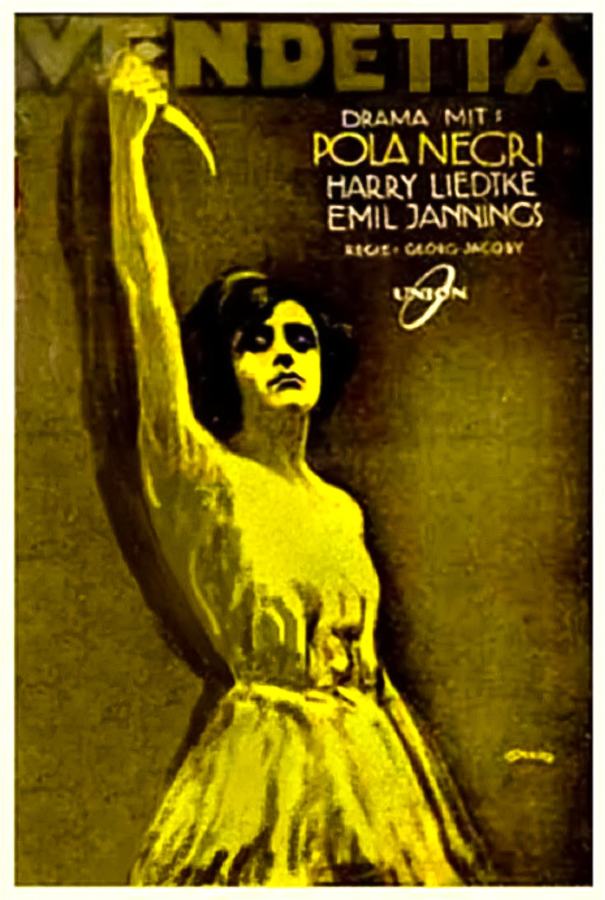
Stepping back into the nascent years of German cinema, one encounters Vendetta (1919), a film that stands as a testament to the raw, unbridled power of early dramatic storytelling. Directed by Georg Jacoby and Léo Lasko, this silent epic, now a century-old relic, pulsates with an intensity that belies its age, largely due to the incandescent presence of Pola Negri. Far from a mere historical curiosity, Vendetta offers a profound exploration of human emotions—love, loss, and the consuming fire of vengeance—all rendered with a visual artistry that was remarkably sophisticated for its era. It's a journey into the heart of a primal conflict, where societal norms clash with an ancient code of honor, and personal desire wrestles with an inescapable destiny. The film doesn't just present a narrative; it immerses the viewer in a psychological crucible, forcing an examination of justice, forgiveness, and the indelible marks left by tragedy.
The narrative unfolds against the dramatic backdrop of Corsica, an island steeped in tradition and fiercely independent spirit. Here, the concept of vendetta is not merely a word but a sacrosanct way of life, an unwritten law that demands blood for blood, an eye for an eye. Marianna Paoli, portrayed with mesmerizing intensity by Pola Negri, embodies this spirit. Her world, initially one of familial harmony, is shattered by the inexplicable murder of her beloved brother at the hands of an unknown Englishman. The film masterfully establishes this initial premise, using evocative imagery of the Corsican landscape—its rugged mountains, ancient villages, and the austere beauty of its people—to underscore the gravity of Marianna’s plight. Her initial grief quickly transmutes into a steely resolve, a vow of vengeance that becomes the singular purpose of her existence. This isn't a casual promise; it's a sacred oath, binding her soul to a path of retribution, regardless of the personal cost. The cultural weight of this oath is palpable, a silent force driving every subsequent action and decision.
Negri’s performance in these early scenes is nothing short of captivating. Her eyes, often wide with sorrow or narrowed with determination, convey volumes without the need for intertitles. She doesn't just act the part; she inhabits Marianna, allowing the audience to feel the raw anguish of her loss and the burning conviction of her purpose. This deep emotional resonance is crucial, as it lays the groundwork for the moral complexities that are yet to unravel. The audience understands implicitly that Marianna is not merely seeking revenge out of malice, but out of a profound sense of duty, a response dictated by the very fabric of her cultural identity. The film thus presents a fascinating ethnological glimpse into a world where personal honor is paramount, and transgressions demand a deeply personal form of justice.
Marianna’s relentless pursuit of her brother’s killer leads her far from the stark beauty of Corsica to the glittering, artificial world of Monte Carlo. This transition is a brilliant cinematic device, creating a stark visual and thematic contrast. The somber, natural tones of Corsica give way to the opulent, often garish, splendor of the casino city. Here, amidst the clinking of glasses, the rustle of silk, and the deceptive smiles of high society, Marianna continues her quest, a lone wolf in a den of artifice. The film effectively uses set design and costuming to highlight this clash of worlds. Marianna, often dressed in simpler, darker attire, stands out against the frivolous finery of Monte Carlo’s denizens, a stark reminder of her grim purpose. This juxtaposition is not merely aesthetic; it underscores the internal conflict brewing within her. Can the rigid code of Corsica survive in this world of fleeting pleasures and moral ambiguity?
It is in this new, dazzling environment that fate, with its cruel sense of irony, intervenes. Marianna encounters a handsome young officer, played by the distinguished Emil Jannings. Jannings, a colossal figure in early cinema, brings a certain gravitas and charm to the role, making his character instantly appealing. The burgeoning romance between Marianna and this officer is portrayed with a delicate sensitivity, a stark counterpoint to the underlying tension of her mission. The film allows their love to blossom naturally, showing stolen glances, tender gestures, and the undeniable pull of mutual affection. This development is crucial, as it deepens the eventual tragedy, making the audience invest emotionally in their relationship. The joy of their connection is palpable, even as the shadow of Marianna’s oath looms ominously over their newfound happiness.
The true brilliance and heart-wrenching power of Vendetta culminates in the agonizing revelation: the man Marianna has fallen so deeply in love with is none other than the very Englishman responsible for her brother’s death. This moment is a masterclass in silent film melodrama. The shock, the betrayal, the profound despair that washes over Marianna are conveyed with breathtaking clarity by Negri. Her face, a canvas of raw emotion, contorts with a mixture of disbelief, horror, and an unbearable internal conflict. The audience is left to grapple with the same impossible choice: how can one reconcile the deepest love with the most sacred vow of vengeance? This narrative twist, while a staple of dramatic storytelling, feels fresh and impactful due to the exceptional performances and the meticulous buildup.
Emil Jannings, though often playing the villain in later works, here portrays a character who is not inherently evil but entangled in a tragic circumstance. His reactions to Marianna's discovery, his own dawning realization of the impossible bind they are in, add another layer of complexity to the drama. The film avoids simplistic good-versus-evil dichotomies, instead presenting a more nuanced exploration of human fallibility and the unforeseen consequences of actions. The dramatic tension is almost unbearable, as the audience waits to see how this intractable dilemma will be resolved. Will Marianna succumb to the dictates of her oath, or will love prove a stronger, more redemptive force? This ethical quandary is where Vendetta truly shines, elevating it beyond a simple tale of revenge into a profound meditation on the human condition.
Pola Negri's performance in Vendetta is, without hyperbole, the beating heart of the film. Born Apolonia Chałupiec, the Polish actress had an almost magnetic screen presence, a quality that would soon make her an international sensation, eventually luring her to Hollywood. In Vendetta, her ability to convey a vast spectrum of emotions—from profound grief and unwavering determination to blossoming love and agonizing despair—without uttering a single word is truly remarkable. She possesses an innate understanding of the silent film medium, utilizing her expressive eyes, subtle gestures, and commanding physicality to communicate Marianna's inner turmoil with extraordinary clarity. Her portrayal is not merely dramatic; it is deeply psychological, allowing the audience to connect intimately with her character's impossible predicament.
One might draw parallels between Negri's raw intensity here and her later, more famous roles, such as her collaboration with Ernst Lubitsch. Her ability to project both strength and vulnerability simultaneously was a hallmark of her acting style. While other actresses of the era might have relied on broader, more theatrical gestures, Negri's performance, even in this relatively early work, feels remarkably nuanced and modern. She is a force of nature, anchoring the entire narrative with her compelling presence. Without her, the film, for all its structural merits, would undoubtedly lose much of its emotional resonance. Her star power is evident from every frame, a testament to her unique talent that transcended language barriers and cinematic eras.
Georg Jacoby and Léo Lasko, credited as the film's directors and writers, demonstrate a keen understanding of visual storytelling. The pacing of Vendetta is deliberate, allowing the emotional beats to resonate fully. They employ a variety of cinematic techniques, from close-ups that emphasize Negri’s expressive face to wider shots that establish the contrasting environments of Corsica and Monte Carlo. The use of intertitles is judicious, providing necessary exposition without overwhelming the visual narrative. The film's aesthetic is consistently strong, with thoughtful compositions and effective use of light and shadow, particularly in scenes of heightened drama. One can see the nascent techniques that would soon define German Expressionism, even if Vendetta itself leans more towards melodrama.
The screenwriters, Jacoby and Lasko, also deserve commendation for crafting a narrative that, despite its melodramatic core, manages to feel both epic and intimately personal. The plot unfolds with a compelling logic, even as it pushes the boundaries of tragic irony. The buildup to the central revelation is handled with suspense, ensuring maximum impact. Their ability to weave together cultural specificity (the Corsican vendetta) with universal themes (love, revenge, duty) is a testament to their skill. Films like The Student of Prague, another German silent film exploring dark choices and destiny, share a similar thematic depth, highlighting a period of German cinema unafraid to delve into complex psychological landscapes.
While Pola Negri undeniably dominates the screen, the supporting cast contributes significantly to the film's overall impact. Emil Jannings, as mentioned, brings a sympathetic yet complex portrayal to the Englishman. Margarete Kupfer, Käthe Dorsch, Fred Immler, and the rest of the ensemble, though perhaps less prominent, provide solid performances that flesh out the world of Vendetta. Their reactions and interactions serve to heighten the central drama, ensuring that Marianna's journey feels grounded within a believable, albeit heightened, reality.
The production design, too, is a standout feature. The recreation of Corsican villages feels authentic, conveying a sense of timeless tradition and rugged beauty. The contrasting sets of Monte Carlo—the lavish casinos, elegant ballrooms, and bustling streets—are equally convincing, effectively transporting the audience to a world of European aristocracy and indulgence. This meticulous attention to detail in set construction and costume design is vital for silent films, where visual cues carry an immense burden of information and atmosphere. The visual richness adds substantially to the immersive quality of the film, making the narrative's emotional stakes feel even more tangible.
Vendetta, despite being over a century old, retains a remarkable power to captivate. Its themes of love, loss, revenge, and the arduous struggle between personal desire and societal duty are timeless. It serves as a potent reminder of the sophistication and emotional depth achievable in the silent film era. For modern audiences, it offers a fascinating glimpse into the origins of cinematic storytelling and the enduring appeal of a well-crafted melodrama. The film's influence, though perhaps not as overtly discussed as some of its contemporaries, lies in its contribution to establishing the dramatic conventions that would carry forward into later decades of cinema. It showcases the early mastery of visual language, character development, and narrative tension.
Comparing it to other films of its time helps contextualize its achievement. While The Blue Streak might offer comedic relief, or Nelson-Wolgast Fight a glimpse into early sports documentary, Vendetta stands firmly in the realm of high drama, exploring complex human emotions with a seriousness and artistry that few could match. It’s a foundational piece for understanding the trajectory of German cinema and the rise of its early stars. The film's ability to evoke such strong feelings without spoken dialogue is a testament to the power of pure cinematic expression, a lesson that remains relevant even in our sound-saturated world. It highlights how universal narratives can be told through universal emotions, transcending cultural and temporal boundaries.
In conclusion, Vendetta is more than just a historical artifact; it is a compelling piece of cinematic art that continues to resonate with its exploration of profound moral dilemmas. Pola Negri’s transcendent performance elevates the film from a mere plot-driven narrative to a deeply affecting character study. The masterful direction, evocative production design, and the timeless nature of its central conflict ensure its place as a significant work in the annals of silent cinema. It forces its protagonist, and by extension the audience, to confront the harrowing choice between the dictates of a tribal past and the redemptive power of individual affection. The film leaves an indelible impression, a poignant reminder of the intricate dance between love and duty, and the often-tragic consequences when these forces collide. It is a powerful, emotionally charged experience that stands as a testament to the enduring human struggle against an unforgiving fate.
The final moments of Vendetta are particularly striking, leaving a lasting impression of the profound toll exacted by such an impossible choice. The resolution, whether it leans towards forgiveness or the fulfillment of the oath, is delivered with a dramatic weight that feels earned, a culmination of all the emotional build-up. It avoids easy answers, instead opting for a conclusion that respects the gravity of Marianna's journey and the cultural forces that shaped her. This nuanced approach to its resolution further solidifies its status as a work of considerable artistic merit, compelling viewers to reflect on the nature of justice, sacrifice, and the enduring power of the human heart, even when faced with the most agonizing of decisions. For anyone interested in the foundational works of cinematic drama or the early career of one of cinema's most magnetic stars, Vendetta is an essential viewing experience.
IMDb 6.2
1919
Community
Log in to comment.