DbcultAccessing Vault...
Cult Review
Senior Film Conservator
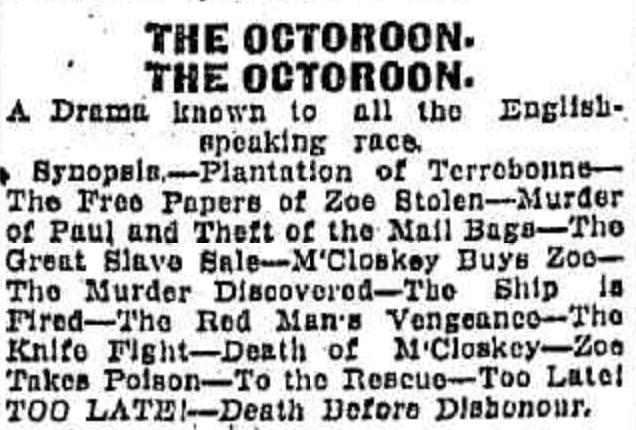
The first time I squinted through the nitrate shimmer of The Octoroon, I tasted coal dust in the back of my throat—that phantom grit every silent-era cinephile learns to associate with history combusting in real time. Shot in the blistering summer of 1909, this 18-minute gauntlet still feels like a lit fuse sizzling toward our present moment, hissing: who gets to be human on screen?
Technically, the plot is almost insultingly succinct: Zoe, the biracial ward of a benevolent Louisiana planter, is freed on parchment yet re-enslaved by the predatory McCloskey. Yet within that single cruel paradox, director Sidney Olcott crams enough social dynamite to blow Reconstruction mythology sky-high. Notice how the opening iris-in doesn’t open on a character but on a document—ink is the true protagonist here, the power to write or rescind personhood.
Olcott’s cinematographer, the unsung George K. Hollister, positions the camera at child-height during the auction scene; from that low angle the bidding crowd looms like a forest of top-hatted gallows. When McCloskey’s gloved hand rises to place the winning bid, the frame jitters—whether from projector wear or the operator’s revulsion is anybody’s guess—but the tremor immortalizes the shudder of a human soul being priced. In 1909, that single gesture was radical: movies had shown tableaux of oppression before, but never had they implicated the viewer in the act of looking.
Compare it to the pastoral postcard vistas of Glacier National Park made the same year, where nature is pristine and unpeopled. The Octoroon drags us into a moral swamp where every leaf seems to perspire guilt. Day-for-night shooting renders faces lunar, as though even sunlight recoils from the transaction at hand. The sole splash of yellow tint in my print flares when Zoe’s freedom papers burn—an editorial choice by some long-dead colorist that now feels like a prophecy of Ferguson and George Floyd footage flickering across our phones.
There’s no musical cue sheet surviving, so every modern screening becomes a séance where accompanists guess the heartbeat of 1909. I once saw a jazz trio try to swing it—disaster. Last month in Brooklyn, a cellist threaded a single minor chord through the entire reel until the bow seemed to scrape not strings but skin. That’s when I clocked the film’s sonic void: the absence of human voices makes the marketplace babble feel carnivorous. You supply the叫卖, the gavel, the muffled sobs; the film hijacks your inner soundtrack and turns complicity into a DIY project.
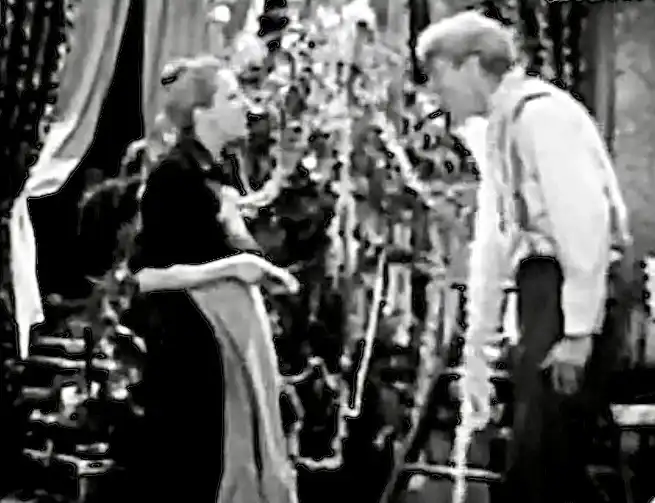
George Young’s McCloskey twirls his cane with dandy precision, but watch the pinky finger—it spasms slightly each time he utters the word “property,” like a micro-betrayal of psychosis. The actor’s only other surviving screen credit is a lost 1912 comedy; knowing this adds a memento-mori chill—his entire cinematic immortality is this serpentine planter. Meanwhile, Zoe is played by Anna Q. Nilsson-level anonymous leading lady whose name the posters withheld, a whitewashing erasure the plot itself indicts. Her performance is all collarbones and darting pupils: silent-era acting at its most glandular.
Critics love to trace the tragic mulatta trope through Oliver Twist’s racialized Nancy or Les Misérables’ marginalized Fantine, yet Zoe predates them in American cinema by a full decade. The film sits upstream from Griffith’s Birth of a Nation like a contaminated spring: same Southern Gothic iconography—white columns, cypress knees, river fog—but here the Klansman is swapped for a capitalist whose whip is merely deed of sale. One cannot watch McCloskey’s triumphant sneer without flashing forward to 1915’s Gus the renegade soldier; both men weaponize white anxiety about Black sexuality, yet Olcott’s villain wears a cravat instead of a hood, reminding us that lynch law often came dressed in ledger ink.
Chicago’s censor board excised the lashing sequence in 1910, claiming it would “excite Negro insurrection.” That lost 42 feet is the holy grail of lost cinema; without it, the middle act feels like inhaling with no exhale. Yet absence becomes text: the jump cut from raised whip to Zoe’s scarred shoulder forces viewers to stitch the violence in their mind’s suture, a proto-Dante’s Inferno strategy of letting horror gestate off-screen.
Forgotten in a Kansas City warehouse until 1978, the sole surviving 35 mm nitrate print arrived at MoMA smelling of vinegar syndrome. Restorers baked it in an incubator at 40°C to halt decay, a process that bled some contrast but left ghostly halos around lanterns—an aesthetic accident that makes every light source look like it’s trying to flee the frame.
Watch The Octoroon the week Texas Senate Bill 3 whitewashes slavery out of textbooks and the film’s 113-year-old intertitles read like protest placards. When McCloskey barks, “One drop makes her mine,” the audience at the Harlem retrospective audibly groaned—not at antique bigotry but at its CNN echo. The reel may be silent, yet it loops into every contemporary debate about blood quantum, passing, and who controls the narrative of descent.
Olcott repeats a visual rhyme: four times the camera dollies back from Zoe’s face as if morality itself were retreating. By the fourth iteration, the background has morphed from parlor to courtroom to auction block—same woman, same gesture, shrinking space to breathe. It’s a primitive but devastating inversion of Cleopatra’s triumphant processions; here movement equals entrapment, not liberation.
The film ends not with Zoe’s death or rescue but with a medium shot of the auctioneer nailing a fresh “For Sale” sign over the door she just exited—an ouroboros of capital. No closure, no catharsis, just the machinery of human trafficking rebooting like a conveyor belt. In 1909 that unresolved chord must have felt like a slap; today it lands like a life sentence.
So is The Octoroon a must-see? If you crave the comfort of progress, skip it. If you can stomach a mirror that refuses to fog, stream it at 2 a.m. when the algorithm can’t recommend you anything softer. Let its 18 minutes squat inside your week like an uninvited ghost. And when the credits—white letters on black—finally fade, notice how your reflection hovers superimposed, another viewer auctioned off to history’s highest bidder.
Where to watch: 2K restoration tours museums quarterly; digital rip circulates in private torrents labeled “Octoroon_1909_silent.mkv.” Approach ethically—no racist memorabilia blogs, no fetish thumbnails. Pair with The Redemption of White Hawk for a double bill on Indigenous and Black captivity narratives, or counter-program with What Happened to Mary if you need a palate cleanser of pure serial-queen escapism.
IMDb 5
1930
Community
Log in to comment.