DbcultAccessing Vault...
3.6/10
Senior Film Conservator
A definitive 3.6/10 rating for a film that redefined the boundaries of cult cinema. The Girl from Abroad; or, The Great Underworld remains a cornerstone of transgressive art.
A chandelier crashes only once in The Girl from Abroad, yet its thousand crystal droplets—each caught in torturous slow-motion—feel like the film’s true dialogue: shards of inherited wealth raining on a man who never learned to walk without velvet underfoot. Mauritz Stiller, Sweden’s answer to mercury, liquefies every certitude of class here; what oozes out is a nightmare fable that predates both The Student of Prague’s doppelgänger guilt and The Cheat’s sadomasochistic finance. The plot, deceptibly banal—banker’s heir loves foreign vamp, loses fortune—becomes under his iris-hungry camera a fever chart of European vertigo.
Stiller begins inside a ballroom so cavernous that dancers resemble phosphor dots inside a cavernous noir aquarium. Candelabra flames stutter across grease-paint faces; black satin gloves peel off like second skins. Into this porcelain hothate strides Grete Wiesenthal—part Nietzschean panther, part displaced pilgrim—her eyes already plotting escape routes through stained-glass exits. She is introduced not by title card but by a tracking shot that slithers across parquet, climbs a staircase, discovers her calves mid-motion, then surrenders to the smile that will bankrupt a dynasty. Silent cinema rarely flirted with such carnal optics; even Cleopatra’s Theda Bara leaned on iconography, whereas Wiesenthal weaponizes kinetic ambiguity.
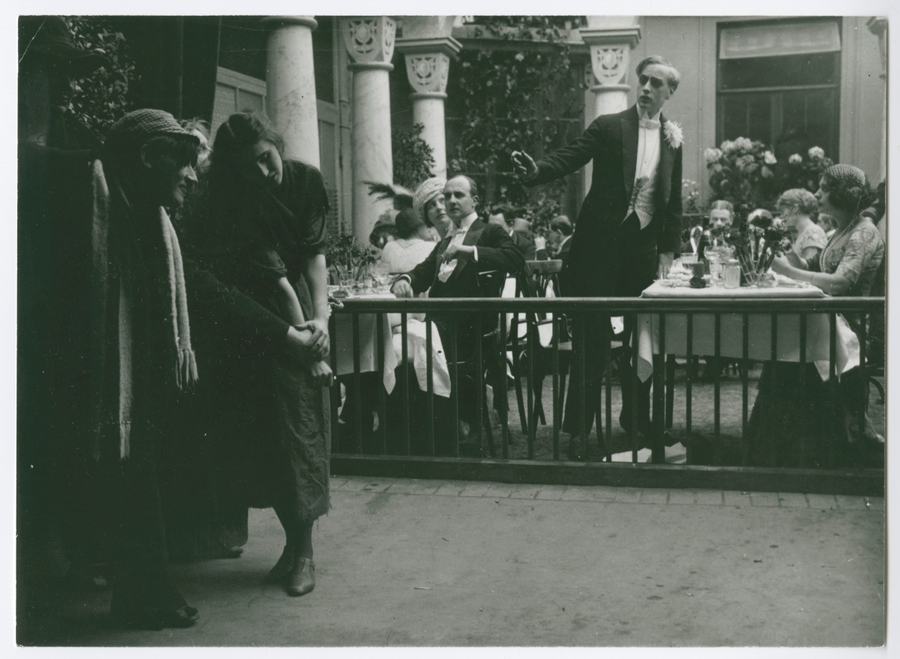
Gösta Ekman—pre-Garbo matinee idol—plays the heir with the bone-structure of a Keats poem and the attention span of a firefly. When he first touches the foreign girl’s gloved hand, Stiller inserts a microscopic cut: a single frame of white-hot light, half-subliminal, half-religious. From that scintilla the narrative detonates. Bank ledgers are replaced by promissory notes scrawled on cigarette paper; family portraits are sold to pawnshops who cut out the eyes for use in carnival masks. Each dissolution is punctuated by Hugo von Hofmannsthal’s intertitles—haiku of decay: “Night fell like unpaid rent” or “Her accent tasted of ships not yet built.”
At the 38-minute mark the film abandons Stockholm for a nocturnal Baltic port, rendered in stylized miniatures that breathe like living engravings. Masts tangle like doomed lovers; fog horns groan the way only pre-war horns can. Here the girl vanishes, leaving Ekman to chase shadows through brothels lit by green-shaded lamps. Stiller’s camera adopts the POV of a rat: scuttling across tavern floors, dodging boot heels, pausing to lap at spilled absinthe. The effect is part narcotic, part newsreel—an early intimation that cinema could be both intoxicant and autopsy.
Censorship boards in Madrid, Chicago and Munich excised different chunks; hence surviving prints resemble a stained-glass window reassembled by drunk glaziers. Yet fragmentation only heightens the picture’s thesis: desire is itself an unreliable narrator. One minute we witness a conflagration aboard a gambling schooner—flames licking at a roulette wheel that still spins red-black-red. The next, we’re inside a Lutheran chapel where Jenny Tschernichin-Larsson’s penitent maid cradles a Bible hollowed out to smuggle diamonds. The tonal whiplash anticipates the channel-surf edits of post-modern television, yet every juxtaposition lands with bruised coherence.
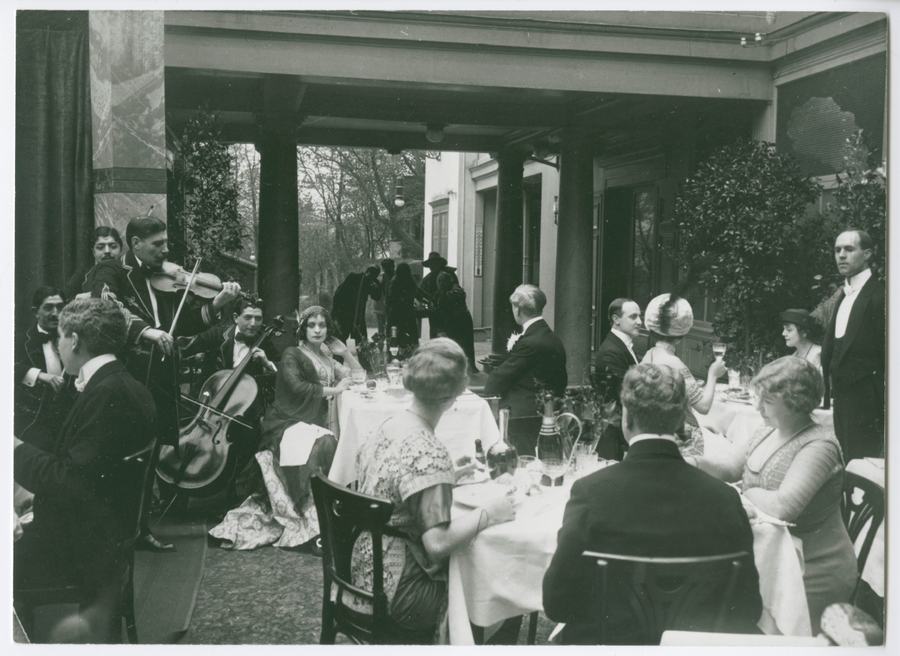
Central to the film’s mystique is Ragnhild Ovenberg Lyche’s Countess—an aristocratic sphinx whose alliance with the underworld suggests a blood pact between Ibsen and Wedekind. She commands a ballroom sequence worthy of Les Amours de la reine Élisabeth but drenched in Scandinavian nihilism: couples waltz inside a glass greenhouse whose panes slowly frost over, until movement becomes embalmed choreography. When the orchestra halts, the musicians exhale visible breath—an effect achieved by having the players inhale cigar smoke before takes, proof that ingenuity trumps budget.
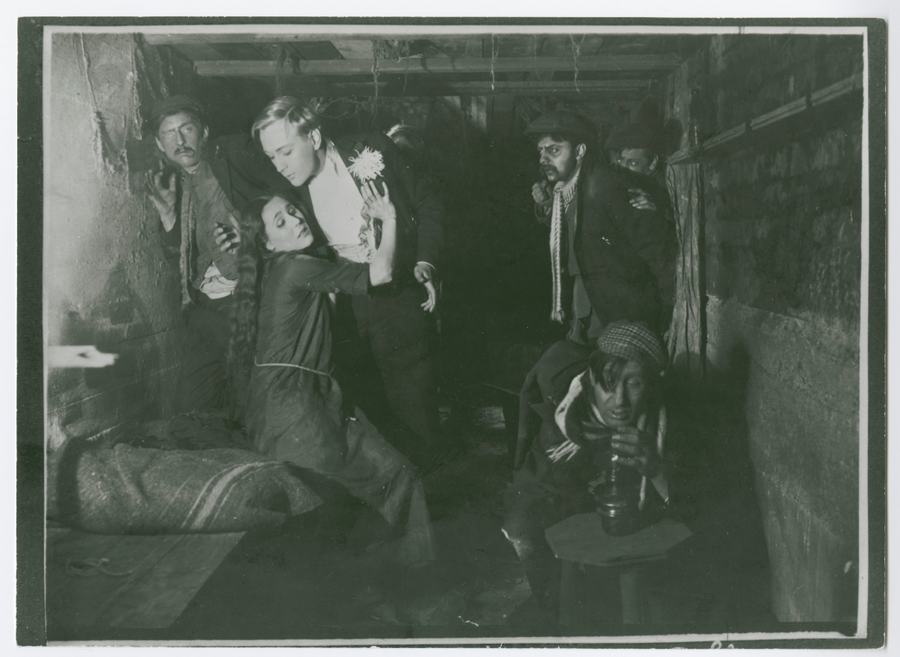
The film’s climax—shot on a barge drifting toward an open-sea turbine—remains one of silent cinema’s unheralded miracles. Stiller rigs a wind machine powered by a World War I airplane engine, hurling sleet at the lovers as they negotiate final allegiances. Ekman’s character, now coatless and shaking, offers the girl a cheque signed in his own blood; Wiesenthal tears it into confetti that swirls like locusts toward the camera. A match-cut to a Stockholm stock-ticker transforms the shredded paper into falling share prices—an audacious visual pun that predates Eisenstein’s intellectual montage by at least four years.
Is it any wonder that contemporary critics, weaned on From the Manger to the Cross’s reverential tableaux, dismissed the picture as “continental rot”? Yet what registers now is the film’s pre-jazz sense of modernity: its conviction that capital is spectral, that identity is liquidity, that eros and bankruptcy share heartbeat velocity. The mercury-fast cutting, the chiaroscuro worthy of later Hitchcock, the erotic cruelty that out-Murnaus The Student of Prague—all congeal into a manifesto for a century hurtling toward credit-default swaps and screen-swiped romance.
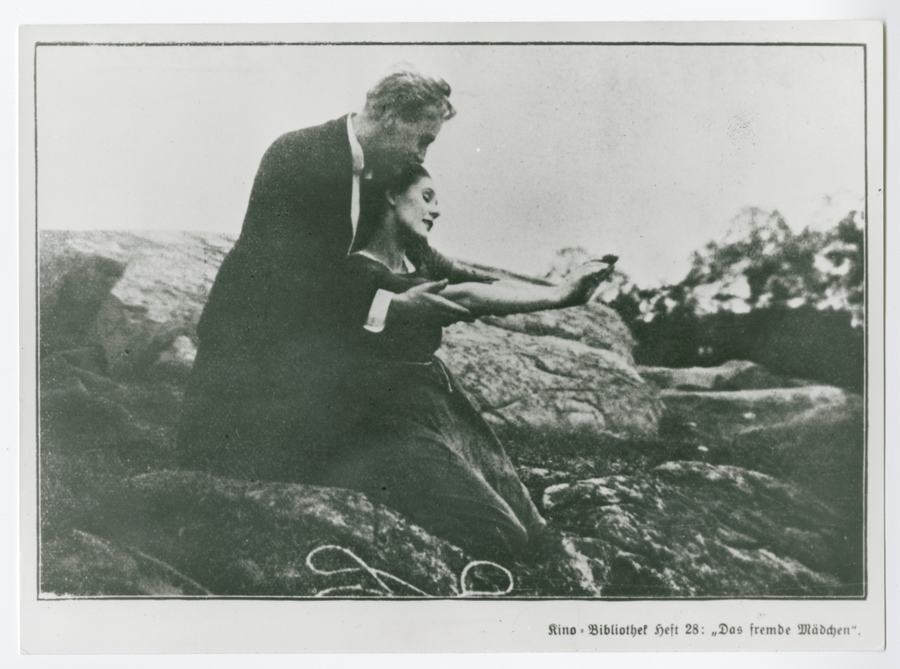
Comparative context only sharpens its singularity. Where Traffic in Souls sensationalized white-slavery to titillate, Girl from Abroad treats criminal underworld as metaphysical borderland. While The Mystery of the Rocks of Kador relied on coincidence and faded tintypes, Stiller’s film burns with psychological x-rays: every object—whether Fabergé egg or forged passport—radiates the terror of being exchanged.
Restoration efforts by the Swedish Film Institute in 2019 reinstated amber tones to the ballroom scenes and a sickly cyan to the port sequences, approximating the chemical palette Stiller himself specified in lost production notes. Accompanied by Matti Bye’s newly commissioned score—piano, musical saw, and sampled foghorns—the film now haunts international festivals, provoking cinephiles to rethink 1920 as ground zero for expressionistic noir. Streaming rights are fractured across regions: Criterion Channel hosts it in North America under the Scandinavian Auteurs banner, while European viewers can rent it in 2K from GladjeFilm with optional German or French subtitles.
Ultimately, what lingers is neither plot nor set-piece but a tactile sensation: the chill of a silk gown evaporating from skin, the metallic scrape of a safe lock spinning empty, the echo of high-heeled footsteps that cease abruptly when the girl steps off-frame. Stiller understood that cinema’s true currency is absence: the kiss withheld, the banknote missing, the final title card left blank. In that void, the viewer—like the heir—descends a staircase with no visible termination, clutching only the faint perfume of a foreign country whose name we never learned to pronounce.
Community
Log in to comment.