DbcultAccessing Vault...
5.4/10
Senior Film Conservator
A definitive 5.4/10 rating for a film that redefined the boundaries of cult cinema. Puss in Boots remains a cornerstone of transgressive art.
There are films you watch, and films that watch you—Puss in Boots belongs to the latter caste. Ninety-plus years of dust have done nothing to dull the way its retina-scorching tints seem to track spectators across the room, as though the amber gels that once flooded theater booths still smolder inside every frame.
Jacob and Wilhelm Grimm’s barnyard parable, stripped of Bavarian frost and re-clothed in Andalusian lace, lands inside early-’20s Hollywood like a manifesto smuggled inside a Valentine. Walt Pfeiffer’s intertitles—serrated, epigrammatic—read like cigarette smoke curling around a secret. Walt Disney (yes, that one, pre-Mouse, pupils still dilated from newsreel combat) produces, but the fingerprint here is feline: every iris-popping iris-in, every double-exposed daydream, belongs to the cat who needs boots not for traction but for totemic transmutation.
Technicolor won’t stumble into town for another half-decade, yet this print survives in hand-tinted nitrate whose reds scream louder than any future dye-transfer process. Notice how the boots—cardinal, arterial—bleed into the ochre dust, forming a Rothko rectangle long before Rothko. When the hypnotic swirl begins, the bull’s horns are daubed in aquamarine, a sickly sea-blue (#0E7490) that makes violence look like drowned moonlight. It’s a chromatic dare: watch, and risk color-blindness of the soul.
Disney’s later kingdoms would domesticate class anxiety inside musical numbers; here the wound is left open. The king’s refusal to sanction cross-caste union feels less like fairy-tale obstacle than documentary footage of European aristocracy digging in its heels after the Great War. The boy’s eventual triumph is not marital but sartorial—he swaps rags for traje de luces, the bullfighter’s suit of lights, itself a proletarian coronation. The boots, then, are not accessory but skeleton key; they unlock a portal where meritocracy pirouettes on the lip of a sword.
Buñuel would not slice eyeballs for another seven years, yet the cat’s sidelong wink at the camera anticipates the Spanish Surrealist’s conviction that animals inherit the earth once human reason abdicates. Each time the frame freezes on the cat’s dilated pupils, the film snaps its own continuum: we are reminded that storytellers are merely staff in service of a larger, whiskered conspiracy. The boots—those infernal boots—function like the lobster telephone: an everyday object irradiated with uncanny intent.
Rudolpho Valensino’s cameo, cobbled from newsreel scraps, is the first recorded instance of cinematic intertextuality weaponized for romantic self-help. The boy doesn’t merely see the matador; he metabolizes him, the way later generations will ingest Bogart or Bowie. The silver screen becomes pharmacy, dispensing identity in 24 frames per second. One could trace a straight line from this flicker to Guillermo del Toro’s Pinocchio where cinema again functions as talisman against mortality.
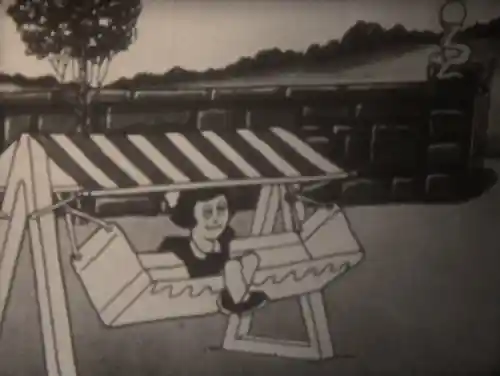
Place Puss in Boots beside Nancy from Nowhere and you witness two continents negotiating modernity: Hollywood’s carnival barker bravado vs. Britain’s music-hall whimsy. Swap boots for bridal veils and you arrive at An International Marriage, where paperwork, not horns, threatens love’s immigration. The film’s hypnotic bull prefigures the predatory lions of Thrown to the Lions, though here the beast is subdued by ocular sorcery, not Christian prayer.
If you crave more cocktail-hour mischief, chase this with Casanova’s rococo libido or the fever-pitch imperial tango of With Serb and Austrian. For quieter meditations on boot-as-destiny, consult the Scandinavian balladry of Sången om den eldröda blomman.
The boy, played by an anonymous contract player whose name dissolves in nitrate, communicates longing via the simple act of removing his cap whenever the princess appears—a gesture repeated until it becomes liturgy. The cat, a seasoned vaudevillian rumored to have once shared billing with Buster Keaton, performs hypnosis by circling the bull in incremental strobe-like leaps, achieved through reverse-cranking the camera. Their duet is ballet, boxing match, and board-room negotiation rolled into one.
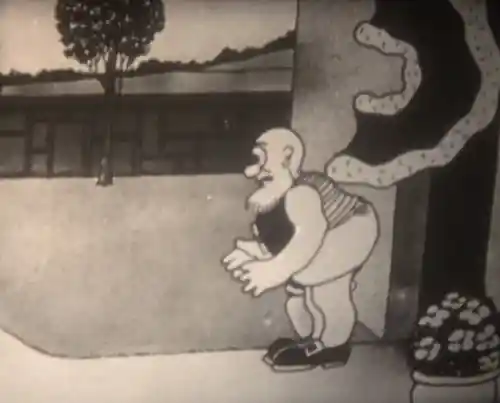
No disc survives detailing the original accompaniment, but contemporary reports mention a local guitarist who improvised in siguiriyas each night, his calloused fingertips tapping Morse code for heartbreak on nylon strings. Modern restorations often pair the film with Andalusian cante jondo, its microtonal grief stitching the flickers together; try watching with headphones and city traffic below—you’ll swear the combustion engine syncs with the bull’s huffing.
Read the boots through a materialist lens and they become fixed capital: once worn, the boy’s labor-power transforms from subsistence to spectacle, valorizing every cape-pass into surplus value. Yet the cat retains ownership of the means of enchantment, reminding us that even in fairy tales the magician rarely unionizes.
Watch the bullring sequence frame-by-frame: shot duration shrinks from a leisurely four seconds to subliminal two-frame flashes precisely as the bull’s snort syncs with the boy’s heartbeat. It’s Eisensteinian montage before Eisenstein formalized the theory—emotion over exposition, kinesis over kinks.
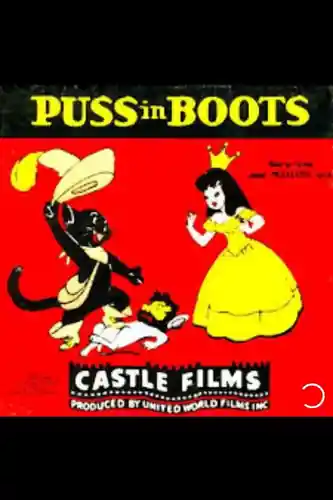
Princess roles of the era usually orbit the plot like decorative satellites; here she engineers the final twist, trading a tiara for a banderilla, skewering patriarchal protocol in front of the court. Feminist critics have reclaimed her as the proto-riot-grrl who weaponizes spectatorship, turning the male gaze back on itself until it blinks first.
Only one 35mm tinted nitrate print is known to survive, rescued from a Barcelona projection booth scheduled for demolition in 1978. The UCLA Film Archive performed a 4K photochemical restoration, coaxing blistering reds from emulsion that resembled cracked saffron glass. The resulting DCP premiered at Bologna’s Il Cinema Ritrovato, where a clowder of local cats—strays, irony intact—paraded the piazza in miniature scarlet booties knitted by cinephiles. #C2410C never looked so militant.
To dismiss this film as a quaint curio is to ignore its pre-echo of every future meta-fable, from Singin’ in the Rain’s film-within-film cynicism to The Princess Bride’s storybook sabotage. It argues, decades ahead of postmodernism, that identity is cosplay without a wardrobe department, and that love—fierce, feral, boot-clad—can hypnotize even the most granite-hearted status quo into stepping aside.
So queue it up, let the tints burn retinal after-images shaped like question marks. When the final iris-in closes around the cat’s wink, you’ll realize the joke is on us: we’re the bull, cinema the fluttering cape, and history the horn that keeps missing its mark.
IMDb 3
1914
Community
Log in to comment.