DbcultAccessing Vault...
Cult Review
Senior Film Conservator
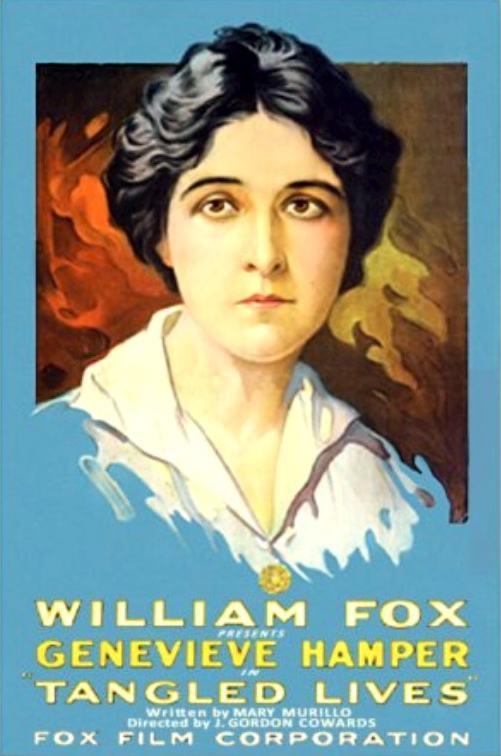
In the annals of early cinema, where grand gestures and stark visual storytelling reigned supreme, there existed a particular strain of melodrama that delved into the darkest corners of the human psyche. Among these captivating relics, the 1917 feature 'Tangled Lives' stands as a compelling testament to the power of silent film to weave intricate narratives of suspense, identity theft, and moral decay. Directed with a keen eye for dramatic tension and featuring a cast adept at conveying profound emotion without a single spoken word, this film, adapted from the intricate web spun by Wilkie Collins, is far more than a mere historical curiosity; it is a gripping psychological thriller that resonates with timeless themes of greed and the perilous pursuit of power.
At its core, 'Tangled Lives' unfurls a chilling narrative centered on Roy Schuyler, portrayed with a chilling blend of desperation and cunning by Henry Leone. Roy is a man utterly stripped of his fortune, his past profligacy having left him beholden to an unforgiving legion of creditors. His only perceived salvation lies in a calculated, loveless marriage to the wealthy Laura Reid, a role imbued with a delicate vulnerability by Claire Whitney. From the outset, the film establishes a palpable sense of impending doom, a creeping dread that seeps into the elegant drawing rooms and hushed corridors of the narrative. It’s a classic setup for a melodrama, yet executed with a nuance that elevates it beyond the predictable. The tension isn't merely in the plot points, but in the unspoken anxieties etched onto the faces of its protagonists, a hallmark of powerful silent film acting.
The film’s true descent into darkness begins with the introduction of Ann, Laura’s perceptive half-sister, played by Genevieve Hamper. Ann, possessing an intuitive grasp of human nature, quickly discerns the predatory motives lurking beneath Roy's polished exterior. Her attempts to warn Laura are met with a swift, brutal response: Roy orchestrates Ann's abduction and subsequent incarceration in a mental asylum, a terrifyingly common plot device in early cinema that reflects societal anxieties and the vulnerability of women. This act of silencing, of literally removing the voice of dissent, is a chilling precursor to the film's more elaborate manipulations. It sets the stage for a narrative where identity, sanity, and freedom are precariously balanced on the precipice of malevolent ambition.
With Ann safely—or rather, unsafely—out of the picture, Roy intensifies his machinations, pressuring Laura to sign over control of her substantial estate. Laura’s steadfast refusal, a quiet act of defiance, becomes the catalyst for Roy’s most audacious and cruel scheme. He enlists the aid of Dassori, an enigmatic Italian figure whose allegiances are murky and whose conscience, we discover, is not entirely extinguished. This character, played by Robert B. Mantell, adds another layer of intrigue, embodying the hired hand whose eventual shift in loyalty provides the narrative's crucial turning point. The film cleverly uses Dassori not just as a tool for Roy’s villainy, but as a moral compass, albeit one initially pointing in the wrong direction.
The climax of Roy’s villainy unfolds with a chilling precision: he brings Ann and Laura together, a reunion culminating in Ann’s tragic death. What follows is a truly audacious act of identity theft, reminiscent of other melodramas where physical resemblance becomes a curse rather than a blessing. Laura, bearing a striking resemblance to her deceased half-sister, is then placed in the asylum in Ann’s stead, a cruel twist of fate that traps her in a living nightmare. This particular plot point, while perhaps bordering on the sensational, is handled with a gravity that underscores the horror of Laura’s predicament. It speaks to the fragility of identity when confronted with overwhelming power and deceit, a theme explored in various forms throughout cinematic history, from the more overt mistaken identity plots to subtle psychological dramas.
In the silent era, the burden of communication fell squarely upon the actors’ expressive faces, their body language, and the precise choreography of their movements. Claire Whitney, as both Laura and, by proxy, Ann, delivers a performance of remarkable depth. Her portrayal of Laura’s initial vulnerability, her growing apprehension, and her eventual terror and desperation is nuanced and utterly convincing. She embodies the classic damsel in distress, yet imbues the role with an inner strength that prevents her from becoming a mere victim. Her wide, pleading eyes and subtle shifts in posture convey a world of unspoken fear and resolve, making her plight profoundly empathetic. The audience feels her anguish as she navigates the asylum’s oppressive environment, mistreated and disbelieved.
Henry Leone’s Roy Schuyler is a masterclass in silent villainy. He isn't a mustache-twirling caricature but a man driven by desperate circumstances into increasingly heinous acts. Leone effectively portrays the calculating nature of Roy, the cold ambition that fuels his actions, and ultimately, the corrosive guilt that begins to erode his sanity. His expressions oscillate between smug satisfaction and growing unease, hinting at the psychological toll his crimes take. Genevieve Hamper, despite her character's limited screen time before her tragic demise, leaves a lasting impression as Ann. Her initial warnings are delivered with a gravitas that establishes her character’s perceptive intelligence, making her subsequent silencing all the more poignant. The supporting cast, including Stuart Holmes, Louise Rial, and Walter Miller, contributes effectively to the film's atmosphere, each playing their part in the intricate machinery of the plot, from the bribable nurse to the determined cousin.
The direction of 'Tangled Lives', while not always attributed to a single director in the fragmented production environment of the era, demonstrates a sophisticated understanding of visual storytelling. The use of light and shadow is particularly effective in creating mood and emphasizing the psychological states of the characters. Dimly lit interiors, often cast in stark contrasts, underscore the sinister nature of Roy’s schemes and Laura’s confinement. The asylum scenes, in particular, are rendered with a stark, almost claustrophobic intensity, using restrictive framing and desolate sets to convey the hopelessness of Laura’s situation. This visual language is crucial, as it fills the void left by spoken dialogue, allowing the audience to intuit emotions and motivations through the mise-en-scène.
The film's set design, while perhaps not as lavish as some of the epic productions of the time like Quo Vadis?, is functional and atmospheric. The contrast between the opulent, yet increasingly suffocating, Reid estate and the stark, dehumanizing environment of the asylum is visually striking. These environments are not mere backdrops but active participants in the narrative, reflecting the characters' fortunes and mental states. The film’s ability to evoke a sense of unease and dread through its visual composition is a testament to the nascent artistry of silent cinema, demonstrating how early filmmakers were already mastering the grammar of the moving image.
At its heart, 'Tangled Lives' is a profound exploration of several enduring themes. Greed, of course, is the primary antagonist, driving Roy Schuyler to commit increasingly atrocious acts. His desperation for wealth blinds him to morality and compassion, making him a chilling embodiment of unchecked avarice. This theme resonates with many films of the era, which often served as moral parables, cautioning against the corrupting influence of money and power. Films like Fruits of Desire or The Climbers similarly explored the dark side of ambition and social climbing, often with melodramatic flair.
The theme of identity is equally central and perhaps even more fascinating. The film plays with the fluidity of identity, not just through the literal exchange of Laura for Ann, but through the psychological erosion that comes with being stripped of one's name, one's sanity, and one's freedom. Laura’s struggle to reclaim her true self from the clutches of institutionalization and deceit is deeply moving. It raises questions about what constitutes identity when external forces conspire to erase it. This psychological dimension adds considerable depth, moving it beyond a simple crime drama into the realm of a genuine psychological thriller, much like some of the more suspenseful narratives such as Out of the Darkness, which similarly explores characters grappling with their perceived realities.
Justice, though delayed, ultimately prevails in 'Tangled Lives'. The narrative arc, heavily influenced by Wilkie Collins’ intricate plotting, ensures that the villain does not escape retribution. The intervention of Laura’s cousin Marion, who bribes a nurse to facilitate Laura’s escape, marks the turning point. This act of familial loyalty and courage provides the necessary impetus for the truth to emerge. Dassori’s deathbed confession, a classic narrative device, serves as the ultimate unraveling of Roy’s elaborate scheme, validating Laura’s identity and condemning her tormentor. Roy’s ultimate demise, driven by a tortured conscience, offers a poetic, if somewhat convenient, resolution, emphasizing the moral retribution that was a common trope in early 20th-century cinema. It aligns with the prevailing moralistic tone found in many films of the period, where good generally triumphed over evil, often through dramatic and emotionally charged means, much like the moral lessons conveyed in films such as As Ye Repent or Her Atonement.
The film’s intricate plot owes a significant debt to Wilkie Collins, the Victorian master of sensation novels, whose works like 'The Woman in White' are renowned for their complex narratives, mistaken identities, and psychological suspense. Mary Murillo, the credited writer, faced the formidable task of adapting such a layered story for the silent screen. Her screenplay successfully distills Collins's intricate plotting into a visually coherent and emotionally resonant narrative. This was no small feat, as translating the nuanced internal monologues and detailed descriptions of a novel into purely visual terms required immense skill. Murillo’s work here demonstrates a deep understanding of cinematic storytelling, crafting a script that relies on strong visual cues and dramatic confrontations to propel the story forward, rather than expositional intertitles, though these are, of course, present.
The influence of literary giants on early cinema is undeniable, and 'Tangled Lives' is a prime example of how classic literature provided fertile ground for cinematic adaptations. The film manages to capture the essence of Collins's suspenseful atmosphere, his penchant for moral ambiguity, and his fascination with the darker aspects of human nature. This adaptation, alongside others of the period, helped establish a template for cinematic thrillers, proving that complex narratives could be effectively conveyed without the aid of dialogue. It showcases the early filmmakers' ambition to tackle sophisticated stories, moving beyond simple chase scenes or vaudeville sketches towards more intricate dramatic structures.
Watching 'Tangled Lives' today offers a valuable window into the craftsmanship of early cinema. It reminds us of the ingenuity required to tell stories in a medium still in its infancy. The film's pacing, while perhaps slower than modern thrillers, is deliberate, allowing the tension to build incrementally. The use of close-ups, though not as prevalent as in later films, is employed effectively to highlight moments of intense emotion or critical plot details, drawing the audience into the characters' inner worlds. The editing, while straightforward, serves the narrative efficiently, ensuring clarity in a complex story. It stands as an example of the kind of compelling drama that was being produced alongside grander spectacles like All for the Movies: Universal City, California, the Wonder City of the World, which celebrated the industry itself. While it lacks the overt propaganda of a film like The Little American, it shares a similar commitment to engaging its audience with clear moral stakes.
The film’s historical context is also vital. Produced during a period of immense social change and just as the United States was poised to enter World War I, these narratives often reflected underlying societal anxieties about power, justice, and individual vulnerability. The portrayal of the asylum, while perhaps sensationalized, taps into real fears about mental health institutions and the ease with which individuals could be stripped of their rights. It’s a stark reminder of a bygone era, yet its themes remain surprisingly resonant. It encourages a critical look at how mental health was understood and depicted, offering a stark comparison to contemporary narratives. The film’s exploration of the societal implications of greed, not just on the individual but on the fabric of trust and family, provides a rich ground for discussion, making it a valuable artifact for understanding the social commentary embedded in early cinema.
For modern viewers, 'Tangled Lives' offers more than just a glimpse into silent film history; it provides a genuinely engaging dramatic experience. Its intricate plot, though occasionally reliant on classic melodramatic contrivances, remains compelling. The performances, especially by Claire Whitney and Henry Leone, transcend the limitations of silent acting, conveying raw emotion and complex character arcs. The film’s ability to build suspense and explore dark psychological territory without a single spoken word is a testament to the universal power of visual storytelling. It demonstrates that the foundations of the psychological thriller genre were being laid even in these formative years of cinema. It’s a film that asks its audience to engage actively, to read the faces, the gestures, and the environment, to piece together the unspoken narrative.
In an era saturated with CGI and rapid-fire editing, there's a unique pleasure in slowing down and immersing oneself in the deliberate pace of a film like 'Tangled Lives'. It reminds us of the fundamental elements of dramatic storytelling: compelling characters, high stakes, and a moral struggle. While it might not have the epic scope of a Neptune's Daughter or the social realism of a Dust, its intimate focus on personal betrayal and the fight for identity gives it a distinctive power. The film's legacy lies in its demonstration of how early filmmakers could craft sophisticated narratives that still resonate with audiences today, proving that a well-told story, regardless of its technological limitations, is timeless. It stands as a powerful example of how the silent screen could be a canvas for deeply human stories, full of intrigue, despair, and ultimately, a glimmer of hope for justice.
Ultimately, 'Tangled Lives' is a captivating journey into the dark heart of human ambition and the resilience of the human spirit. It is a film that rewards patient viewing with its intricate plot, evocative visuals, and strong performances. It serves as a potent reminder of the rich tapestry of early cinema and its enduring capacity to thrill, provoke, and move its audience. For anyone interested in the evolution of the psychological thriller or simply a compelling tale of good versus evil, this silent gem is a must-see, a testament to the artistry that flourished even in cinema's nascent years. It’s a story that, despite its century-old vintage, still manages to tighten its grip on the viewer, proving that some narratives are truly timeless, their threads forever interwoven with the human condition.
IMDb 5.7
1927
Community
Log in to comment.