DbcultAccessing Vault...
5.2/10
Senior Film Conservator
A definitive 5.2/10 rating for a film that redefined the boundaries of cult cinema. The Old Homestead remains a cornerstone of transgressive art.
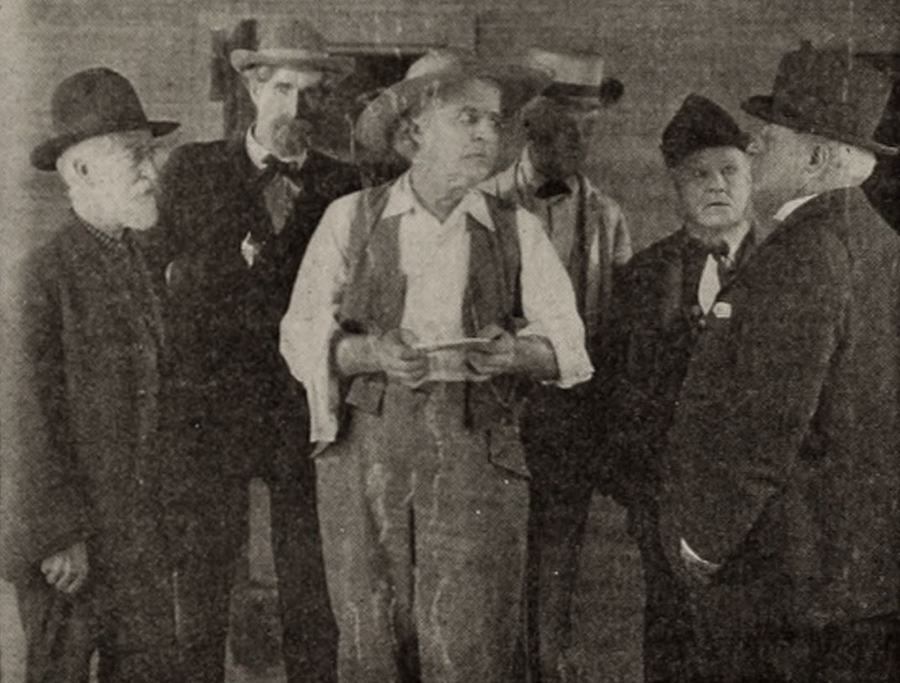
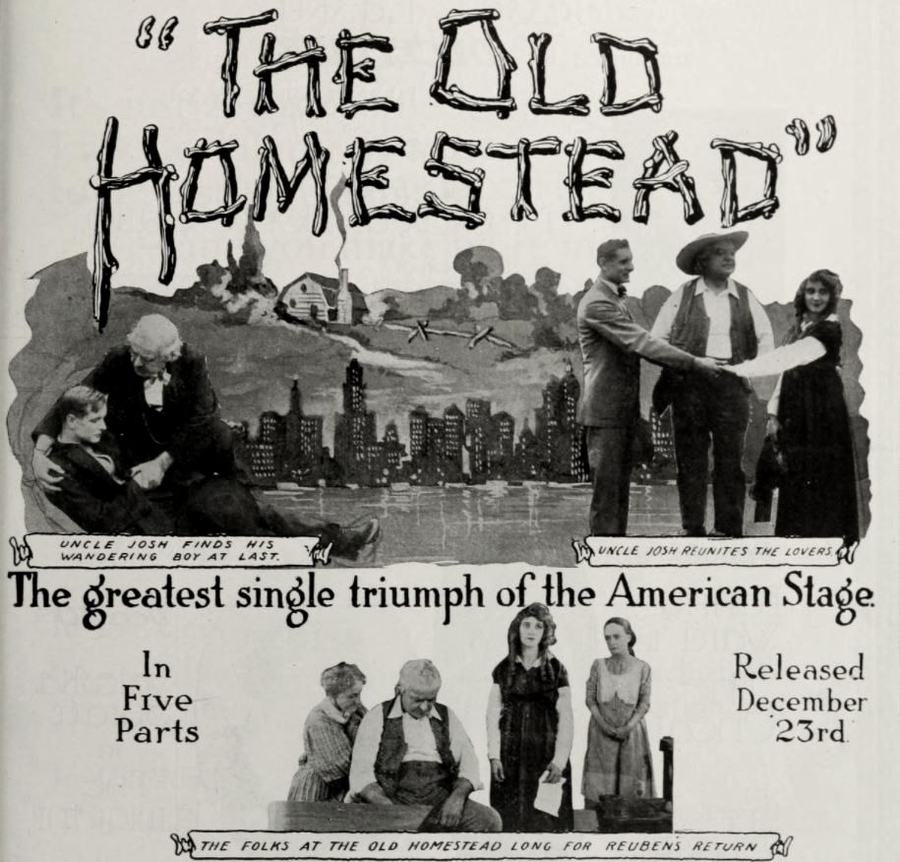
In the pantheon of early silent cinema, few works capture the seismic cultural shifts of the early 20th century with as much earnestness as The Old Homestead. Directed by Hugh Ford and based on the legendary stage play by Denman Thompson, this 1915 production is far more than a mere morality play; it is a visual treatise on the American identity at a crossroads. While contemporary audiences might initially view the film as a relic of Victorian sentimentality, a deeper excavation reveals a sophisticated exploration of displacement and the erosion of traditional community structures. Much like the protagonist in The Failure, Josiah Whitcomb represents a facet of humanity that finds itself increasingly obsolete in the face of industrial acceleration.
Russell Simpson, an actor who would later become synonymous with the dust-bowl grit of John Ford’s masterpieces, delivers here a performance of remarkable restraint. His Josiah Whitcomb is not a caricature of the "country bumpkin" but rather a stoic monument to a different era. Every gesture is imbued with the heavy labor of the farm, and his eyes reflect a bewildered disappointment that the world has moved on without his consent. In the scene where he first arrives in New York, the camera captures his physical alienation with a clarity that rivals the psychological depth seen in Man of the Hour. His interactions with the city’s denizens—the polished, the hurried, and the cruel—serve as a microcosm for the broader national anxiety regarding urbanization.
The film’s visual language relies heavily on the dichotomy between the open, sun-drenched vistas of the New Hampshire farm and the claustrophobic, shadow-laden alleys of New York. This isn't just set design; it is psychological mapping. The "Old Homestead" is shot with a softness that suggests a fading memory, a sepia-toned dream of stability. Conversely, the city scenes are frantic, populated by characters who seem to lack the groundedness of the rural cast. One cannot help but draw parallels to the social critiques found in The Goddess, where the environment itself acts as a character, shaping the destinies of those trapped within its borders. The city in The Old Homestead is a predatory organism, swallowing the youth and spitting out disillusioned shadows.
Critics often dismiss the melodrama of the 1910s as hyperbolic, yet Ford’s direction maintains a level of narrative integrity that feels surprisingly modern. The subplot involving Reuben’s fall from grace is handled with a gravity that avoids the campiness often associated with the era. When Reuben is discovered in a state of moral and physical decay, the reunion between father and son is played with a quiet intensity that rivals the emotional stakes in The Broken Promise. The film understands that the tragedy isn't just the son's failure, but the father's realization that his protection has limits. It’s a theme that resonates through the ages, echoing the familial tensions seen in Captain Swift.
Technically, The Old Homestead showcases the rapid evolution of the medium. The editing, while rudimentary by today’s standards, shows a burgeoning understanding of cross-cutting to build tension. The contrast between the static, wide shots of the country and the more dynamic, medium shots in the city highlights the differing tempos of life. This stylistic choice provides a rhythmic pulse to the film that keeps the viewer engaged despite its deliberate pacing. It is a far cry from the more theatrical staging of The Life and Death of King Richard III, signaling a move toward a more purely cinematic grammar.
Louise Huff and Creighton Hale provide excellent support, offering a glimpse into the youthful energy that Josiah is desperately trying to preserve. Huff, in particular, manages to convey a vulnerability that is never cloying, serving as the emotional anchor back at the farm. Her presence reminds the audience—and Josiah—of what is at stake. The film handles its supporting cast with a level of care that ensures the world feels lived-in and populated by genuine souls rather than plot devices. This ensemble strength is reminiscent of the character depth found in Princess Romanoff.
To truly appreciate The Old Homestead, one must consider the year of its release. 1915 was a year of immense transition. The world was on the brink of total war, and the United States was grappling with its own internal contradictions. Films like A Militant Suffragette were highlighting social upheaval, while The Life of General Villa brought the chaos of revolution to the silver screen. In this climate, The Old Homestead acted as a stabilizing force, a reminder of the foundational myths of the American experience. It offered a sanctuary of nostalgia, even as it acknowledged the inevitable intrusion of the modern world.
The film’s treatment of the "sophisticated city" as a place of ridicule for the "country ways" is particularly telling. It reflects a growing class divide and a burgeoning intellectual elitism that Josiah simply cannot comprehend. This dynamic is explored with similar nuance in My Official Wife, though with a more cosmopolitan flair. In The Old Homestead, the ridicule Josiah faces is not just a personal slight; it is an attack on the very values of honesty, hard work, and simplicity that he represents. His eventual triumph—not through force, but through the sheer persistence of his character—is a powerful statement on the resilience of the human spirit.
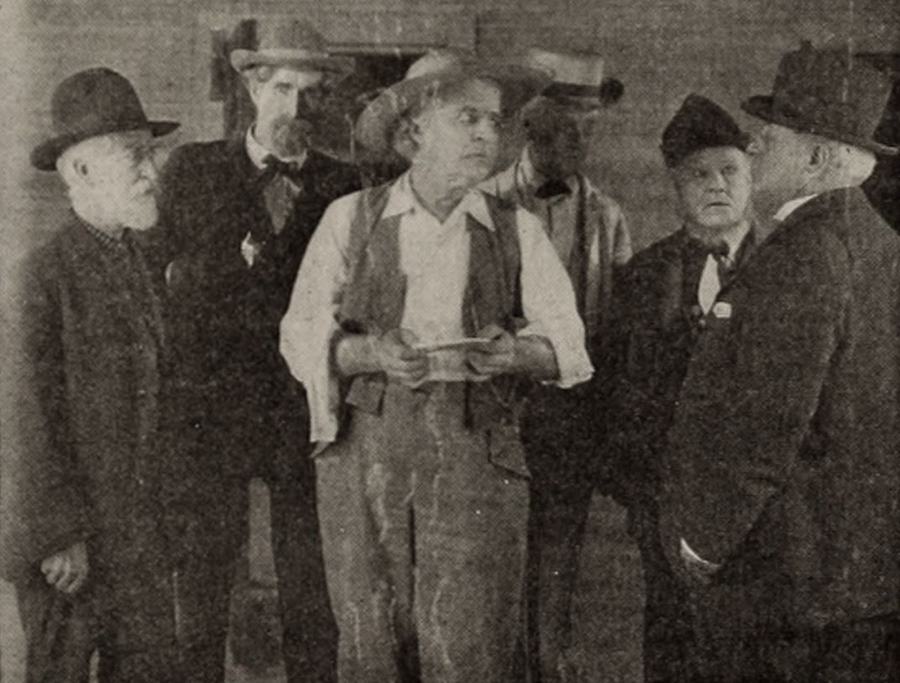
One must also commend the cinematography, which utilizes natural lighting in a way that feels incredibly authentic for the period. The interior shots of the homestead have a warmth that contrasts sharply with the harsh, flat lighting of the city’s boarding houses. This visual storytelling is a precursor to the expressionistic techniques that would later dominate European cinema, such as in Az éjszaka rabja. The use of space in The Old Homestead is masterful; the vastness of the fields suggests freedom, while the narrow corridors of the city suggest a spiritual and physical imprisonment.
Why does The Old Homestead still matter? In an era of digital disconnection and hyper-urbanization, the story of a father seeking his lost son in a world he no longer understands is more relevant than ever. It touches on the universal fear of losing one’s roots and the courage required to confront a changing reality. The film doesn't offer easy answers; it doesn't suggest that the city is inherently evil or that the farm is a perfect paradise. Instead, it posits that the "homestead" is a state of mind—a commitment to those we love, regardless of the setting. It shares this philosophical DNA with A Message from Mars, which also uses a transformative journey to explore the fundamental nature of human kindness.
The narrative resolution, while satisfying, carries a tinge of melancholy. Reuben returns, but the innocence of the homestead has been irrevocably altered. The world has seeped in. This nuanced ending elevates the film above standard melodrama, placing it in the company of works like The Ticket-of-Leave Man, which also deal with the long shadows cast by past mistakes. The Old Homestead is a testament to the power of silent cinema to convey complex emotional truths through nothing more than light, shadow, and the human face.
Ultimately, The Old Homestead is a vital piece of cinematic history. It bridges the gap between the 19th-century stage and the 20th-century screen, preserving a specific American vernacular for future generations. It is a film that demands to be seen not as a curiosity, but as a living, breathing work of art. Whether you are a scholar of silent film or a casual viewer looking for a story with heart and substance, this film offers a rich, rewarding experience. It reminds us that while the landscape of our lives may change, the "homestead" of the heart remains a constant worth fighting for. Like the characters in The Actress' Redemption or The Love Tyrant, Josiah Whitcomb teaches us that redemption is always possible, provided we have the courage to walk through the fire of the unknown.
A cinematic journey of profound empathy and visual splendor, The Old Homestead remains a towering achievement in the early history of the American screen.
IMDb —
1918
Community
Log in to comment.