Does The Girl from Gay Paree hold up for a modern audience, or is it merely a dusty relic of a bygone era? Short answer: yes, but with significant caveats, appealing primarily to silent film enthusiasts and those curious about early cinematic portrayals of cultural collision.
This 1920s romantic comedy, while undeniably a product of its time, offers glimpses into the enduring power of charm and the universal humor found in cultural misunderstandings. It is unequivocally for those who appreciate the historical context and unique performance styles of the silent era, but absolutely not for viewers seeking fast-paced narratives, complex psychological depth, or contemporary dialogue.
At its core, The Girl from Gay Paree is a film of contrasts and simple pleasures. Let's break down its fundamental architecture:
This film works because: It perfectly captures the lighthearted, often exaggerated comedic style of the early 1920s, leaning heavily on the magnetic screen presence of its lead and a universally understood "fish out of water" premise. Its simplicity is, paradoxically, its strength.
This film fails because: Its narrative depth is virtually non-existent, relying on broad strokes and predictable character arcs that offer little in the way of surprise or emotional resonance beyond surface-level amusement. The pacing, by modern standards, can feel glacial.
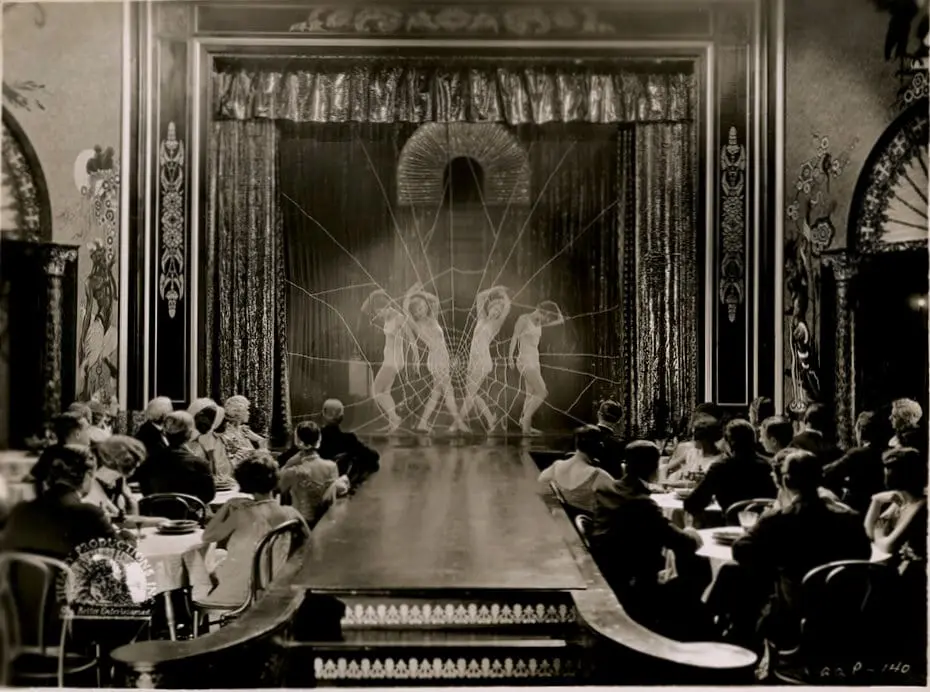
Scene from The Girl from Gay Paree
Cinematic perspective: Exploring the visual vocabulary of The Girl from Gay Paree (1927) through its definitive frames.
You should watch it if: You have a genuine interest in silent cinema, appreciate the artistry of physical comedy, or are a film historian keen on understanding the evolution of romantic comedies. It’s a comfortable, if undemanding, stroll down cinematic memory lane.
The Narrative: A Parisian Dream?
Violet Clark's screenplay for The Girl from Gay Paree is, by design, a straightforward affair. We are introduced to Fifi, a spirited French dancer, who arrives in a bustling American city, her suitcase packed with ambition and a charming naiveté. The plot quickly establishes her as a fish out of water, immediately thrust into a series of comedic misunderstandings that form the backbone of the film's humor.
Her initial encounters with local customs, from ordering coffee to navigating a busy street, are played for broad laughs, often conveyed through exaggerated physical comedy and expressive intertitles. One particularly memorable sequence, early in the film, sees Fifi attempting to understand American slang, her bewildered expressions and comically incorrect interpretations eliciting genuine chuckles.
The romantic conflict soon emerges in the form of a virtuous, if somewhat clumsy, American suitor, played by Malcolm McGregor, and a slick, manipulative rival, portrayed by Lowell Sherman. This love triangle is as old as cinema itself, and Clark's script doesn't attempt to reinvent the wheel. Instead, it relies on the audience's familiarity with these archetypes to drive the narrative forward.
While this predictability might be a drawback for contemporary viewers, it was a common and often comforting narrative device in the silent era. The pleasure came not from what happened, but how it happened, and the charisma of the performers bringing these familiar tropes to life.
Scene from The Girl from Gay Paree
Cinematic perspective: Exploring the visual vocabulary of The Girl from Gay Paree (1927) through its definitive frames.
The story's climax, involving a convoluted scheme by Sherman's character to discredit Fifi, feels a little rushed and underdeveloped. It serves its purpose, but lacks the dramatic punch that a more intricate plot might have delivered. Still, its resolution, while inevitable, lands with a satisfying, if not groundbreaking, sense of justice.
Performances: Silent Charisma
The success of any silent film hinges almost entirely on the expressive power of its cast, and The Girl from Gay Paree is no exception. Betty Blythe, as Fifi, carries the film with an infectious energy and a remarkable ability to convey emotion without uttering a single word. Her wide, expressive eyes and fluid body language are a masterclass in silent screen acting.
Blythe imbues Fifi with a delightful blend of vulnerability and resilience. There's a particular scene where she receives a harsh letter from her rival, and her subtle shift from hopeful anticipation to crestfallen disappointment is genuinely moving, a testament to her nuanced performance in a genre often associated with overt theatrics.
Malcolm McGregor, as the earnest American love interest, provides a charmingly understated counterpoint to Blythe's effervescence. His character's bewildered sincerity, especially in moments of romantic confusion, is endearing. He doesn't attempt to overshadow Blythe, instead providing a steady, reliable presence that grounds the more outlandish comedic elements.
Lowell Sherman, on the other hand, fully embraces the role of the suave, conniving antagonist. His performance is a delightful exercise in silent film villainy, complete with sneering glances and theatrical gestures that leave no doubt as to his nefarious intentions. While his character isn't deeply explored, Sherman's commitment to the archetype makes him a compelling figure, even if his menace feels more theatrical than truly threatening.
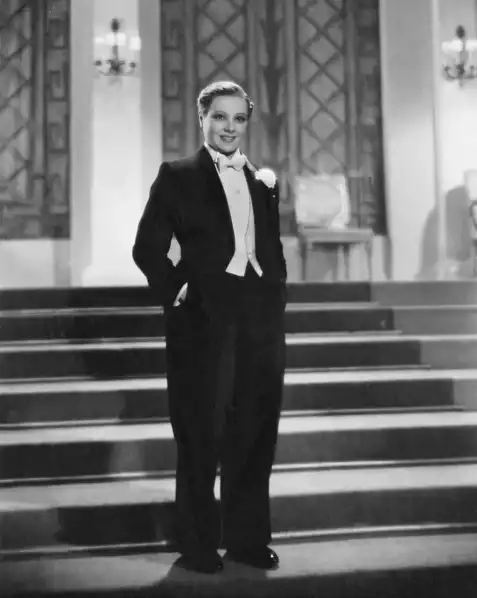
Scene from The Girl from Gay Paree
Cinematic perspective: Exploring the visual vocabulary of The Girl from Gay Paree (1927) through its definitive frames.
The supporting cast, including Walter Hiers and Barbara Bedford, fill their roles adequately, contributing to the film's overall charm without demanding too much attention. Their interactions often provide the necessary comedic relief or plot exposition, serving the narrative effectively.
Direction and Cinematography: Glimpses of Artistry
The direction in The Girl from Gay Paree is competent, if not groundbreaking. The unnamed director (often the case for films of this vintage where directorial credit was less emphasized) demonstrates a clear understanding of silent film storytelling conventions. The camera work is largely static, focusing on capturing the full physical performances of the actors, a common practice of the era.
However, there are moments where the cinematography elevates beyond mere documentation. The use of iris shots to emphasize Fifi's emotional reactions or to highlight a comedic detail is particularly effective. One scene, where Fifi first sees the bustling American cityscape, uses a simple but impactful wide shot to convey her awe, before quickly cutting to a close-up of her overwhelmed expression.
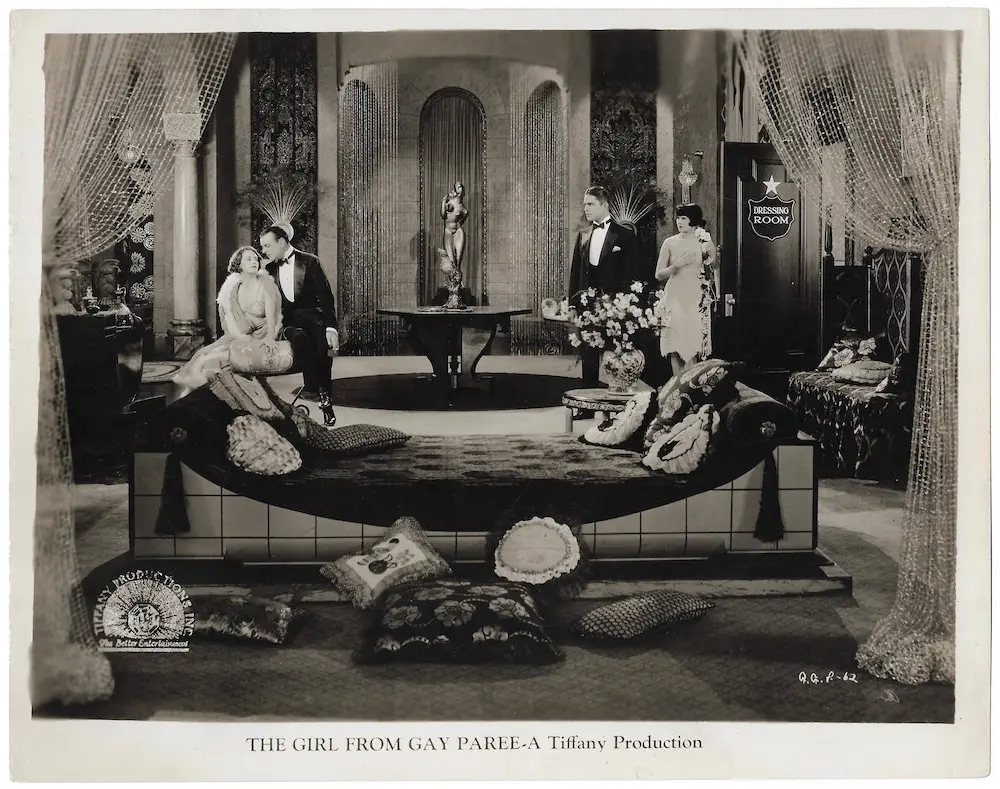
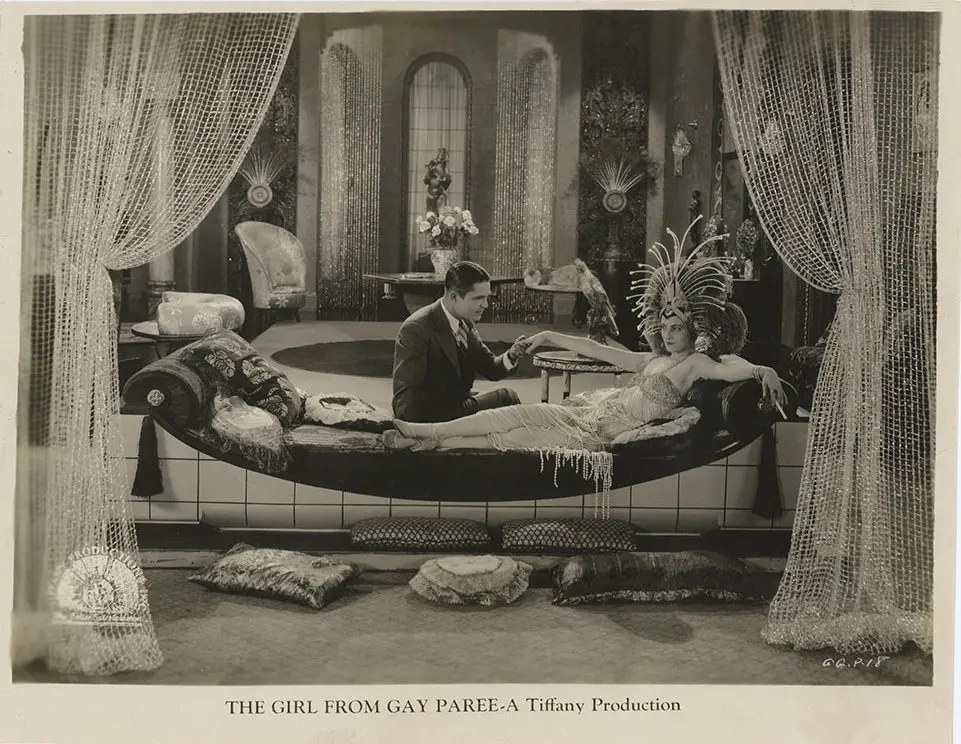
The set design, while not extravagant, effectively distinguishes between the quaint charm of a Parisian café (briefly shown in Fifi's memories) and the more modern, somewhat starker interiors of her American lodgings. This visual contrast subtly reinforces the film's central theme of cultural displacement.
Lighting is primarily functional, ensuring visibility, but there are instances of dramatic chiaroscuro, particularly in scenes involving Sherman's villain, which add a touch of noirish intrigue, even if fleeting. It's not the visual poetry of a Murnau or a Griffith, but it shows an evolving craft.
Scene from The Girl from Gay Paree
Cinematic perspective: Exploring the visual vocabulary of The Girl from Gay Paree (1927) through its definitive frames.
The editing maintains a steady rhythm, typical of silent comedies, often cutting between reaction shots and action to maximize comedic timing. While not as sophisticated as later works like Fig Leaves, it serves the film's lighthearted tone well, ensuring the audience can follow the narrative without confusion.
Pacing and Tone: A Stroll, Not a Sprint
The pacing of The Girl from Gay Paree is undeniably deliberate. For a modern audience accustomed to rapid-fire editing and constant plot developments, it might feel slow. The film takes its time establishing characters and situations, allowing scenes to play out with extended physical comedy and lingering glances.
This measured pace, however, is not necessarily a flaw; it's a characteristic of the era. It allows the audience to fully absorb the visual storytelling and appreciate the nuances of the actors' performances. There's a certain charm in this unhurried approach, a gentle invitation to slow down and immerse oneself in a different cinematic rhythm.
The tone is consistently lighthearted and comedic, even when minor dramatic conflicts arise. The stakes never feel overwhelmingly high, which contributes to the film's overall pleasantness but also limits its emotional impact. It never truly delves into deep emotional territory, preferring to skim the surface with good-natured humor.
One could argue that this refusal to engage with serious emotional conflict makes the film feel somewhat superficial. The villain's schemes are never truly terrifying, and the romantic obstacles are easily overcome. It works. But it’s flawed.
However, for those seeking a gentle, escapist experience, this consistent tone is a welcome attribute. It's a film designed to entertain and amuse, not to challenge or provoke. Its simplicity is both its greatest asset and its most significant limitation, creating a viewing experience that is comfortable but rarely profound.
Is this film worth watching?
Absolutely, if you approach it with the right expectations. The Girl from Gay Paree is a delightful artifact of silent cinema. It offers a window into the comedic sensibilities of the 1920s. Its charm lies in its simplicity and the vibrant performance of Betty Blythe. It is not a forgotten masterpiece. But it is a pleasant diversion. For silent film buffs, it’s a must-see. For casual viewers, it might be a revelation of how much expression can exist without words. It's a testament to enduring appeal of classic romantic comedy tropes.
Key Takeaways
Best for: Silent film enthusiasts, students of film history, and those seeking lighthearted, classic romantic comedy.
Not for: Viewers expecting modern pacing, complex narratives, or deep psychological character studies.
Standout element: Betty Blythe's captivating and expressive performance as Fifi, which anchors the entire film.
Biggest flaw: A largely predictable plot and a lack of narrative depth that prevents it from truly resonating beyond surface-level entertainment.
Pros and Cons
Pros:
Engaging Lead Performance: Betty Blythe is a joy to watch, embodying Fifi with charisma and comedic timing.
Charming Humor: The film's comedic misunderstandings and physical gags hold up surprisingly well.
Historical Insight: Offers a fascinating glimpse into 1920s societal norms and comedic styles.
Accessible Silent Film: Its straightforward plot makes it a good entry point for newcomers to the silent era.
Cons:
Predictable Plot: The narrative offers few surprises, adhering closely to established romantic comedy tropes.
Slow Pacing: Modern audiences may find the deliberate speed challenging.
Lack of Depth: Characters and themes are explored superficially, without much emotional resonance.
Dated Portrayals: Some aspects of cultural representation, while comedic, might feel somewhat simplistic today.
Verdict
The Girl from Gay Paree is a delightful, if not groundbreaking, silent romantic comedy that offers a charming escape into the past. Its enduring appeal lies squarely in the magnetic performance of Betty Blythe, who effortlessly carries the film with her vivacious spirit and impeccable comedic timing. While the plot is straightforward and the pacing deliberate, these elements are more a reflection of its era than inherent flaws.
For those with an appreciation for silent cinema, or a curiosity about the foundational elements of romantic comedy, this film is a worthwhile viewing. It may not redefine the genre, but it certainly entertains, proving that even a century later, a little Parisian charm and a lot of silent charisma can still win hearts. It’s a pleasant, uncomplicated cinematic experience that reminds us of the simple pleasures of early filmmaking, a quiet joy in a noisy world.