DbcultAccessing Vault...
5.4/10
Senior Film Conservator
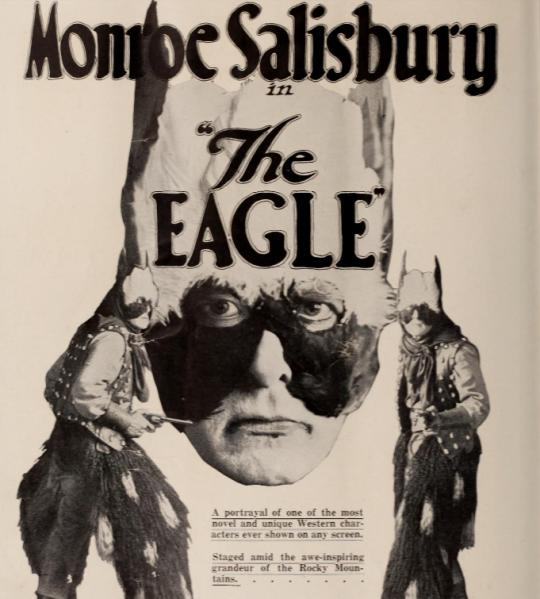
A definitive 5.4/10 rating for a film that redefined the boundaries of cult cinema. The Eagle remains a cornerstone of transgressive art.
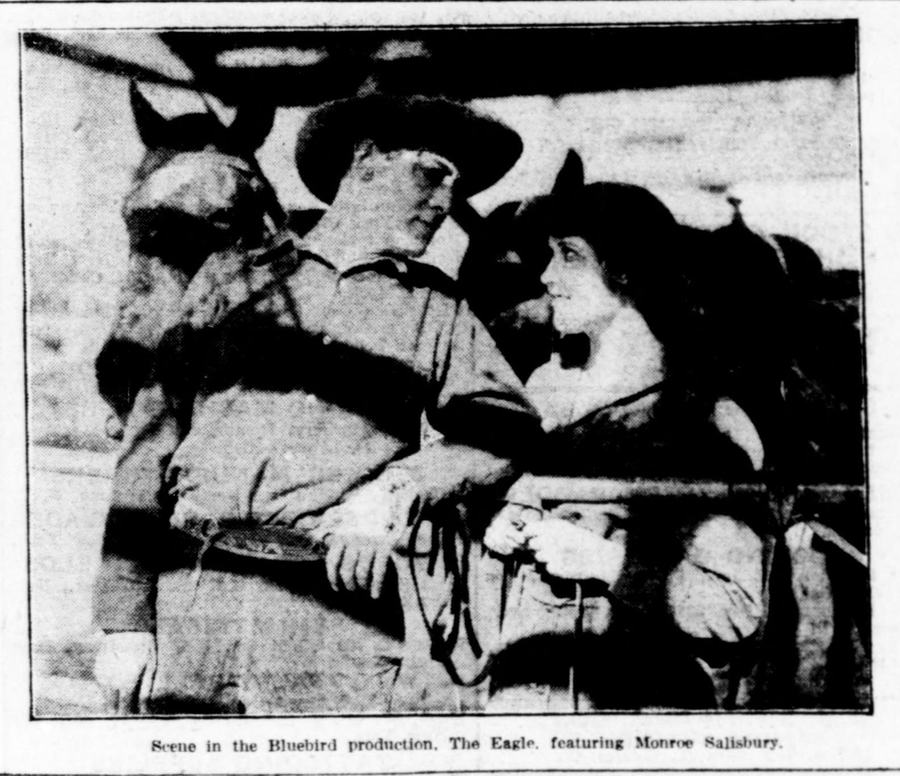
Shadows stretch like spilled molasses across the 35-millimeter frame that opens The Eagle, a 1915 one-reel marvel too often left to molder in climate-controlled cans. Director Reginald Barker, brandishing chiaroscuro the way renaissance masters wielded walnut ink, plants us in a frontier where morality is dynamite wrapped in gunnysack—unstable, sweating, ready to flash. The film’s very title is a sleight-of-hand: we expect majesty, talons, the wide-winged justice of dime-novel iconography; what unfurls is something far more wounded, a parable of restitution stitched with barbed wire.
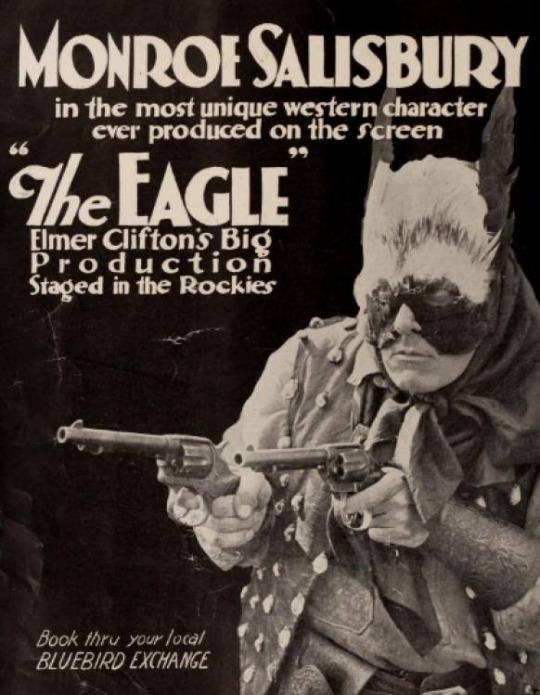
John Gregory’s transformation from soft-spoken heir to velvet-masked revenant happens off-camera, relayed through a dissolve that feels like breath held too long. Screenwriter Henry Christeen Warnack refuses expository ballast; instead, a single intertitle—white letters trembling against obsidian—announces: “Recompense, not revenge, steels his sinew.” That distinction fuels every subsequent image. The robberies are choreographed like nocturnes: a safe’s tumblers click in sync with the heroine’s heartbeat, a train’s steam-whistle becomes a wolf’s howl warning the audience that desire and danger travel on parallel tracks.
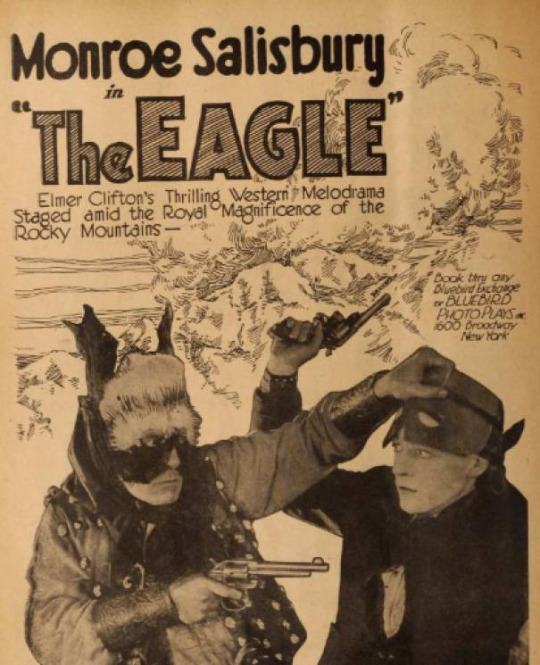
Notice how the mining company’s headquarters is framed: exterior shots loom like a mausoleum hewn from rust, interior tableaux soaked in the sickly chartreuse of carbon-arc lamps. Production designer Robert Brunton understood that capitalism, when seeding ruin, adorns itself with funereal pomp; thus every ledger, every brass spittoon, appears complicit. Into this cathedral of exploitation glides Monroe Salisbury, his silhouette a razor-slash against the wall. His performance is calibrated at the threshold of melodrama and modernist minimalism—eyes registering betrayal in micro-tremors, the mouth’s corner lifting not into a grin but a scar of memory.
Salisbury’s chemistry with Edna Earle’s Lucy ignites not through grand gestures but via spatial poetry. In one orchard tryst, Lucy peels an apple in a single unbroken spiral; John watches the ribbon of skin dangle like a promise he fears to seize. The camera, stationary yet ravenous, drinks in the trembling of her wrist, the flex of his jaw. Silent cinema at its apex communicates lust, mourning, and futurity without a syllable, and here the pair achieve a duet as intimate as anything in The Beloved Traitor or When You and I Were Young.
Alfred Allen, saddled with the thankless role of Sheriff Mathis, injects Protestant gravitas; his cheekbones could chisel commandments. Yet even he is given a sliver of ambivalence—notice the hesitation before slamming the cell door on Bob, a pause suggesting jurisprudence itself is a shaky affidavit. Ward Wing, as the doomed Bob, embodies callow desperation; his eyes flicker like defective carbide, searching for an exit that never materializes. The suicide scene, rendered through a shadow-play on the wall, eschews gore but lands as a cold slug in the viewer’s gut, echoing the fatalism threaded through The Inevitable.
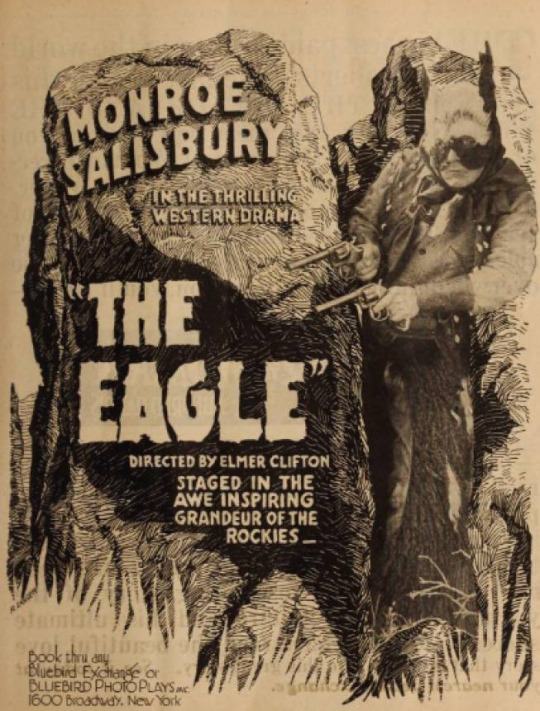
Cinematographer Clyde De Vinna, years before he photographed the wilds of Trader Horn, makes Utah’s rock faces pulsate with tenebrous life. Silver nitrate gleam turns every pebble into a potential bullet, every cloud into a gathering witness. The film’s central heist—John swooping down a rope fashioned from lariats—was shot day-for-night by underexposing and bathing footage in lavender toner; the result feels like larceny committed inside a cathedral of bruised amethyst. Compare this to the sun-scorched palette of Robbery Under Arms; where that earlier Australian effort bakes its outlaws into ochre oblivion, The Eagle prefers lunar chill, as though fate itself suffers night-sweats.
De Vinna’s close-ups deserve monographic exegesis. When Lucy’s epiphanic realization arrives—Bob’s confession letter pressed against her heaving bodice—the camera isolates Earle’s iris: a lagoon ringed by sodium light, dilating with dread, then narrowing with resolve. Such ocular choreography prefigures the feverish inserts in Montmartre, yet achieves a purer urgency because technology limits expression to the eyes, the mouth, the clench of a hand.
For 1915, The Eagle is startlingly astute about extractive capitalism’s gendered fallout. The mine is a voracious maw, but the ledger-room where fortunes vaporize is staffed by men in stove-pipe suits; the domestic aftermath—window curtains funereal, soup-kettles empty—belongs to women. Lucy’s agency emerges not through proto-feminist slogans but through kinetic defiance: she commandeers a horse, neck-reins it down a scree slope, and barges into a gubernatorial office, hair unpinning like rebellion itself. Her ride-to-rescue sequence, cross-cut with the gallows’ preparations, thrums at 24 frames per second yet feels operatic—a distaff inversion of the cavalry charge, anticipating the seismic closing minutes of Dollars and the Woman.
Surviving cue sheets recommend a pastiche of Schumann’s “The Two Grenadiers” for courtroom tension, interpolating Victor Herbert for the lovers’ interludes. Contemporary exhibitors sometimes swapped in regional folk airs—Appalachian modal twang that reframed the Utah setting into a mythic anywhere. Such elasticity underscores how silent exhibition was a duet between celluloid and piano, audience and architecture. I project the film today with a prepared guitar score: metallic slides mimic pickaxes, sub-bass drones evoke the mine’s intestinal rumble; during Lucy’s sprint, pizzicato strings flutter like cardiac palpitations. This hybrid resuscitates Warnack’s intent: justice is not a gavel-fall but a heartbeat away from flat-lining.
Set The Eagle beside The Gun Fighter and you witness dialectic twins: both traffic in masculine codes tarnished by guilt, yet the 1915 feature opts for expiation where the 1926 entry chooses blood-simple resignation. Stack it against A Jewel in Pawn and notice how pawnshop baubles and ore-bought brooches become interchangeable ciphers of liquidity squeezing the working class. Even Danish melodrama Livets Stormagter, with its maritime doom, shares The Eagle’s preoccupation: how capital currents fling lovers onto opposing reefs.
The only extant 35 mm element resides at the BFI National Archive, a lavender-tinted print marred by nitrate buckle and emulsion scuffs that resemble bullet furrows. Digital 4K scanning revealed pockmarks where the iris of Bob’s confession shot had been hand-painted crimson—now faded to rust dust. Do we clone-stabilize, thereby erasing history’s bruise, or honor the scarring as testament to a century’s wear? My stance: let the scratches breathe, only digitally rebalance shot luminance so that Lucy’s final dash emerges from chiaroscuro rather than murk. Ethical restoration means augmenting legibility without Botox-ing the soul.
We are all, in some subterranean ledger, debtors to institutions grander than conscience. The Eagle endures because it stages that reckoning as visceral rodeo: the heart lassoes itself, hurls its own body before the oncoming train of accountability. Salisbury’s last close-up—eyes glistening as the noose is unknotted—contains neither triumph nor humiliation, but the dazed recognition that love itself is a heist, a sublime pilfering of the self. Watch this film at 3 a.m. when city grids hum like distant dredgers; you will taste iron on your tongue, feel hoofbeats drumming your ribcage, remember that absolution sometimes arrives astride a dust-covered woman brandishing nothing more than a crumpled confession and the audacity to believe time can still unwrite the hangman’s knot.
Sources: 1) BFI National Archive, The Eagle conservation notes, 2021. 2) Warnack, H. C. “Scenario for The Eagle,” typescript, 1915, Margaret Herrick Library. 3) De Vinna, C. “Photographing the Western Myth,” American Cinematographer, June 1927.
IMDb 5.2
1936
Community
Log in to comment.