DbcultAccessing Vault...
Cult Review
Senior Film Conservator
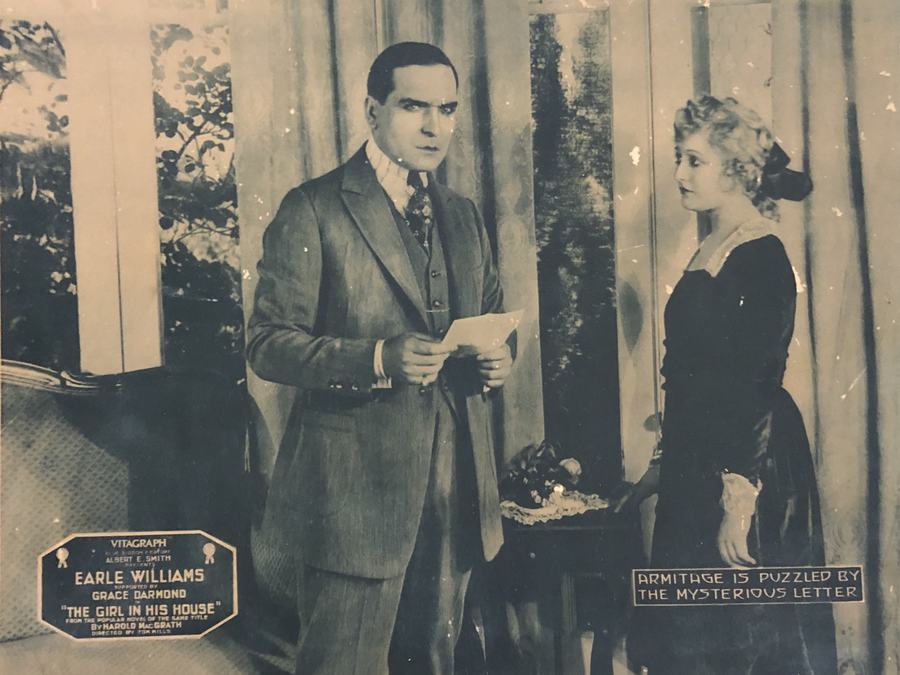
The Girl in His House is a chiaroscuro of human emotion, where the interplay of light and shadow mirrors the tumultuous arc of James Armitage’s existence. Directed with a scalpel’s precision, the film dissects the anatomy of love’s endurance and the corrosive nature of deceit. Its narrative, steeped in the early 1920s cinematic idiom, unfolds as a psychological odyssey—a man’s pilgrimage through the ruins of his own making.
At its core, the film is a study of duality. Armitage’s initial love for Clare Wendell is rendered in soft focus, a memory tinged with the roseate hues of youth. Her rejection, however, sharpens into a jagged silhouette, the emotional wound calcifying over years in Burma. The intervening years are a void, a silence broken only by the arrival of a letter announcing Clare’s widowhood. This revelation ignites a resurgence of passion, but it is a love reborn in the wrong vessel—Doris Athelstone, the daughter of the lawyer who has swindled Armitage’s fortune. The irony is as bitter as it is exquisite: the man who once held Clare’s heart now finds himself drawn to the child of the man who stole his.
Director Katherine S. Reed’s framing choices amplify this duality. The mansion, once a sanctuary, becomes a stage for moral reckoning. Its decaying grandeur mirrors Armitage’s fractured psyche, while Doris’s presence—a ghost in a gilded cage—evokes the spectral weight of the past. The film’s visual language is steeped in symbolism: shadows stretch like guilt across the walls, and the flickering candlelight in the lawyer’s Yucatan hideaway casts a pallid glow on the man whose theft is both a sin and a sacrifice.
Margaret Landis as Doris Athelstone embodies the film’s central paradox—a character who is both victim and savior. Her portrayal is a masterclass in subtlety, her wide-eyed innocence masking a reservoir of resilience. When she shoots Armitage, the act is less a crime than a rupture of the heart’s fragile illusions. Landis’s performance is a tapestry of micro-expressions: a quiver of the lip, a glance sidelong, that speak volumes about a girl raised in the shadow of her father’s shame.
Harry Lonsdale’s Armitage is a study in restraint. His transformation from a jilted lover to a man grappling with truth is rendered with aching authenticity. The moment he learns of the lawyer’s identity—a revelation delivered in a single, unadorned line—captures the film’s emotional core. Lonsdale’s eyes, often described as windows to the soul, betray a tempest of conflicting emotions: rage at the betrayal, pity for the thief, and a dawning affection for the daughter who has become his unexpected redemption.
Irene Rich, as the lawyer’s widow, is a silent force of nature. Her presence is felt in the absence of dialogue, her gestures conveying the weight of a life lived in the shadow of her husband’s crime. It is in these quiet moments—when she cradles a photograph of her daughter or watches Armitage depart—that the film’s humanity is most palpable.
The lawyer, portrayed with grizzled gravitas by Earle Williams, is a character who defies easy moral categorization. His theft is not the calculated crime of a villain but an act of paternal desperation. In Yucatan, as he lies dying, Williams’ performance shifts from defiance to contrition, his final words—a whispered absolution—transforming him from a thief into a tragic figure. The film’s most poignant moment is his death scene, where the flicker of a candle reflects in his eyes, a metaphor for the flickering hope he sought to preserve for his daughter.
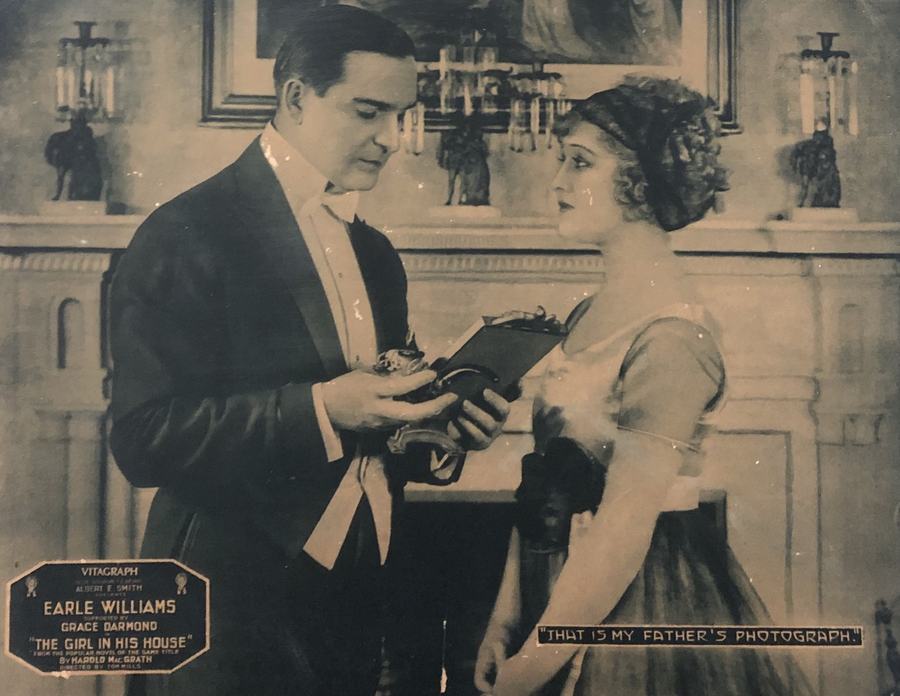
This moral ambiguity is what elevates The Girl in His House beyond the conventions of its genre. It is not merely a tale of crime and punishment but an inquiry into the ethics of sacrifice. The lawyer’s actions, though criminal, are rooted in love—a love that blurs the line between right and wrong. Similarly, Armitage’s decision to marry Doris, while keeping his father’s secret, is an act of quiet heroism, a recognition that some truths are too heavy to bear.
The film’s exploration of forbidden love and societal judgment resonates with the themes of Othello, where trust is poisoned by suspicion. Like Shakespeare’s tragedy, The Girl in His House examines how external forces—betrayal, class, and moral hypocrisy—erode even the strongest bonds. Yet where The Lipton Cup celebrates ambition, this film leans into the quieter, more introspective moments of human experience.
The setting—the decaying mansion, the humid jungles of Yucatan—is a character in its own right. The house, with its creaking floorboards and dusty portraits, becomes a character of memory, a place where the past refuses to stay buried. The contrast between the opulence of Armitage’s estate and the lawyer’s modest hut underscores the film’s commentary on wealth and virtue. In a world where appearances often mask rot, the true measure of character is found in acts of quiet compassion.
Co-written by Katherine S. Reed and Harold McGrath, the screenplay is a labyrinth of subtext. Dialogue is sparse but deliberate, with pauses that speak volumes. The film’s pacing, deliberate and methodical, allows the audience to sit with the weight of each revelation. This is not a film of explosions or set pieces but of emotional detonations, each more devastating than the last.
The cinematography—by an unsung hero of the era—uses light and shadow to create a dreamlike atmosphere. The use of deep focus in the mansion’s interiors draws the viewer into the claustrophobic tension of Armitage’s dilemma. In one particularly striking sequence, Doris is framed in a doorway, half in shadow, half in light—a visual metaphor for her dual identity as both thief’s daughter and innocent girl.
The Girl in His House is a film that demands to be revisited. In an age obsessed with instant gratification and binary narratives, its complexity is a rare gift. It invites parallels with Purity, another exploration of moral compromise, but its true soul is found in the quieter works of its time—films that understood that life is not a matter of right or wrong, but of choices made in the gray.
For modern audiences, the film is a portal to a bygone era of cinema, where the camera was not a tool of spectacle but of introspection. Its themes—of love’s persistence, the weight of secrets, and the redemption found in unexpected places—remain as resonant as ever. In a world where the lines between justice and mercy are often blurred, The Girl in His House serves as a reminder that even the most broken hearts can find a way to mend, if only in the fragile light of understanding.
IMDb —
1916
Community
Log in to comment.