DbcultAccessing Vault...
Cult Review
Senior Film Conservator
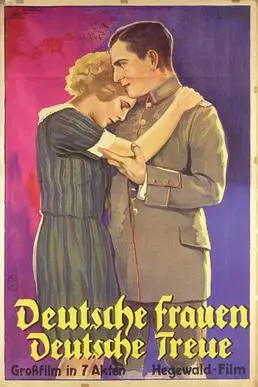
Is 'Deutsche Frauen - Deutsche Treue' worth watching today? Short answer: yes, but with significant caveats that demand a discerning and historically informed viewer. This isn't a film for passive entertainment; it's a challenging, often perplexing, artifact.
This film is unequivocally for those with a keen interest in cinematic history, the evolution of nationalistic narratives, and the societal roles assigned to women in early 20th-century Germany. Conversely, it is absolutely not for viewers seeking a modern, character-driven story, nor for those unprepared to engage with potentially uncomfortable historical ideologies.
To approach 'Deutsche Frauen - Deutsche Treue' critically is to engage with a film that existed at the confluence of art, social commentary, and, likely, burgeoning political sentiment. Understanding its context is paramount. It’s not merely a film; it’s a document, a product of its time that reflects certain cultural aspirations and anxieties.
The film’s very title, 'German Women - German Loyalty,' immediately flags its thematic intent. This isn't a subtle exploration of individual psychology or complex interpersonal dynamics. Instead, it’s a broad strokes painting, designed to elevate and enshrine specific virtues. The challenge for a modern viewer is to look beyond the didacticism and appreciate the cinematic craft, however ideologically charged it may be.
This film works because it offers an unvarnished window into a specific historical mindset, showcasing how cinema was utilized to construct and reinforce national identity and gender roles. Its success lies in its stark clarity of purpose, leaving little ambiguity about its message.
This film fails because its thematic rigidity often overshadows nuanced storytelling and character development, reducing individuals to archetypes rather than complex human beings. The artistic merit, while present, is frequently subservient to its ideological agenda, making for a less universally engaging experience.
You should watch it if you are a student of history, film studies, or cultural anthropology, eager to dissect the cinematic techniques used to propagate social and political ideals. It’s a compelling case study, even if its content can be challenging.
The film’s central theme—loyalty—is explored through the lens of 'German women,' a concept laden with cultural and, eventually, political significance in the early 20th century. This wasn't just about personal fidelity; it was about loyalty to family, community, and ultimately, the nation. The narrative, as inferred, likely presents a series of vignettes illustrating these virtues, each segment building upon the last to create a cohesive, if somewhat heavy-handed, ideological statement.
One can imagine scenes depicting a mother's steadfastness in the face of hardship, a daughter's dedication to tradition, or a community's collective spirit embodied by its female figures. These weren't intended as mere stories but as parables, designed to instruct and inspire. The film operates on a symbolic level, often prioritizing the message over the individual plight of its characters. This makes it a fascinating, if sometimes frustrating, piece for modern analysis.
The casting, featuring actors like Eugen Neufeld and Hermine Sterler, suggests a reliance on established performers capable of conveying gravitas and archetypal strength. Their presence would lend a certain authority to the film's moral pronouncements, grounding the abstract ideals in recognizable human forms, even if those forms were ultimately symbolic rather than deeply personal.
"'Deutsche Frauen - Deutsche Treue' is less a narrative and more a cinematic argument, a visual thesis on the virtues it seeks to define and elevate within a specific national identity."
The writers, Arthur Irrgang and Marie Luise Droop, would have been tasked with translating these abstract concepts into a digestible, emotionally resonant form. This is no small feat, especially in an era where cinematic language was still evolving. Their approach likely involved clear, unambiguous symbolism and straightforward character arcs, ensuring the message was never lost in complexity.
The direction of 'Deutsche Frauen - Deutsche Treue' would have been critical in shaping its impact. Given its thematic weight, one can infer a directorial approach that leaned towards the majestic and the didactic. Sweeping shots of pastoral landscapes juxtaposed with intimate, almost reverential close-ups of the female protagonists' faces would likely be employed to underscore their connection to the land and their inherent dignity.
Consider, for instance, a scene where a woman, perhaps played by Sophie Pagay, gazes out over a field, her expression a mix of resilience and quiet determination. The camera would hold on this shot, allowing the audience to project onto her the collective ideals of strength and loyalty. This visual rhetoric is far more potent than any dialogue, especially in a film from this period.
The pacing, too, would serve the film's purpose. It's unlikely to be brisk or action-packed. Instead, a deliberate, almost meditative rhythm would allow the audience time to absorb the symbolic weight of each scene. This slow burn, punctuated by moments of emotional intensity, would contribute to the film’s overall solemn and respectful tone. It's a style that demands patience, rewarding those who are willing to immerse themselves in its specific aesthetic and message.
The use of light and shadow, characteristic of early German cinema, would also play a crucial role. Stark contrasts might be employed to highlight moral choices or to imbue figures with an almost sculptural quality, elevating them beyond the mundane. Imagine Hermine Sterler, her face half-lit, embodying an unwavering resolve; such imagery would be less about realism and more about idealization.
The cast of 'Deutsche Frauen - Deutsche Treue' would have been tasked with embodying ideals rather than merely portraying characters. Actors like Fritz Kampers and Adele Sandrock, seasoned performers of their era, would bring a certain gravitas and stage presence to their roles. Their performances would likely be less about subtle psychological nuance and more about conveying strong, clear emotions and archetypal positions.
Helga Thomas and Geza L. Weiss, among others, would contribute to a collective portrayal of German society. Their interactions, whether as family members, community figures, or symbolic representations, would be carefully orchestrated to reinforce the film's central tenets. A poignant example might be a scene where a young woman, perhaps played by Solveig Hedengran, makes a difficult choice driven by loyalty, her internal struggle conveyed through expressive facial gestures rather than extensive dialogue, a hallmark of silent or early sound cinema.
The ensemble nature of the cast suggests a focus on the collective rather than individual stardom. While certain actors might have more screen time, the overall impression would be one of a unified societal fabric, with each character playing a vital, symbolic role in illustrating the different facets of 'German loyalty.' It’s a testament to their craft that they could imbue these archetypes with enough humanity to resonate, even within a highly structured ideological framework.
The visual language of 'Deutsche Frauen - Deutsche Treue' would be paramount in conveying its message. Early German cinema often excelled in creating evocative atmospheres through sophisticated lighting and composition. One can envision a visual style that balances realism with a touch of romantic idealism, painting a picture of a virtuous and steadfast Germany.
The use of deep focus, allowing multiple planes of action or symbolism to be visible simultaneously, could draw parallels between the individual's actions and the broader national narrative. For instance, a domestic scene might subtly include a national symbol in the background, linking the private sphere to the public ideal. This kind of visual layering is sophisticated and speaks to a deliberate artistic choice.
Color, if present through tinting or toning, would also contribute to the emotional landscape. Sepia tones might evoke a sense of tradition and timelessness, while specific color washes could highlight moments of joy, sorrow, or national pride. Such choices are not merely decorative; they are integral to the film’s persuasive power, guiding the audience's emotional response.
Compared to a film like Return to Reason, which pushed abstract visual boundaries, 'Deutsche Frauen - Deutsche Treue' would likely employ a more conventional, yet still artistic, approach to cinematography. Its goal isn't to deconstruct reality but to construct an idealized version of it, making its visual choices serve a clear, representational purpose.
The pacing of 'Deutsche Frauen - Deutsche Treue' would likely be deliberate, perhaps even stately. This is not a film designed for quick consumption but for thoughtful contemplation. Each scene, each vignette, would be given ample time to unfold, allowing its symbolic weight to settle with the audience. This slow, measured rhythm is characteristic of many films from this era, particularly those with serious dramatic or didactic intentions.
The tone would oscillate between solemn reverence and quiet inspiration. Moments of adversity would be met with stoicism, while moments of triumph would be understated, emphasizing inner strength over outward exuberance. The film aims to evoke a sense of deep respect for its subjects and their virtues, fostering a collective pride rather than individualistic celebration.
Emotional impact would be carefully managed. Instead of sudden shocks or melodramatic outbursts, the film would build its emotional resonance through accumulation: repeated examples of loyalty, quiet sacrifices, and unwavering resolve. This cumulative effect is designed to leave the audience with a profound sense of the virtues being extolled. It works. But it’s flawed.
It’s easy for modern viewers, accustomed to faster cuts and more overt emotional cues, to find this pacing challenging. But to truly appreciate 'Deutsche Frauen - Deutsche Treue,' one must surrender to its rhythm, allowing its carefully constructed atmosphere to take hold. It requires a different kind of engagement, one that rewards patience and an understanding of its historical context.
Yes, for very specific reasons.
It's a significant historical document.
It showcases the acting and directing styles of its era.
It's not for casual viewing.
It demands critical engagement.
Approach it as a historical artifact, not just entertainment.
'Deutsche Frauen - Deutsche Treue' is not a film to be enjoyed casually. It is a cinematic relic, a powerful testament to the ways in which film was harnessed to shape national identity and reinforce societal norms. Its value lies not in its ability to entertain in a contemporary sense, but in its capacity to provoke thought, to illuminate a historical moment, and to serve as a cautionary tale about the intersection of art and ideology. While its slow pace and archetypal characters might deter many, its importance as a cultural artifact is undeniable. It demands engagement, critical distance, and a willingness to understand the past, however uncomfortable it may be. Watch it if you dare to confront history through a challenging, yet illuminating, lens. Skip it if you prefer your cinema to be an uncomplicated escape. My strong opinion is that ignoring such films is a disservice to understanding media's historical power. It’s a crucial piece, even if it’s a difficult one. I found moments of genuine artistic merit, particularly in its visual storytelling, often overshadowed by its undeniable, heavy-handed messaging. It’s an acquired taste, perhaps, like an antique that reveals more about its past than its present utility.
IMDb 6.8
1933
Community
Log in to comment.