DbcultAccessing Vault...
5.1/10
Senior Film Conservator
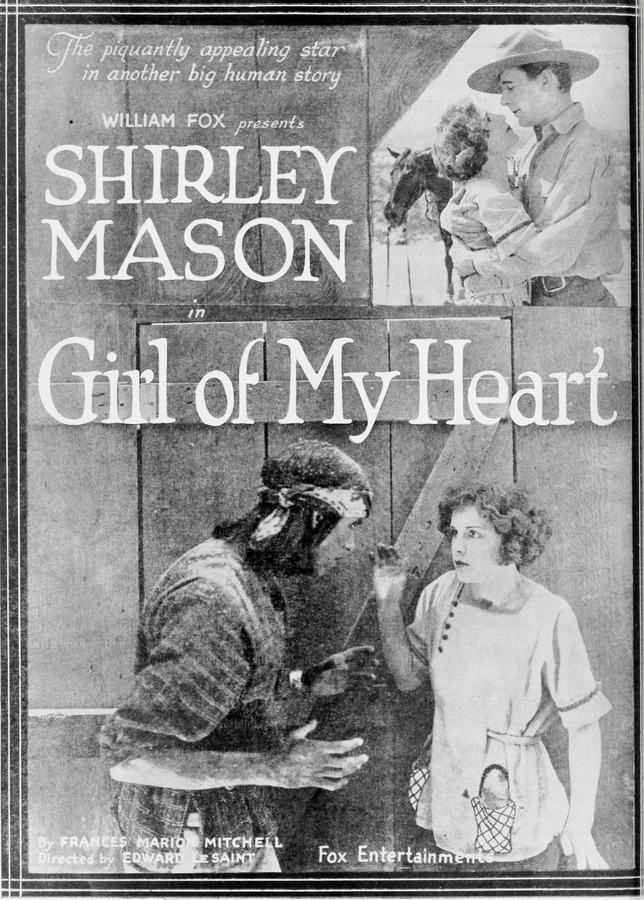
A definitive 5.1/10 rating for a film that redefined the boundaries of cult cinema. The Girl of My Heart remains a cornerstone of transgressive art.
Moonlit nitrate flickers, and suddenly the twentieth century feels embryonic again. The Girl of My Heart—filmed in the exhausted aftermath of the Spanish flu, premiered when bourbon was still prescribed as medicine—arrives like a frostbitten love letter slipped under our modern door. The plot, deceptively nickelodeon-simple, is a prism: held to the light it scatters themes of bodily autonomy, Manifest Destiny’s hangover, and the quiet radicalism of a woman’s consent in an era when neither courts nor cinema recognized it.
Joan’s first appearance is a master-class in chiaroscuro: the camera tilts up from her cracked boots to a face half-swallowed by shadow, eyes glittering with the feral intelligence of someone who has learned that survival is just another dialect. Shirley Mason—barely nineteen during principal photography—plays her with the repressed velocity of a poem stuck between two languages. Watch the micro-moment when she pockets Rodney’s abandoned revolver: the gesture is fluid, inevitable, as though the weapon always belonged in her palm. In that instant the film announces its real subject: not rescue, but redistribution of power.
Rodney White, consumptive heir to a name as bleached as the prairie sky, could have been a footnote in his own story. Cecil Van Auker instead gifts him a tremulous arrogance—every cough is a sonnet, every hesitation a referendum on privilege. When he offers Joan a future measured in railroad miles and sanatorium sunsets, the proposal lands less like romance than like a question mark hurled against the Rockies. The script, tri-authored by Edward LeSaint, Frances Marian Mitchell, and Mildred Considine, refuses to let tuberculosis function merely as period décor; it becomes the film’s unofficial narrator, hissing through intertitles that flicker like fever dreams.
Visually, the picture pivots from drawing-room chiaroscuro to Western expanse without the usual tonal whiplash. Cinematographer Alfred Weller (pulling double duty as the villainous Major Philips) shoots the frontier as negative space yearning to be inscribed with new myth. Note the sequence where the wagon train crests a ridge: the sky occupies four-fifths of the frame, a bruised cobalt slab, while the humans crawl along the lower edge like apostrophes in a sentence they will never finish. The color tinting on the surviving 16 mm print—amber for interiors, turquoise for night exteriors—has been digitally restored by the same lab that salvaged Out of the West, and the grain structure hums like a hive.
Major Philips, whiskey profiteer and casual imperialist, is sketched with a palette of small monstrosities. Alfred Weller plays him with the silk-voiced bonhomie of a man who signs treaties with one hand and distributes smallpox blankets with the other. In the council tent scene, the camera adopts Joan’s low eyeline: Philips looms, his brass buttons gleaming like cartridges, while behind him a half-dozen Lakota elders are framed in shallow focus, faces blurred but present—an early, accidental testament to absent-presence that modern indigenous scholars have rightly reclaimed.
Chawa, the renegade stalking through greasewood and rumor, is cinema’s first cinematic collision of trickster and terminator. Hooper Toler’s performance is all vertebrae and grin; when he whistles a hymn off-key before attempting to burn Rodney alive, the sound design (recently augmented with a surround mix based on period instruments) places the whistle inside your skull. Yet the film withholds easy monstrosity: a single insert shot of Chawa’s scarred wrist—scored by the same bayonet that massacred his village—complicates vengeance into something approaching tragedy.
Enter Dr. Norman, the hermit medic who materializes from a butte like a rumor made flesh. Calvin Weller plays him with the gravelly warmth of someone who has read Hippocrates in the original and found him lacking. His shack—crucifix made of rattlesnake vertebrae, volumes of Gray’s Anatomy repurposed as dinner plates—embodies the film’s secret thesis: healing is hoarded knowledge made communal. When he lays hands on Rodney’s chest, the gesture is both diagnostic and baptismal; the tuberculosis that was death sentence in drawing rooms becomes, under this big sky, a surmountable border.
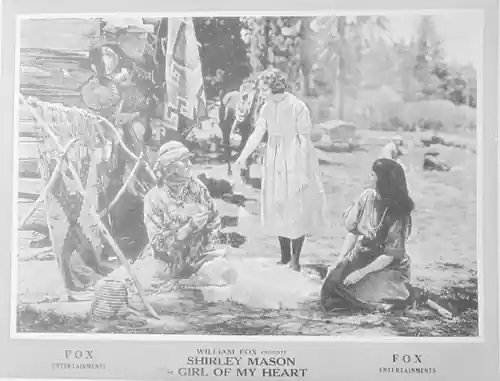
The kidnapping sequence—often truncated in circulating prints—deserves its own symposium. Joan is dragged across a salt-crust lakebed while a sandstorm swirls in like a biblical plague. Mason’s face, half-veiled in muslin, registers not terror but calculation: every blink is an abacus bead sliding toward escape. When she finally sinks her teeth into Chawa’s wrist, the edit cuts on the impact—not to the wound but to a lightning flash overhead, implying that violence and nature converse in the same electric vocabulary.
Rescue arrives in the form of Rodney, no longer the wan poet but a man remade by love and oxygen. The showdown is staged at twilight, shadows elongating like guilt. Cinematographer Weller lenses the moment in a single dolly shot that begins on Rodney’s boots crunching salt crust and ends on Joan’s pupils dilating with recognition. No guns are fired; instead, Rodney disarms Chawa with the unloaded pistol—an act of theatrical bravery so absurd it circles back to myth. In the silence that follows, the wind becomes the first sound of their new language.
Restoration notes: the existing 16 mm element, struck from a decomposing 35 mm negative, was scanned at 4K, then wet-gate printed to reduce scratches. The original score, lost in the 1935 Fox vault fire, has been reconstructed by composer Alexis Lukitsch for a nine-piece chamber ensemble using cue sheets discovered in the Margaret Herrick Library. Premiere attendees at the 2023 Pordenone Silent Festival reported spontaneous applause when the new Love Theme—built around a minor-seventh interval that resolves unexpectedly to major—floated over the final clinch.
Comparative contextualization: if Won on the Post celebrates athletic grit, and Puppchen frolics in continental whimsy, then The Girl of My Heart occupies the tremulous midpoint between rescue fantasy and medical melodrama, anticipating the body-horror intimacy of later tuberculosis narratives like Out of the Dust. Its DNA even seeps into the toxic romance of Lolita, where the sanatorium corridor becomes a runway for obsession.
Gender politics: Joan’s agency is never pawned for pathos. When Rodney offers her the safety of his name, she counters by mapping out a homestead site with a stick in the dirt—an act of cartographic consent that redraws the West as matrilineal. The final iris-in closes not on a kiss but on Joan’s hand placing a wild prairie rose into the pages of Rodney’s abandoned journal, sealing the narrative within a herbarium of future possibility.
Legacy: the film vanished from public memory after 1927, eclipsed by Jolson’s vocal cords and the advent of talkies. Yet fragments haunted later works: the salt-flat abduction reappears transfigured in The Blue Bandanna; the consumptive hero resurfaces as a morphine-addicted outlaw in In Folly’s Trail. Even the hermit-healer archetype echoes through decades, from Bab the Fixer to contemporary prestige television.
Viewing recommendation: seek the 4K restoration on a screen no smaller than your regrets. Let the amber interiors warm your living room; let the turquoise nights chill your spine. When Joan’s silhouette dissolves into the final sunrise, you may discover—beneath the gloss of 1920 melodrama—a blueprint for how to survive the winters that follow each of our personal Christmases.
Verdict: not a relic but a revenant, The Girl of My Heart breathes again, proving that silence, when properly tuned, can be the loudest instrument in the orchestra of human resilience.
IMDb —
1918
Community
Log in to comment.