DbcultAccessing Vault...
Cult Review
Senior Film Conservator
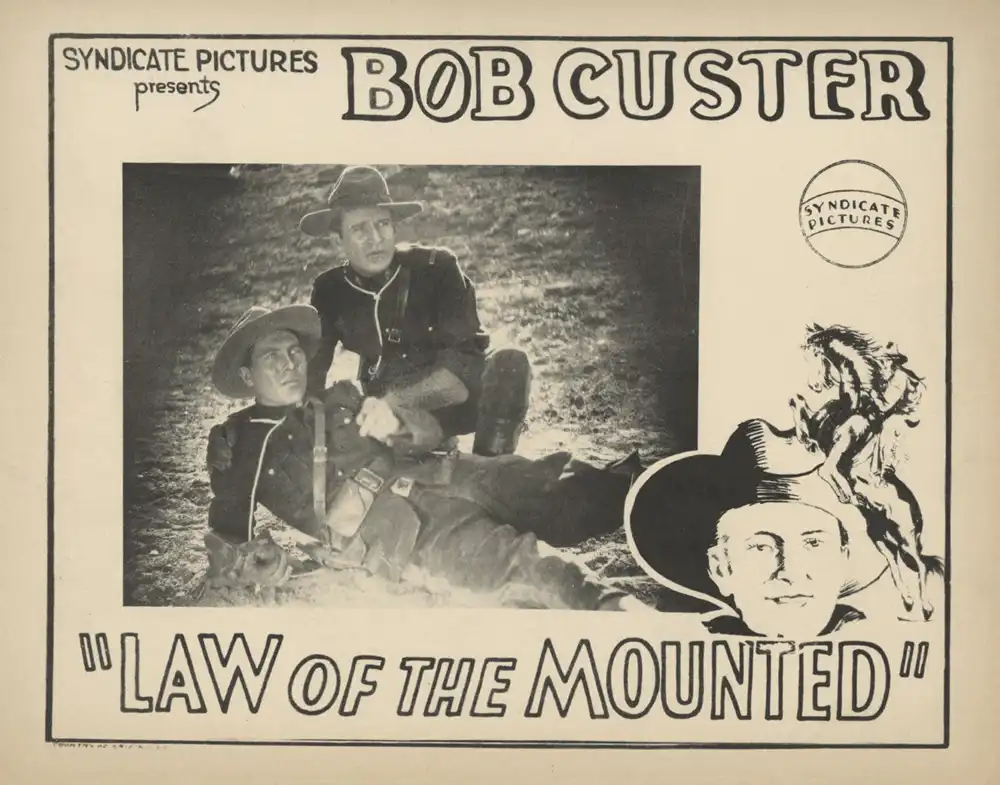
If you’re looking for a lost masterpiece of the silent era, keep looking. The Law of the Mounted is really only for people who can’t get enough of 1920s B-westerns or anyone who finds the Royal Canadian Mounted Police aesthetic inherently funny. It’s a 1928 programmer that feels like it was shot in about three days, mostly because the director, J.P. McGowan, was also playing the villain. It's the kind of movie you put on when you want to see how the genre functioned before it got self-conscious.
Bob Custer has this very specific way of standing. He’s the hero, but he looks incredibly uncomfortable in his uniform, like the wool is making him itch every second he’s on screen. There’s a scene early on where he’s looking for the fur thieves, and he just stares at a patch of dirt with such intense confusion that you wonder if he’s forgotten his lines—except, of course, it’s a silent movie and there are no lines to forget. He just has a very blank, heavy face that doesn't always communicate 'justice' so much as 'I wonder when lunch is.'
The plot is one of those 'two birds with one stone' situations that only happens in movies like this. Custer is after fur thieves, but wait, the head thief is also the guy who killed someone in a completely different case Custer was working on! What are the odds? It makes the world feel about the size of a postage stamp. It’s a bit like The Phantom Bullet in how it relies on these massive leaps of narrative convenience to get the job done in under an hour.
I noticed the hats. The Mountie hats in this movie are surprisingly pristine given how much these guys are rolling around in the dirt. At one point, during a fight scene with Cliff Lyons, Custer’s hat stays on way longer than physics should allow. It’s distracting. You stop watching the punches and start betting on the chin strap. The fights themselves have that frantic, slightly sped-up quality common in films like The Speed Boy. It’s less like a brawl and more like a very aggressive dance where everyone is worried about breaking the furniture.
The scenery is supposed to be the Canadian wilderness, but it’s very clearly the same California hills we see in The Man in the Saddle. There’s a shot where the light hits the dust behind the horses as they gallop through a clearing, and for about four seconds, the movie actually looks beautiful. Then it cuts back to a medium shot of McGowan looking mean, and the spell is broken. The grain of the film is heavy here, almost like you're watching the movie through a screen door.
McGowan is actually the best thing in it. He’s got this heavy, tired face that suggests he’s seen way more than the script is letting on. He’s much more interesting to watch than Custer, who mostly just looks like he’s posing for a recruitment poster. McGowan directs himself with a certain economy; he knows he’s the bad guy, he does the bad things, and he doesn't waste time with a lot of theatrical flourishing.
There’s a weird bit of editing near the middle. We see a woman, Mary Maybery, looking out a window. Then we cut to the horses. Then back to her. She doesn’t change expression. It feels like they had ten feet of extra film and just decided to stick her in there to remind us there’s a female lead, even though she has almost nothing to do with the actual fur-thieving plot for long stretches.
It’s not a long movie, which is its greatest strength. It gets in, does its business with the furs and the murder, and gets out. If you’ve seen The Three Godfathers, you know how these moralistic westerns can drag when they try to be 'important.' This one doesn't have time to drag. It just sort of happens and then it’s over. It’s an artifact of a time when you could just throw a guy in a red coat, give him a horse, and call it a day's work. It's not great, but it's honest about what it is.
IMDb —
1924
Community
Log in to comment.