DbcultAccessing Vault...
6/10
Senior Film Conservator
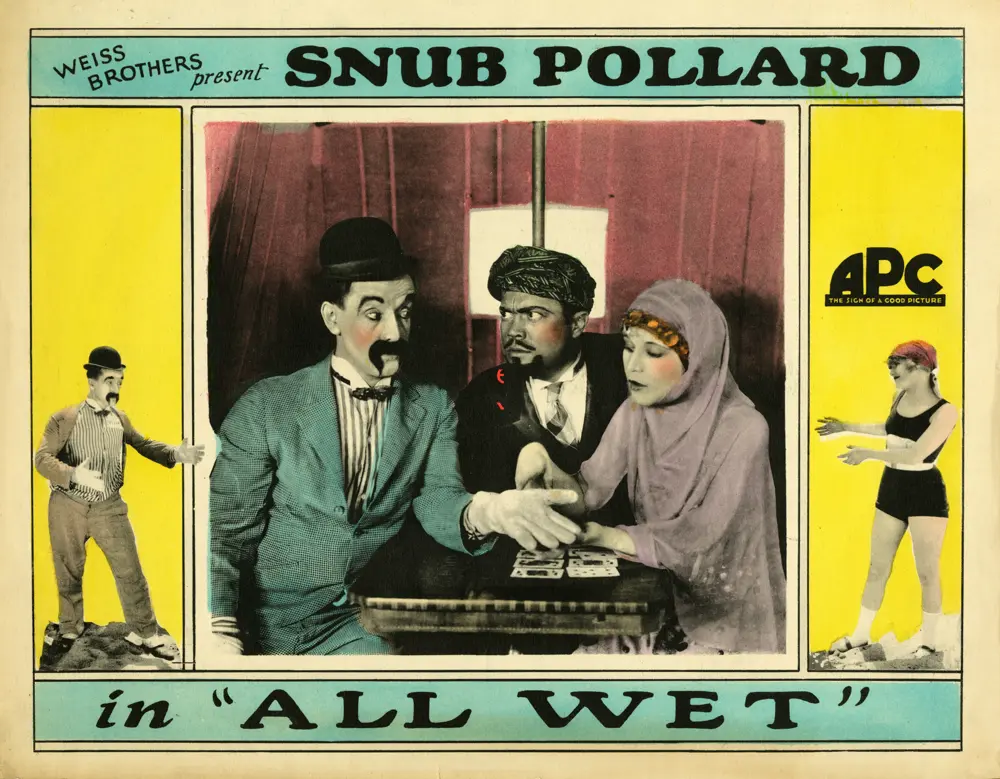
A definitive 6/10 rating for a film that redefined the boundaries of cult cinema. All Wet remains a cornerstone of transgressive art.
Is All Wet a lost masterpiece of the silent era? Short answer: No, but it is a fascinating, frantic time capsule that captures the transition of slapstick from pure chaos to character-driven satire.
This film is for the silent cinema completionist and fans of the Hal Roach aesthetic who want to see the DNA of modern 'fish out of water' comedies. It is absolutely NOT for those who demand high-definition pacing or have no patience for the broad, pantomime-style acting of the 1920s.
1) This film works because it leverages 'Snub' Pollard’s unique physical geometry—his droopy moustache and slight frame—to make him a believable victim of high-society greed.
2) This film fails because it relies on a highly predictable 'oil inheritance' plot point that was already a cliché by 1926, lacking the structural innovation found in his contemporary Harold Lloyd’s work.
3) You should watch it if you want to see a master of vaudeville transition into a sophisticated two-reeler that bridges the gap between the rough-and-tumble shorts like The Duck Hunter and the more polished features of the late silent period.
Snub Pollard was never the athlete that Buster Keaton was, nor was he the everyman hero that Harold Lloyd perfected. Instead, Pollard was a comic of the 'little man' variety, though with a distinctly Australian edge of cynical bewilderment. In All Wet, his performance is a masterclass in reactionary acting. Watch the scene where he first enters his aunt’s parlor; his hands are never still, constantly adjusting a hat that doesn't fit or smoothing out a suit that looks borrowed. It is a performance of perpetual discomfort.
Unlike the broad slapstick seen in Golf, where the humor is purely physical, All Wet attempts a more psychological brand of comedy. Pollard isn't just falling down stairs; he is falling down the social ladder. The way he looks at the vampish Cleopatra—with a mix of terror and misplaced rural gallantry—shows a level of nuance that many critics often overlook in his earlier, more aggressive shorts. He is a man out of time and out of place, and Pollard sells that alienation with every twitch of his lip.
The physical gags are tightly choreographed, a hallmark of the Roach studio. There is a specific moment involving a tea service where Pollard’s attempt to be 'refined' results in a catastrophic failure of physics. It’s a simple gag, but the timing is surgical. It reminds me of the chaotic energy in Too Much Married, but with a more grounded, domestic setting that makes the failure feel more personal and, consequently, more humorous.
The introduction of Cleopatra, the 'vamp' cousin, is where the film finds its satirical teeth. The 1920s were obsessed with the idea of the 'gold digger,' and All Wet leans into this with zero subtlety. Thelma Daniels plays the role with a predatory grace that contrasts sharply with Pollard’s bumbling. When the news of the oil well breaks, the shift in the room's atmosphere is palpable, even through the grainy 35mm stock. The way the flappers swarm him is filmed like a school of sharks surrounding a wounded seal.
This is a cynical film. It suggests that the only thing that makes a 'hick' palatable to high society is the smell of petroleum. This theme was common in films like She Couldn't Help It, but here it feels more biting because Pollard is so clearly unequipped to handle the attention. He isn't a secret genius; he is just a lucky man with a moustache. The film doesn't reward his character for being smart; it rewards him for being rich, which is a surprisingly honest take for a silent comedy.
The 'Cleopatra' character is more than just a plot device. She represents the 'New Woman' of the era, but through a lens of traditionalist anxiety. She is independent, aggressive, and entirely motivated by self-interest. When she leans in to 'seduce' Pollard near the film's climax, the camera stays on her face, capturing a look of calculation that is genuinely chilling for a comedy. It’s a small, specific detail that elevates the film above standard slapstick fare.
The direction in All Wet is invisible in the best way. It follows the standard Roach grammar: wide shots for the setup, medium shots for the reaction, and close-ups for the punchline. However, the pacing is what sets it apart. Unlike the slower, more deliberate pacing of Lily of the Dust, All Wet moves with a frantic, almost desperate speed. It knows it only has a limited runtime to tell its story, and it doesn't waste a frame.
The cinematography by the Roach regulars is functional but effective. Note the use of depth in the aunt’s mansion. They often place Pollard in the background, a small, dark figure against the white, opulent walls of the 'big city.' This visual storytelling does more to convey his isolation than any intertitle could. It’s a technique we see used more dramatically in films like Black Friday, but here it serves a comedic purpose.
The transition between the rural prologue and the city main act is handled with a simple but effective montage. The 'hick' world is dusty, sun-drenched, and open. The city world is cluttered, interior, and claustrophobic. This visual dichotomy reinforces the culture clash. It’s not just that Pollard is a different kind of person; he is from a different kind of world. This is a film that understands its setting is just as much a character as the actors.
If you are looking for a laugh-a-minute riot, you might find All Wet a bit dated. However, if you are looking for a window into the evolution of screen comedy, it is essential. It represents the moment when silent comedy started to grow up, moving away from the 'man gets hit with a board' style of A Milk Fed Hero toward something that resembles a modern sitcom. It’s a short, sharp shock of 1920s cynicism wrapped in a coat of slapstick paint.
Pollard himself is the reason to stay. He was a staple of the era for a reason. He didn't have the ego of the major stars, which allowed him to be the butt of the joke in a way that felt authentic. In All Wet, he is at the peak of his powers. He is vulnerable, funny, and strangely relatable. Even when the plot becomes absurd, Pollard remains grounded in his own confusion.
Pros:
Cons:
All Wet is a solid, professional piece of silent entertainment. It doesn't reinvent the wheel, but it rolls it very effectively. Snub Pollard remains one of the most underrated figures of the 1920s, and this film is a testament to why he was able to maintain a career for nearly fifty years. It is a cynical, funny, and visually competent short that manages to say more about the American Dream in twenty minutes than many modern features do in two hours. It works. But it’s flawed. Yet, the flaws are part of its charm. If you can handle the crackle of old film and the silence of the medium, All Wet will leave you anything but dry.
IMDb 4.8
1928
Community
Log in to comment.