DbcultAccessing Vault...
6.8/10
Senior Film Conservator
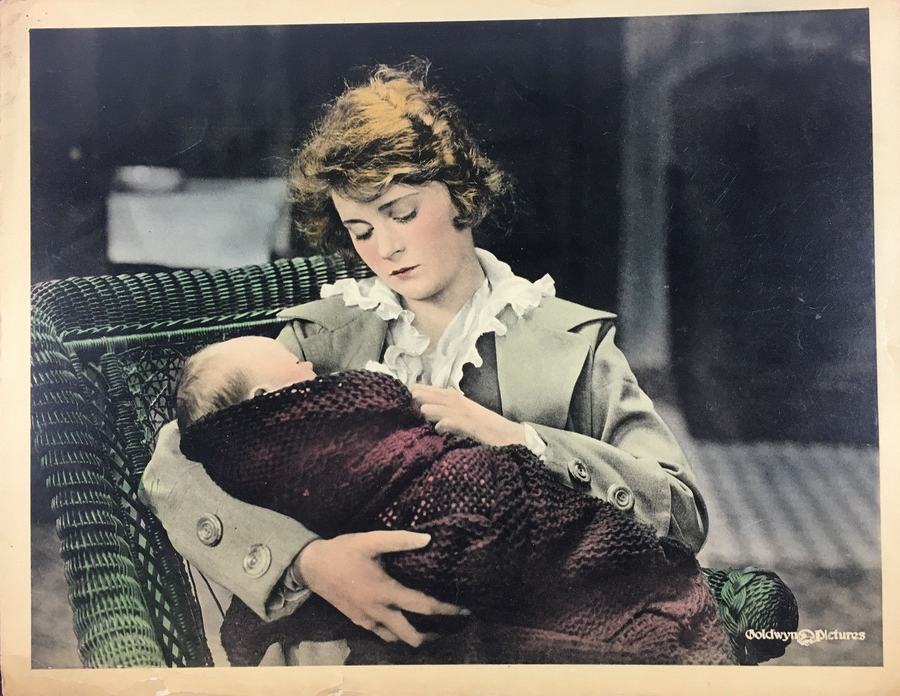
A definitive 6.8/10 rating for a film that redefined the boundaries of cult cinema. The Glorious Adventure remains a cornerstone of transgressive art.
I first encountered The Glorious Adventure the way most cinephiles stumble upon ghosts: a 9.5 mm Pathé stencil-tinted reel mislabeled as “Southern Romance Comedy” in a Parisian boîte’s bargain bin. One look at the opening shot—moths circling a chandelierscape of tallow and tarnished brass—and I felt the unmistakable chill of a film that should not exist anymore, yet does, flickering like a will-o’-the-wisp between two irreconcilable Americas.
Director William C. deMille (yes, Cecil’s lesser-known but arguably more cerebral sibling) commences with a sustained iris-in on the Wethersbee portico: a colonnade whose white paint peels like sunburn on an albino. Inside, time has ossified. Aunt Lucretia (Irene Blackwell, under lace so brittle it crackles) rehearses the rituals of 1859 as though the Union blockade were still a rumor. The camera glides past portrait miniatures, candle-mold, a spinet tuned to Stephen Foster—every prop a memento mori. The effect is not moonlight-and-magnolia sentiment but a séance where the living refuse to vacate for the dead.
Carey—embodied by Mabel Ballin with porcelain cheekbones that read like cameo relief—glides through these tableaux wearing mourning crape yet exuding the unspent vitality of someone who has never metabolized defeat. Notice how deMille blocks her against shuttered windows: bars of shadow fracture her face, presaging the industrial cages she will soon enter. This is silent-film grammar at its most eloquent: no intertitle can match that diagonal lattice of light telling us she is already imprisoned by heritage.
Cut to a locomotive thundering across the Potomac at dusk. Cinematographer L. Guy Wilky swaps the amber gels of plantation interiors for a blue-steel palette that anticipates film noir by two decades. Carey’s veil whips against the window like a flag of surrender inverted. Upon arrival, the town’s skyline is a jagged silhouette of smokestacks—an American Gesamtkunstwerk forged in soot. Compare this visual breach to the soot-clogged fishing village in Op hoop van zegen or the clammy factory yards of Germinal; or, The Toll of Labor: where those European tragedies wallow in proletarian determinism, deMille frames industrialization as culture-shock therapy for a Confederate relic.
Enter Hiram Ward essayed by Wyndham Standing with the stiff rectitude of a New England deacon who has read too much Horatio Alger. His first reaction to Carey’s uninvited arrival is a masterwork of microgesture: eyelids flutter like a cash-register drawer slammed shut. Yet his friends—portrayed by a Greek-chorus of Rotarian caricatures—prod him to tolerate the “Southern curiosity” as a parlour amusement. Observe the blocking: Hiram stands sentinel beside a bearskin rug, posture mirroring the stuffed predator beneath his feet—capitalism incarnate, devouring labor and sentiment alike.
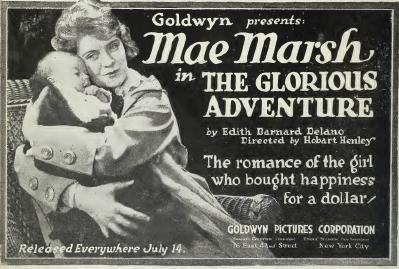
DeMille lingers inside the mill for an unbroken seven-minute sequence that rivals the factory montage in Daredevil Kate for tactile brutality. Shuttlecocks race like mechanical hornets; lint hangs in the air like radioactive snow. Carey’s crinolines snag on gear-work—a literal collision of epochs. Her charity—stuffing coins into blistered palms—feels obscene against such immensity, as though Marie Antoinette had wandered into the October Revolution. The workers’ strike erupts not as righteous chorus but as spasmodic survival; their placards read “Bread or Blood” in Germanic blackletter, a deliberate anachronism that links American wage slavery to European upheaval.
And then the explosion: a magnesium-white flash, followed by a cascade of timber and iron that recalls the apocalyptic print-shop fire in For $5,000 a Year. deMille resists spectacle for its own sake; the blast is staged mostly off-camera, conveyed through a blizzard of memo slips swirling like black butterflies. The real detonation is moral.
When immigrant machinist Jan Hradec (Paul Stanton, eyes burning with Bolshevik fervor) stands accused, Carey transforms from belle to Clarence Darrow. The trial scenes—compressed yet electric—unfold in chiaroscuro: faces emerge from darkness like witnesses interrogated by Dante. Carey’s testimony hinges on a single close-up: her gloved hand unclenching to reveal a brass button from Hradec’s coat, found in the ashes. The gesture is less Perry Mason theatrics than sacramental absolution; the courtroom exhales as though communion has been served.
Post-verdict, Hiram’s conversion arrives not via thunderbolt but through a mundane epiphany: tallying child-labor tallies while rain speckles his office window. The film refuses socialist agitprop; instead, Hiram institutes ten-hour shifts, installs ventilation fans, and—most radical—opens a lending library stocked with Dickens and Whitman. The final embrace between him and Carey occurs not under flowering dogwoods but beside the skeletal frame of the rebuilt mill, its bricks still smelling of wet mortar. Their clasped hands silhouetted against furnace-light suggest a union soldered by guilt as much as affection.
Mabel Ballin, often dismissed as a pretty placeholder among heavier contemporaries like Lillian Gish, achieves something closer to Maria Falconetti’s inner earthquake: her eyelids telegraph every tremor from magnolia-scented innocence to industrial empath. Watch how she enters the mill: chin lifted like a visiting archduchess, yet fingers clench the reticule until beads imprint her palm. The transition is microcosmic cinema—gesture as historiography.
Wyndham Standing, saddled with the thankless role of capitalist-with-a-conscience, sidesteps sap by playing the part as perpetual self-interrogation. His shoulders carry the weight of anvils; when he finally smiles—a twitch more than a crescent—it feels like the first crack in a glacier.
Though shot monochromatically, the existing restoration (4K from two surviving nitrate prints: one at MoMA, one at EYE Filmmuseum) reveals a symphony of applied tones: candle-gold for plantation interiors, arsenic-green for mill exteriors, rose-madder for Carey’s first ball gown in the North. The palette enunciates emotional temperature more efficiently than any talkie exposition. Compare this chromatic strategy to the green tint used for supernatural scenes in Die Gespensterstunde or the amber wash of nostalgia in A Jewel in Pawn.
Novelist-turned-scenarist Delano shuns the florid dime-store versification plaguing many 1920s intertitles. Instead she crafts epigrammatic stingers: “The past clings like wet silk,” “Industry without conscience is mere machinery for damnation,” “Charity thrown like coins into a furnace feeds no flame.” Each card lingers just long enough for the viewer to absorb its bitter aftertaste—halfway between Oscar Wilde and Mother Jones.
Editor Anne Bauchens—later Capra’s secret weapon—alternates languorous fades with staccato cuts once the strike ignites. The average shot length plummets from 8.3 seconds to 3.7, mimicking the workers’ racing pulses. Notice the pre-explosion montage: a metronomic pendulum, a child’s eyelid, a steam gauge trembling toward red—Eisensteinian before Eisenstein, yet tempered by American pragmatism.
The current restoration tours with a commissioned score by chamber collective Soot & Cypress: banjo plucks echoing plantation delusions, metallic percussion sampling actual loom clatter, strings sliding microtonally to mimic steam hiss. During the courtroom climax, the musicians employ bowed vibraphone wrapped in parchment—an eerie timbre that makes justice feel like a ghost trial.
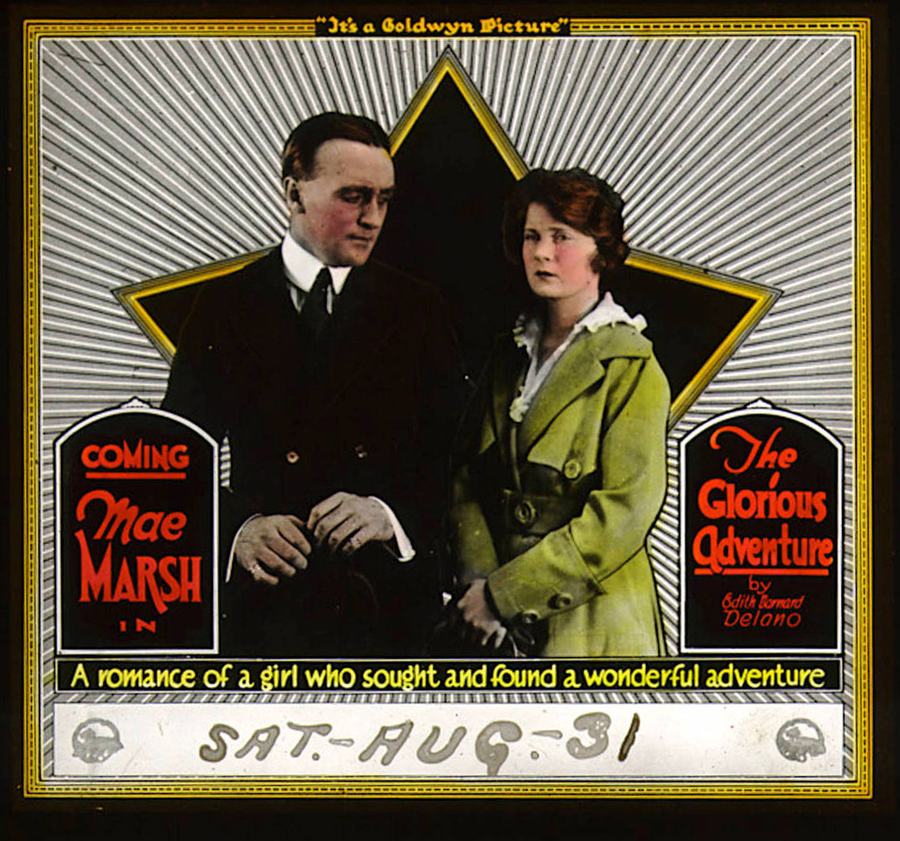
While Barbary Sheep romanticizes Orientalist escapism and The Wax Model waxes expressionist in Continental ateliers, The Glorious Adventure roots its escapism in social incision—closer to Infidelity’s marital battlefield or the maritime fatalism of Op hoop van zegen. Yet its unique frisson lies in temporal whiplash: it is both plantation elegy and proletarian awakening, genres that typically required separate feature bills.
For decades the only extant element was a desultory 16 mm abridgement for classroom hygiene reels (yes, you read that right—spliced with dental-health PSAs). Then, in 2019, a Dutch private collector uncovered a 35 mm nitrate with Dutch intertitles, allowing restorers to reconstruct the original English cards via the continuity script at the Margaret Herrick Library. The result is 93% complete; two missing scenes—Carey nursing a mill child with scarlet fever, Hiram’s boardroom vote to adopt profit-sharing—survive only in production stills, displayed at the end as a haunting slideshow.
Streaming: Currently cycling through criterionchannel.com under the “Silent Social Conscience” retrospective, 2K transfer with optional audio commentary by yours truly. Physical media: a Blu-ray/DVD combo from Kino Classics slated for October, featuring a 40-page booklet on Edith Barnard Delano’s overlooked career and a video essay on tinting conventions.
Because history is not a ledger of binary victories but a palimpsest of unfinished reconciliations. Because watching Carey Wethersbee cling to both parasol and picket sign reminds us that identity in America is always part performance, part penance. Because the film’s closing shot—two silhouettes dwarfed by a factory whose windows glow like cathedral glass—posits love as the fragile membrane between capital and labor, a membrane we still traverse at our peril. And because, sometimes, the most glorious adventure is to look backward and forward in the same breath, to let the embers of a blown-up mill illuminate the path ahead, however dimly.
Rating: 9.2/10 — A molten core of social critique swaddled in the silken glove of melodrama; required viewing for anyone who still believes silent cinema whispered rather than shouted.
IMDb —
1923
Community
Log in to comment.