DbcultAccessing Vault...
Cult Review
Senior Film Conservator
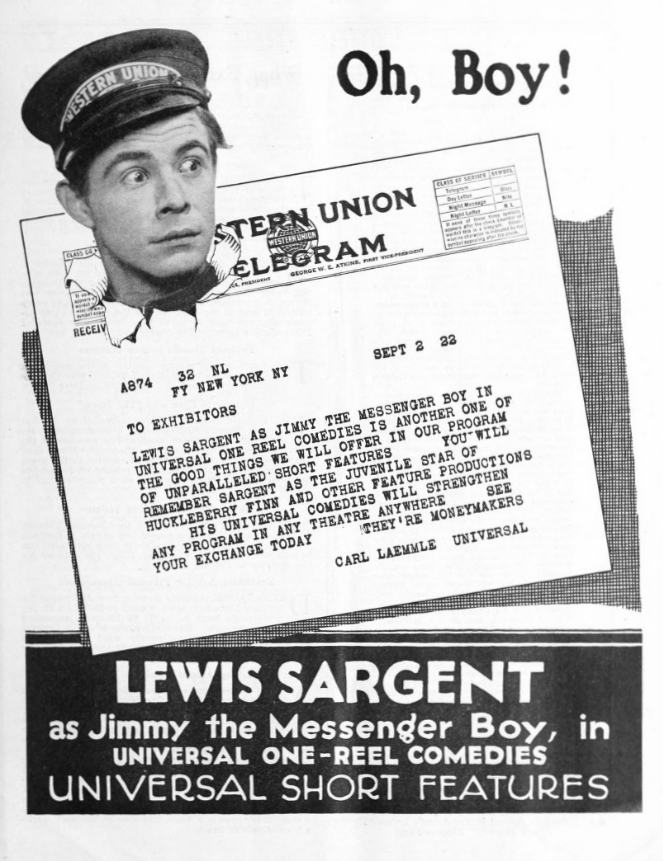
The cinematic artifacts of the early 1920s often serve as a vibrant barometer for the cultural anxieties of the Jazz Age, and The Speed Boy is no exception. Directed with a relentless pace and written by the prolific Scott Darling, this film encapsulates the frantic pulse of a society caught between Victorian expectations and the burgeoning chaos of modernity. While many contemporary viewers might dismiss such shorts as mere precursors to the sophisticated comedies of the 1930s, a closer inspection reveals a complex tapestry of social commentary, physical virtuosity, and the sheer audacity of silent storytelling.
At the heart of this comedic whirlwind is Lewis Sargent, an actor whose physicality transcends the limitations of the silent frame. Having already established a reputation for his portrayal of Huckleberry Finn, Sargent brings a certain rustic vulnerability to the role of Jimmy. Unlike the more polished deception found in A Perfect Crime, Jimmy’s transformation into 'Willie' is a frantic, involuntary descent into the absurd. The 'speed' alluded to in the title is not merely a reference to his profession as a messenger, but a metaphor for the rapid-fire shifts in identity required to survive the whims of the upper-middle class.
The premise—a childless couple fabricating a family to secure an inheritance—is a venerable trope of the era, yet Darling breathes new life into it through rhythmic editing and a focus on the tactile elements of the ruse. The wig, which eventually becomes the instrument of their downfall, is treated throughout the film as a ticking clock, a precarious crown that signifies both their ambition and their inevitable exposure. This focus on the 'prop as destiny' is a hallmark of the genre, echoing the structural tensions seen in The Checkmate.
"The film operates as a frantic ballet of desperation, where the stakes are not merely financial, but existential, as Jimmy is forced to navigate a childhood he likely never had the luxury to experience."
While Sargent provides the kinetic energy, Laura La Plante offers a glimpse into the burgeoning stardom that would soon make her one of Universal's most bankable leads. In The Speed Boy, her presence provides a necessary grounding force against the escalating lunacy of the plot. Even in these early roles, La Plante exhibits a nuanced facial vocabulary that allows her to convey a range of emotions—from skeptical amusement to genuine panic—without the histrionics often associated with the period. Her performance here can be contrasted with the more dramatic weight found in The Sign on the Door, showcasing her versatility even within the confines of a two-reeler.
The chemistry between the cast members is palpable, creating a domestic atmosphere that feels lived-in despite the outlandish circumstances. The aunt, the quintessential arbiter of morality and wealth, serves as the ultimate antagonist—not through malice, but through the sheer weight of her expectations. This dynamic of the 'looming relative' was a staple of silent comedy, providing a clear moral compass against which the protagonists' chicanery could be measured, a theme also explored with varying degrees of gravity in Home Wanted.
One cannot ignore the underlying class struggle that fuels the narrative engine of The Speed Boy. The couple’s willingness to 'impress' Jimmy into service speaks volumes about the disposable nature of the working class in the eyes of those chasing capital. Jimmy is treated less as a person and more as a malleable asset, a human tool to be used and discarded once the objective is met. This theme of social climbing through deception is a recurring motif in Scott Darling’s work, often mirroring the moral ambiguities presented in False Fronts.
The film’s climax, involving the wig’s departure, is a masterclass in visual timing. It is the moment where the 'false front' literally falls away, revealing the absurdity of the entire endeavor. There is a profound honesty in this failure; the truth is not revealed through a moral epiphany, but through a physical accident. This reliance on the material world to expose human folly aligns the film with the tradition of the 'comedy of errors,' while maintaining a uniquely American obsession with the 'self-made' (or in this case, 'self-faked') man.
From a technical standpoint, The Speed Boy utilizes the limited resources of its time to maximize visual impact. The cinematography, while functional, excels in capturing the frantic movements of Sargent as he attempts to maintain his 'Willie' persona. The framing often emphasizes the claustrophobia of the domestic setting, contrasting with the 'speed' of Jimmy’s initial arrival. This creates a sense of entrapment that heightens the comedic tension. We see similar explorations of spatial dynamics in Edgar's Little Saw, where the domestic environment becomes a battlefield of wits.
The editing is particularly noteworthy for its ability to sustain the momentum of the farce. Scott Darling, serving as both writer and a key creative force, ensures that the gags are not merely isolated incidents but are woven into the fabric of the character's desperation. The transition from the telegram delivery to the full-blown masquerade is handled with a narrative efficiency that modern screenwriters would do well to study. It lacks the sprawling, sometimes aimless nature of longer features like The Man Who Won, opting instead for a lean, muscular storytelling approach.
In the broader context of 1923 cinema, The Speed Boy stands as a testament to the durability of the short-form comedy. While grand epics like The Life and Passion of Jesus Christ sought to capture the divine, films like this were content to capture the ridiculous, which in many ways is a more accurate reflection of the human condition. It shares a certain DNA with The Spitfire in its portrayal of headstrong characters navigating social hurdles, though it leans more heavily into the slapstick than the romantic.
Furthermore, the film’s exploration of identity and the 'performance' of family life predates the more existential inquiries found in later European works like Das Spiel ist aus, albeit in a much more accessible and lighthearted format. The idea that one can simply 'put on' a child and 'take off' a wig to change one's destiny is a quintessentially silent-film conceit, one that relies on the audience’s willingness to accept the physical as the ultimate reality. This same spirit of improvisational identity can be seen in Romance and Rings, where the trappings of status are used to manipulate perception.
Ultimately, The Speed Boy is a delightful, if fleeting, example of the silent era's ability to find profound humor in the mundane. It is a film about the lengths to which people will go to achieve financial stability, and the inevitable ways in which our true selves (or at least our true hairlines) eventually emerge. Lewis Sargent’s performance remains a highlight, a reminder of a time when an actor’s entire career could be built on the expressive power of their limbs and the timing of a stumble.
For those interested in the evolution of the American comedy, this film provides essential context. It bridges the gap between the raw energy of early Mack Sennett shorts and the more sophisticated narrative structures that would follow. It is a piece of cinematic ephemera that, like the telegram Jimmy delivers, carries a message far more significant than its humble origins suggest. Whether compared to the rugged individualism of The Red Lane or the romantic entanglements of Castles for Two, The Speed Boy maintains its own unique velocity, a testament to the enduring power of a well-timed wig-fall and the desperate, hilarious scramble for the American dream.
Reviewer's Note: Fans of early 20th-century farce should also seek out The Dangerous Talent and Jim Corwey ist tot for further examples of how the era dealt with themes of death, deception, and the precariousness of the social contract.
IMDb 7.1
1926
Community
Log in to comment.