DbcultAccessing Vault...
Cult Review
Senior Film Conservator

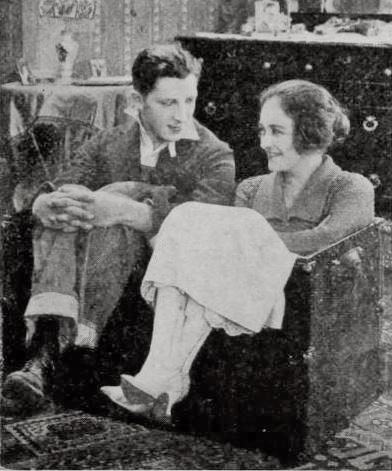
Ah, the silent era! A time when narratives relied on the eloquence of expression, the grandeur of gesture, and the sheer force of a compelling story. Among the gems that flicker from this foundational period of cinema, 1923’s The Go-Getter stands out, not merely as a quaint historical artifact, but as a surprisingly potent examination of ambition, resilience, and the relentless pursuit of purpose. Directed with an understated elegance and penned by the collaborative talents of John Lynch, Peter B. Kyne, and George Marion Jr., this film, starring the earnest William Sorelle as its indefatigable protagonist, Bill Peck, offers a timeless blueprint for overcoming adversity. It’s a narrative that, despite its century-old vintage, speaks with remarkable clarity to the contemporary struggles of finding one’s footing in a challenging world.
The premise is deceptively simple: a young man, fresh from the crucible of military service and the subsequent convalescence in an army hospital, seeks employment. Yet, in the hands of its creators, this straightforward quest transforms into an epic journey of self-discovery and a rigorous test of character. Bill Peck isn't just seeking a job; he's seeking validation, a proving ground for the spirit that has endured the traumas of war and now yearns for a new kind of battle. His discharge isn’t an end, but a beginning, a transition from one form of duty to another, equally demanding one: the duty to carve out a meaningful existence.
Enter Cappy Ricks, portrayed with a compelling gravitas that anchors the film’s central conflict. Ricks isn't merely a boss; he's an industrial sage, a man whose wisdom is distilled through years of navigating the cutthroat world of commerce. He possesses an almost alchemical ability to discern potential, to see beyond superficial qualifications and into the very soul of an individual's drive. When Bill Peck crosses his path, Ricks doesn't offer a conventional interview or a probationary period. Instead, he devises an ordeal, a trial by fire designed to expose the true mettle of his prospective employee. This isn't about skill sets on a resume; it's about an unquantifiable quality, an innate tenacity.
The test, as any admirer of classic storytelling will recall, involves the procurement of a specific blue vase. On the surface, it appears an arbitrary, even whimsical, demand. But its significance runs far deeper. This isn't just any vase; it's the blue vase, a MacGuffin of the highest order, imbued with symbolic weight far exceeding its material value. It represents the seemingly impossible task, the challenge that pushes one to the absolute limits of ingenuity and perseverance. Ricks understands that the true measure of a 'go-getter' isn't in their ability to perform routine tasks, but in their capacity to surmount obstacles that would deter lesser individuals. It's a brilliant narrative device that elevates the film beyond a simple workplace drama into a profound allegory for ambition itself.
William Sorelle's portrayal of Bill Peck is a masterclass in silent film acting. Without dialogue, he conveys a spectrum of emotions: the quiet desperation of a man seeking purpose, the burgeoning hope ignited by Ricks' challenge, and the unflagging determination that propels him forward. Peck isn't a superhero; he's an everyman, flawed and vulnerable, yet possessed of an internal furnace that refuses to be extinguished. His journey to find this elusive vase is fraught with setbacks, misdirections, and moments that would cause most to simply give up. But Peck, true to the film's title, embodies the spirit of relentless pursuit. He embodies the sheer, unadulterated will to succeed, regardless of the odds stacked against him.
This character arc resonates deeply, particularly in the context of the post-World War I era, when countless veterans returned home to a world that often struggled to reintegrate them. Peck's search for a job, and more profoundly, for a renewed sense of self-worth, speaks to the collective experience of a generation. He represents the hopeful, resilient spirit necessary to rebuild lives and societies. The film subtly critiques the conventional employment structures by highlighting Cappy Ricks’ unconventional, yet ultimately more insightful, hiring methodology. It suggests that true leadership lies in fostering potential, not just filling vacancies.
The blue vase is more than a plot device; it is the physical manifestation of the metaphorical mountain Bill Peck must climb. Its rarity, its specific shade, its very existence, become a test of his network, his resourcefulness, and his refusal to accept 'no' for an answer. The search takes him through various strata of society, exposing him to different characters and challenges. Each dead end, each false lead, only serves to sharpen his resolve. This narrative structure, where a seemingly simple object becomes the nexus of an arduous quest, mirrors other tales of singular pursuit. One might consider the relentless ambition seen in films like Get Your Man, where characters are driven by an almost obsessive desire to achieve a particular outcome, often against formidable odds. Or perhaps, the journey of self-discovery and overcoming literal and figurative 'roads of strife' as seen in The Road o' Strife, where the protagonist's path is paved with trials.
The vase also symbolizes the elusive nature of opportunity itself. In a world brimming with competition, distinguishing oneself often requires an extraordinary effort, a willingness to venture beyond the conventional. Peck’s pursuit is not just for an object, but for the very essence of what it means to be indispensable. He isn't merely fulfilling a task; he's demonstrating a philosophy, a way of approaching challenges that sets him apart. It's a testament to the power of initiative, a quality that remains as valuable today as it was a century ago.
While William Sorelle carries the emotional weight, the film benefits from a robust supporting ensemble. John Carr, Louis Wolheim, Dorothy Walters, and Betty Bronson, among others, contribute to the rich tapestry of characters Peck encounters. Each interaction, though wordless, is imbued with meaning, conveyed through exaggerated expressions

IMDb 6.4
1933
Community
Log in to comment.