DbcultAccessing Vault...
Cult Review
Senior Film Conservator
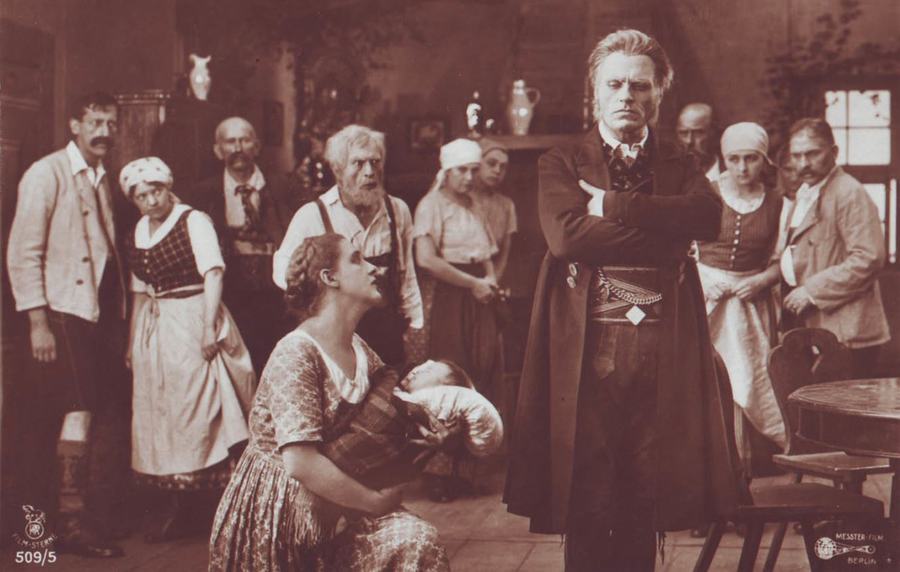
Stepping back into the hallowed halls of early cinematic history, one encounters "Die Claudi vom Geiserhof," a profound and emotionally resonant silent drama that stands as a testament to the era's capacity for intricate storytelling and powerful character portrayal. This film, a masterclass in visual narrative, transcends its temporal constraints, offering a timeless exploration of human resilience, the corrosive nature of unchecked power, and the enduring strength of authentic affection. It plunges viewers into a world where the rugged beauty of the Alpine landscape serves as a breathtaking, yet often unforgiving, backdrop to intense personal and societal conflicts. The stark contrasts between the humble, hardscrabble existence of the Geiserhof family and the opulent, manipulative sphere of the aristocracy are drawn with a clarity that resonates deeply, even a century later. From its opening frames, the film establishes a palpable sense of place and impending tension, drawing us inexorably into Claudi's world.
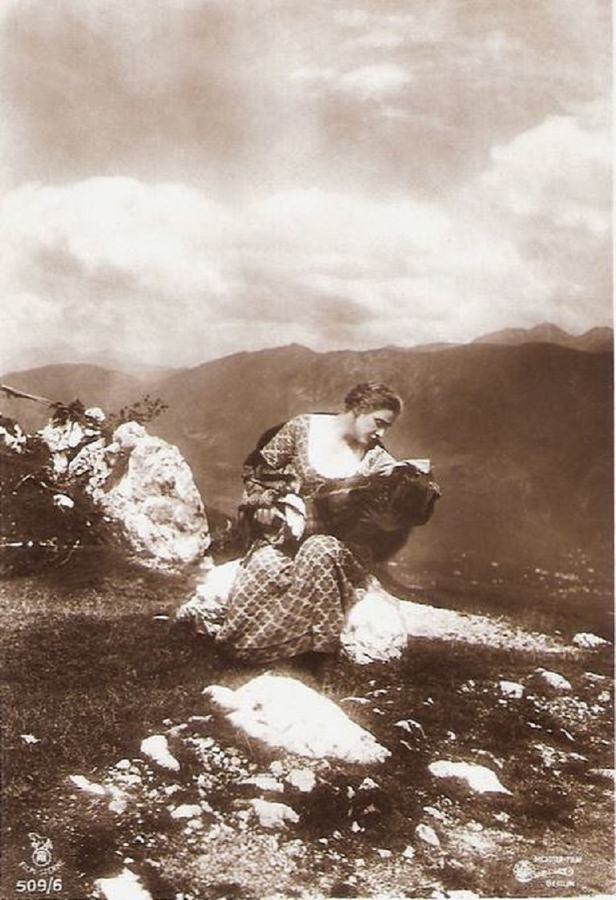
At the heart of "Die Claudi vom Geiserhof" pulses the incandescent performance of Henny Porten as Claudi. Her portrayal is nothing short of magnetic, a tour de force that commands attention without uttering a single word. Porten, a true icon of the silent screen, imbues Claudi with a spirited independence and an unwavering moral compass that feels both authentic and deeply moving. Her expressive face, a canvas of nuanced emotions, communicates volumes: the burgeoning joy of first love, the searing pain of betrayal, the fierce defiance against injustice, and the profound weight of familial obligation. Each gesture, each subtle shift in her gaze, contributes to a characterization that is remarkably complex and utterly believable. She is not merely a victim of circumstance but an active agent, her internal struggles externalized through a masterful command of pantomime and physical presence. Porten's Claudi is a woman of immense inner strength, whose struggle against the suffocating pressures of her environment becomes a universal symbol of the individual's fight for dignity and self-determination. Her ability to convey such a vast spectrum of human experience through silent performance alone solidifies her reputation as a cinematic titan, and this role stands as one of her most poignant achievements.
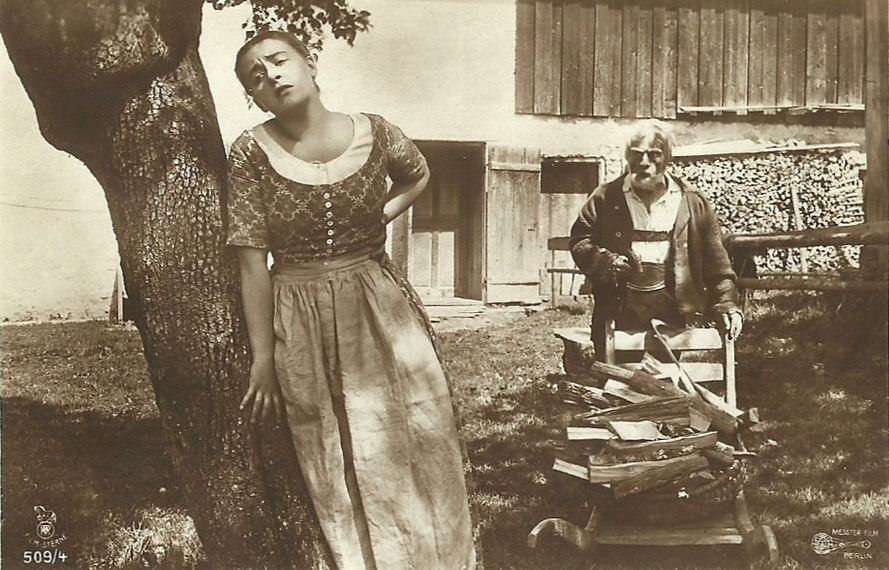
The Geiserhof itself is more than just a setting; it functions as a potent microcosm of the broader societal conflicts at play. It represents the idealized notion of honest labor and familial bonds, constantly imperiled by the encroaching shadows of aristocratic privilege and economic exploitation. Joseph Klein, as Claudi's stern but ultimately well-meaning father, embodies the crushing burden of responsibility, his every furrowed brow and weary sigh speaking volumes of a life spent battling both the elements and the unforgiving economic realities. His desperation to secure his family's future, even at the cost of his daughter's happiness, is depicted not as villainy but as a tragic consequence of his limited options. Similarly, Rudolf Biebrach, in his role as a sympathetic elder kinsman, provides a crucial emotional anchor within the struggling family, conveying a quiet resignation tinged with a deep love for Claudi, highlighting the collective plight of the rural poor. The film meticulously paints a picture of a community held hostage by the whims of the powerful, where land ownership equates to life itself, and its loss spells utter annihilation. This stark portrayal of class struggle, where the very soil beneath one's feet becomes a battleground for survival, lends "Die Claudi vom Geiserhof" a profound social relevance that transcends its period setting. The visual language of the film, through its depiction of humble farmsteads juxtaposed with the Baron's imposing estate, eloquently articulates this chasm, making the power dynamics intrinsically cinematic.
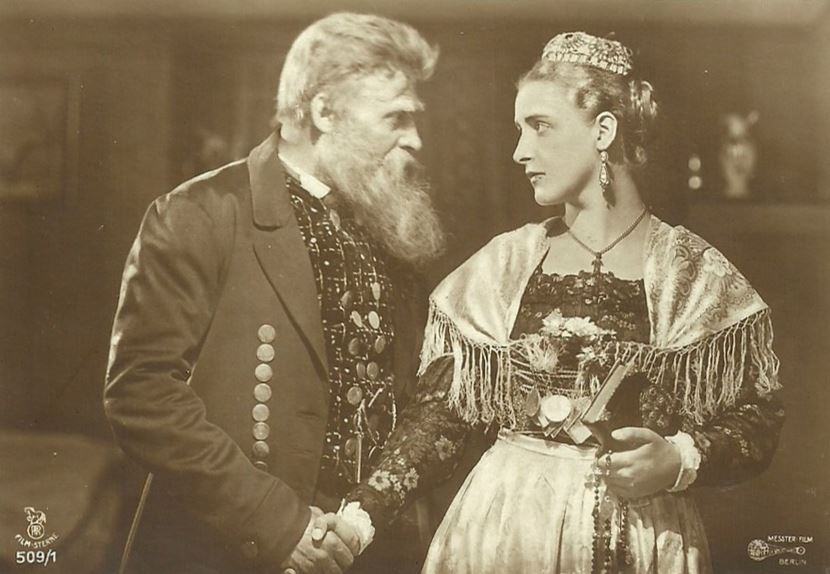
The cinematic craftsmanship evident in "Die Claudi vom Geiserhof" is truly remarkable for its era. Lacking spoken dialogue, the film relies heavily on its visual grammar to convey intricate emotional landscapes and narrative complexities. The cinematography is often breathtaking, capturing the majestic, yet sometimes harsh, beauty of the Alpine environment, which serves as a powerful metaphor for Claudi's own struggles. Wide shots emphasize the isolation of the Geiserhof, while intimate close-ups draw the viewer into the characters' inner turmoil. The use of light and shadow is particularly effective, often mirroring the moral ambiguities of the characters; the Baron's world is frequently bathed in an artificial, almost theatrical glow, contrasting sharply with the natural, often stark, lighting of the farm. Intertitles are employed judiciously, providing essential plot points and character insights without interrupting the flow of the visual storytelling. The pacing, a delicate balance between contemplative moments and dramatic crescendos, ensures that the audience remains fully invested in Claudi's journey. The film's ability to evoke such a powerful emotional response through purely visual means is a testament to the skill of its creators, demonstrating a profound understanding of the medium's expressive potential. Every frame is meticulously composed, every edit purposefully placed, building a narrative tapestry rich in symbolic meaning and human drama. This reliance on visual cues demands a more active engagement from the audience, inviting them to interpret and feel, rather than merely observe.
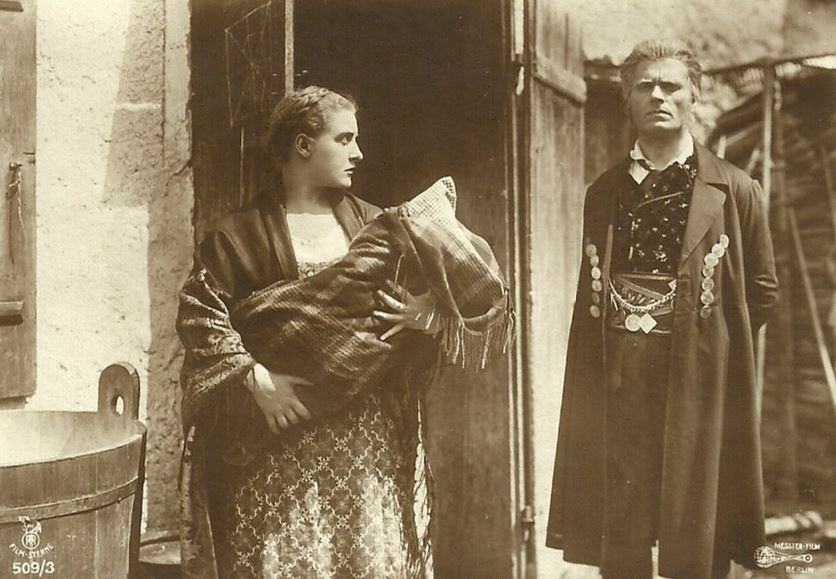
While Porten anchors the film, the ensemble cast surrounding her delivers performances that are equally vital in constructing the film's intricate emotional architecture. Lupu Pick, as the earnest farmhand Franz, offers a portrayal of unwavering devotion and quiet strength. His love for Claudi is portrayed with a sincerity that makes his character deeply sympathetic, and his eventual heroic efforts to expose the Baron's deceit are imbued with a palpable sense of urgency and moral conviction. Franz represents the purity of intention, a stark foil to the Machiavellian machinations of his rival. Eduard von Winterstein, in his role as Baron von Steinfels, is deliciously villainous. He projects an aura of aristocratic charm that thinly veils a ruthless, calculating nature. Winterstein masterfully uses subtle gestures and a predatory gaze to convey the Baron's sense of entitlement and his absolute disregard for the well-being of those beneath him. His performance elevates the Baron beyond a mere caricature, rendering him a formidable and genuinely menacing antagonist. Paul Hartmann, as the Baron's conniving estate manager, provides the perfect secondary antagonist, a man whose loyalty is bought and whose actions are driven by a cynical self-interest. His complicity in the Baron's schemes adds another layer of moral decay to the aristocratic world, highlighting how power corrupts not just the powerful, but also those who serve them. The interplay between these characters, each contributing a distinct facet to the narrative, creates a rich and dynamic dramatic landscape that keeps the audience enthralled.
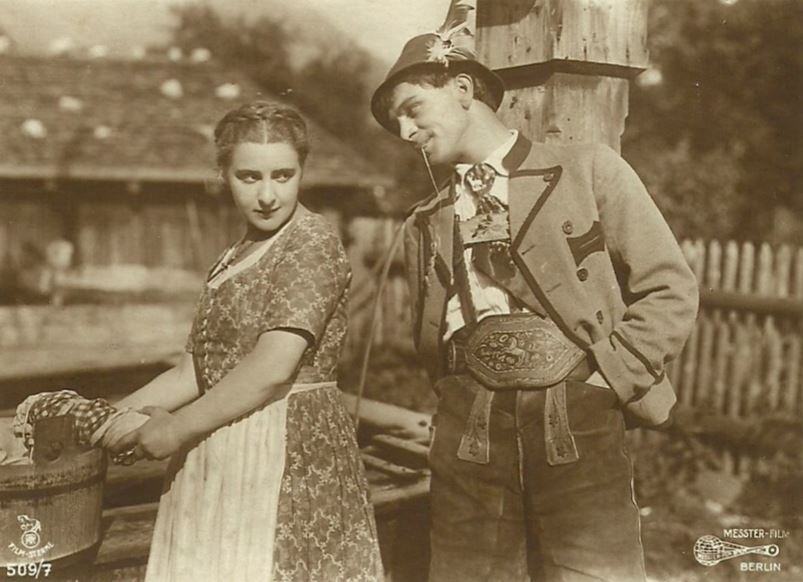
The thematic resonance of "Die Claudi vom Geiserhof" extends beyond its immediate narrative, finding kinship with other cinematic explorations of societal pressures and individual defiance. One might draw parallels with the earnest social commentary prevalent in films like Where Are My Children?, which similarly grappled with weighty moral dilemmas and the struggles of ordinary people against systemic forces. While that film focused on birth control and family planning, the underlying current of individual autonomy versus societal expectation is strikingly similar. "Claudi" also shares a spiritual kinship with narratives that foreground the plight of the working class against the backdrop of industrial or feudal power structures, echoing the struggles for dignity and survival that defined so much of early 20th-century cinema. Another intriguing comparison point could be found in the more melodramatic yet equally poignant narratives surrounding marital expectations, such as in The Marriage Market. Though "Claudi" is set against a rural backdrop rather than an urban socialite scene, both films dissect the transactional nature of certain unions and the emotional toll they exact on the protagonists, particularly women. The film's exploration of a woman's agency in a patriarchal society also brings to mind the silent era's burgeoning interest in female empowerment, often depicted through characters who defy conventional roles, even if their rebellion is ultimately constrained by the social norms of the time. The raw emotionality and moral clarity of "Die Claudi vom Geiserhof" firmly establish its place within a lineage of films that dared to challenge the status quo and champion the cause of the underdog. It eschews simplistic resolutions, instead presenting a nuanced view of justice achieved through arduous struggle.
The film's exploration of themes like land ownership and the inherent injustices of a rigid class system also resonates with a certain socio-political consciousness that permeated much of European cinema during this period. It’s not simply a personal drama; it’s a statement on the vulnerabilities of the working class and the unchecked power wielded by the landed gentry. The Geiserhof's struggle, therefore, becomes emblematic of a larger societal tension, making the film a valuable historical document as well as a compelling piece of art. The narrative does not shy away from depicting the harsh realities faced by those without influence, showcasing how easily their lives can be disrupted or destroyed by the caprice of the powerful. This unflinching gaze at social inequality adds layers of depth to the personal drama, transforming Claudi's individual battle into a broader metaphor for societal justice. The film's climactic confrontation is not merely a personal triumph, but a symbolic victory for the community, demonstrating the potential for collective action and the exposure of corruption. This broader impact elevates "Die Claudi vom Geiserhof" beyond a mere melodrama, cementing its status as a significant cultural artifact.
In its entirety, "Die Claudi vom Geiserhof" is a captivating and deeply affecting cinematic experience. Its enduring appeal lies not only in its compelling narrative and superb performances but also in its universal themes. The struggle for self-determination, the battle between love and duty, and the fight against injustice are narratives that resonate across generations and cultures. The film serves as a powerful reminder of the artistry inherent in silent cinema, demonstrating how a story can be told with profound emotional depth and visual sophistication without the aid of spoken dialogue. It invites modern audiences to appreciate the nuanced performances and innovative techniques that defined this foundational period of filmmaking. For enthusiasts of classic cinema, or anyone interested in the evolution of storytelling on screen, "Die Claudi vom Geiserhof" is an essential viewing. It is a film that lingers in the mind long after the final frame, a testament to the power of a well-told story and the indelible mark left by its memorable characters, particularly the spirited Claudi, whose courage continues to inspire. The enduring relevance of its themes ensures that this silent masterpiece will continue to find new audiences, proving that true artistry transcends the limitations of its medium and its era.
IMDb 5.4
1934
Community
Log in to comment.