DbcultAccessing Vault...
Cult Review
Senior Film Conservator
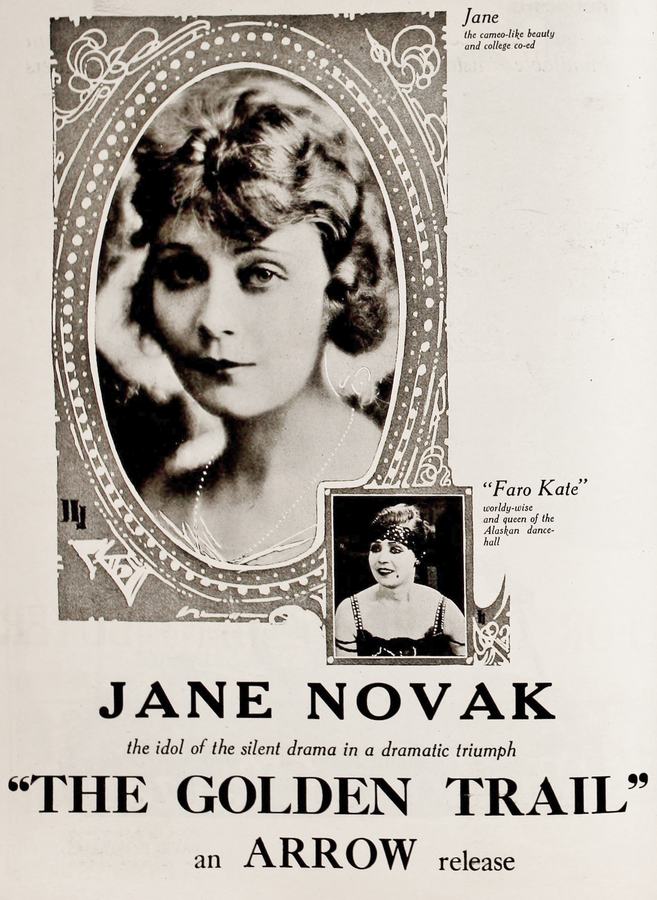
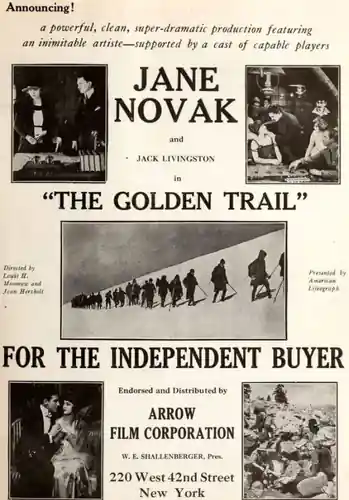
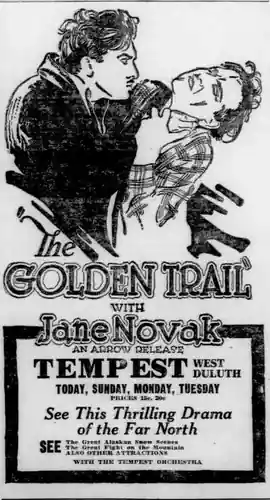
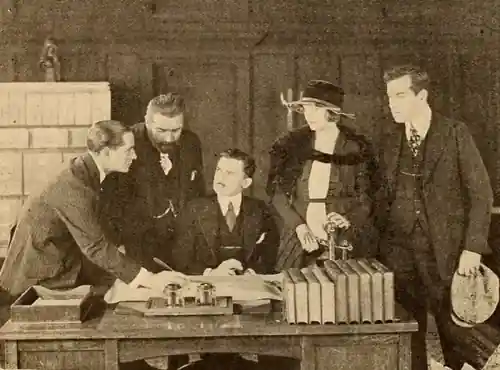
A frost-caked print of The Golden Trail surfaces only once every decade, usually in a private collector’s temperature-controlled vault, yet its celluloid embers burn brighter than many canonized classics. William Dills’ Dave Langdon haunts the frame like a man who has swallowed the aurora and now must live with its cold fire behind his eyes. Every shrug of his parka, every squint against the endless white, feels carved from lived experience rather than studio-backlot artifice.
Director Lewis H. Moomaw—better known for two-reel ranch shorts—trades sagebrush for permafrost here, orchestrating a chiaroscuro symphony: ivory blizzards slap against mahogany bars, while cigarette smoke coils around kerosene halos. The result is a Yukon Gothic that anticipates von Sternberg’s later chiaroscuro by at least five years, though history has relegated it to footnote status.
Strip away the furs and fedoras and what remains is a moral parable about ownership—of land, of women, of narrative. Teal’s mining claim is merely the MacGuffin; the real stakes hinge on who gets to author Jane’s future. Note how Moomaw repeatedly frames Jane between two male silhouettes: doorways, windows, even cracked mirrors bisect her visage, hinting that every choice is a forfeiture of self. When she finally strides into the Klondike courtroom to vouch for Dave, the camera dollies back as though awestruck by a woman reclaiming authorship.
Jane Novak—often unfairly labeled “the poor man’s Pickford”—delivers a masterclass in reactive stillness. Watch the 47-second unbroken close-up when she reads Dave’s farewell letter: her pupils oscillate like compass needles searching for true north, then settle into resigned steel. It’s a moment so intimate you feel you’ve trespassed.
Opposite her, Allan Hersholt (pre-Hollywood Anglicization) etches Harry Teal with feline grace; his cigarette holder becomes a conductor’s baton, orchestrating chaos with the flick of a wrist. The villainy never tips into moustache-twirling because Hersholt keeps a vein of self-loathing pulsing beneath the silk—Teal despises his own need for control.
Cinematographer Broderick O’Farrell—pulling double duty as an actor—freezes his lenses before each exterior, coaxing breath-crystal motifs that swirl across the aperture. Interiors, by contrast, bask in umber pools reminiscent of Rembrandt. The juxtaposition creates thermodynamic tension: warmth equals deceit, cold equals clarity, a reversal of audience expectations that still feels avant-garde.
Co-scenarist Elizabeth Mahoney, a journalist turned suffragette pamphleteer, wields intertitles like haiku. Example: “Love, like nitro, warms the palms before it blows the bridge.” The line arrives seconds before Sykes’ shooting, foreshadowing both combustion and ruination without telegraphing the twist. Modern screenwriters could learn brevity from her—no clunky expositional throat-clearing, just lyrical concision.
Though originally accompanied by theater organ, surviving cue sheets suggest Moomaw envisioned a modular score: ragtime for saloon bacchanalia, Native frame-drum motifs for wilderness treks, and—most daring—silence during the climactic cliff duel. Contemporary festival restorations often ignore those silences, filling them with generic strings. Seek out the San Francisco Silent Film Society 2016 restoration if you can; their three-minute absence of score turns the showdown into an existential vacuum where every crunch of snow feels like a vertebra snapping.
Place The Golden Trail beside Moomaw’s earlier The City of Failing Light and you’ll detect an obsession with illumination as moral barometer. Where City used flickering electric grids to signal urban decay, Trail weaponizes natural light—auroras, dawn’s rose daggers—to suggest redemption is cosmically ordained yet geographically remote.
Some academics dismiss Jane’s final deferential embrace as patriarchal capitulation. Look closer: she has already engineered Teal’s exposure, manipulated legal testimony, and carved fiscal independence by staking her own claim earlier in Act II. The closing clinch isn’t surrender; it’s strategic consolidation of gains. In 1920, twelve months before the first U.S. state grants women jury service, such subtext plays like quiet revolution.
Regrettably, the saloon scenes feature a “comic” Tlingit bartender spouting malapropisms—an offensive relic even for the era. Modern curators face a dilemma: crop the caricature and you erase evidence of how popular culture trafficked in dehumanization. Contextual introductions and post-screening discussions serve better than scissors.
No streaming giant hosts an authorized transfer; your best bets are:
If you snag a copy, project it at 18 fps—not the modern default 24—or the sled-chase sequence will resemble Keystone chaos rather than measured existential dread.
Because history is a sieve that discards as much gold as gravel. The Golden Trail distills the silent era’s adventurous spirit while foreshadowing psychological complexities that wouldn’t fully bloom until Beatrice Fairfax and The Wolf. It deserves shelf space beside these better-remembered siblings, not for nostalgic duty but for its stark reminder that love, like permafrost, preserves what warmth would rot.
If you unearth this reel, thaw it slowly—let each frame breathe like brandy in a snifter. The chill is part of the flavor.
IMDb —
1927
Community
Log in to comment.