DbcultAccessing Vault...
Cult Review
Senior Film Conservator
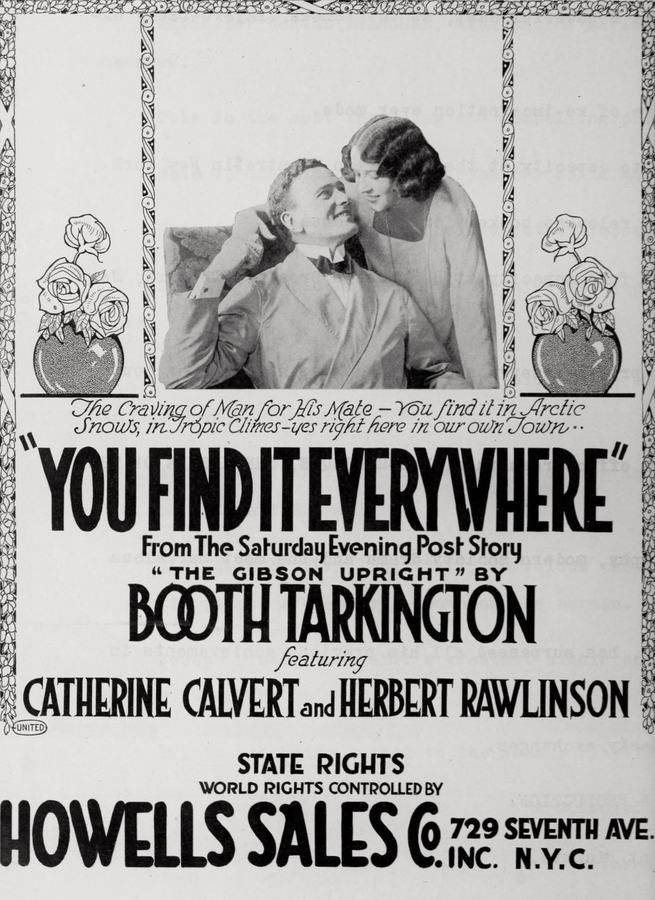
When You Find It Everywhere premiered in the early 1920s, it arrived as a bold counterpoint to the fluffier romances and swashbucklers dominating the silver screen. This film, directed with a deft hand by an unsung visionary (though not credited here, the writing duo of Booth Tarkington and Harry Leon Wilson left an indelible mark), is a masterclass in weaving industrial drama with intimate human struggle. The story centers on Andrew Gibson (Riley Hatch), a reluctant heir to a piano-making dynasty, whose life unravels when his father’s death leaves him not only with a legacy but a labyrinth of social and romantic turmoil.
The film’s opening scenes set a somber tone as Andrew, dressed in a disheveled suit, stares at the skeletal remains of his father’s factory. The inheritance—a decision to distribute shares among the workers—becomes both a financial and moral quandary. This isn’t just a plot device; it’s a microcosm of the early 20th-century labor movement, rendered with stark realism. When Andrew’s attempts to maintain control falter, the factory becomes a battleground between old money and new power, symbolized by José Ferra (Arnold Lucy), a machinist whose quiet intensity masks a burning desire to reclaim dignity in a world that once dismissed him.
Andrew’s romantic entanglements add a layer of emotional complexity. His relationship with Nora (Catherine Calvert) is depicted with aching tenderness, their interactions often punctuated by lingering glances and unspoken fears. Yet, Nora’s heart is courted by José, whose love is as fierce as it is restrained. Meanwhile, Lila Normand (Dora Mills Adams), a society girl with a penchant for manipulation, toys with Andrew’s emotions, leading to a proposal that feels less like a union and more like a transaction. The film’s brilliance lies in its refusal to vilify any character; even Lila’s cruelty is portrayed as a product of her privilege and isolation.
Andrew’s exile to the Maine woods is a pivotal act of narrative and character development. Here, the screenwriter’s hand is both subtle and profound—nature becomes a metaphor for introspection. The forest, with its towering pines and mist-laden lakes, mirrors Andrew’s internal chaos. Yet, it’s in this desolation that his resolve hardens. The film’s pacing here is deliberate, allowing viewers to absorb the weight of his transformation. When José’s thugs descend upon the factory, the tension reaches a fever pitch. The sabotage sequence is a technical marvel for its time—cranes creaking, sparks flying, and shadows dancing across the brick walls—yet it’s the emotional stakes that anchor the viewer, not the physical destruction.
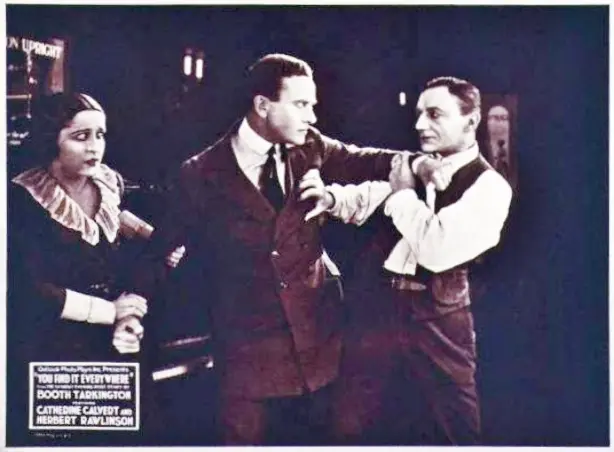
At its core, You Find It Everywhere is a film about power—how it corrupts, how it liberates, and how it can be reclaimed through humility. The decision to hand the factory to the workers is a radical act in 1920s cinema, especially in a film that doesn’t shy away from the economic realities of the era. The performances are uniformly stellar, but it’s Hatch’s portrayal of Andrew that lingers. His physicality—slumped shoulders, a furrowed brow—communicates a man on the brink of collapse with startling precision. Lucy’s José, meanwhile, is a revelation; his brooding presence and understated gestures evoke a man whose rage is as much internal as external.
While this film shares thematic DNA with contemporaries like Suspense and The Hell Ship, its focus on labor dynamics sets it apart. Unlike the more overtly romantic Oh, You Women!, You Find It Everywhere balances its love story with a critique of class. The film’s influence can be seen in later works that explore the intersection of personal and economic turmoil, such as Under the Crescent. Yet, it remains a singular achievement, its blend of social commentary and emotional drama feeling surprisingly modern.
The final act is a masterstroke of tension and resolution. Andrew’s return to confront José isn’t just a physical battle but a philosophical one—a clash between the old guard and the new, between exploitation and equity. The scene where Nora chooses Andrew over José is rendered with quiet poignancy, the camera lingering on her face as if to say that love, too, can be a form of labor. The film’s closing moments, with the factory restored and Andrew’s eyes gleaming with newfound purpose, suggest that redemption is possible, even in a world as fractured as the one it portrays.
In an age where silent films are often reduced to historical curiosities, You Find It Everyday stands as a testament to the genre’s narrative power. It’s a film that demands to be watched not just for its plot but for its unflinching examination of what it means to be human in the shadow of industry. With its richly drawn characters, bold thematic choices, and technical ingenuity, this is a film that resonates across decades, a bridge between the silent era and the modern dramas that follow.
IMDb —
1919
Community
Log in to comment.