DbcultAccessing Vault...
Cult Review
Senior Film Conservator
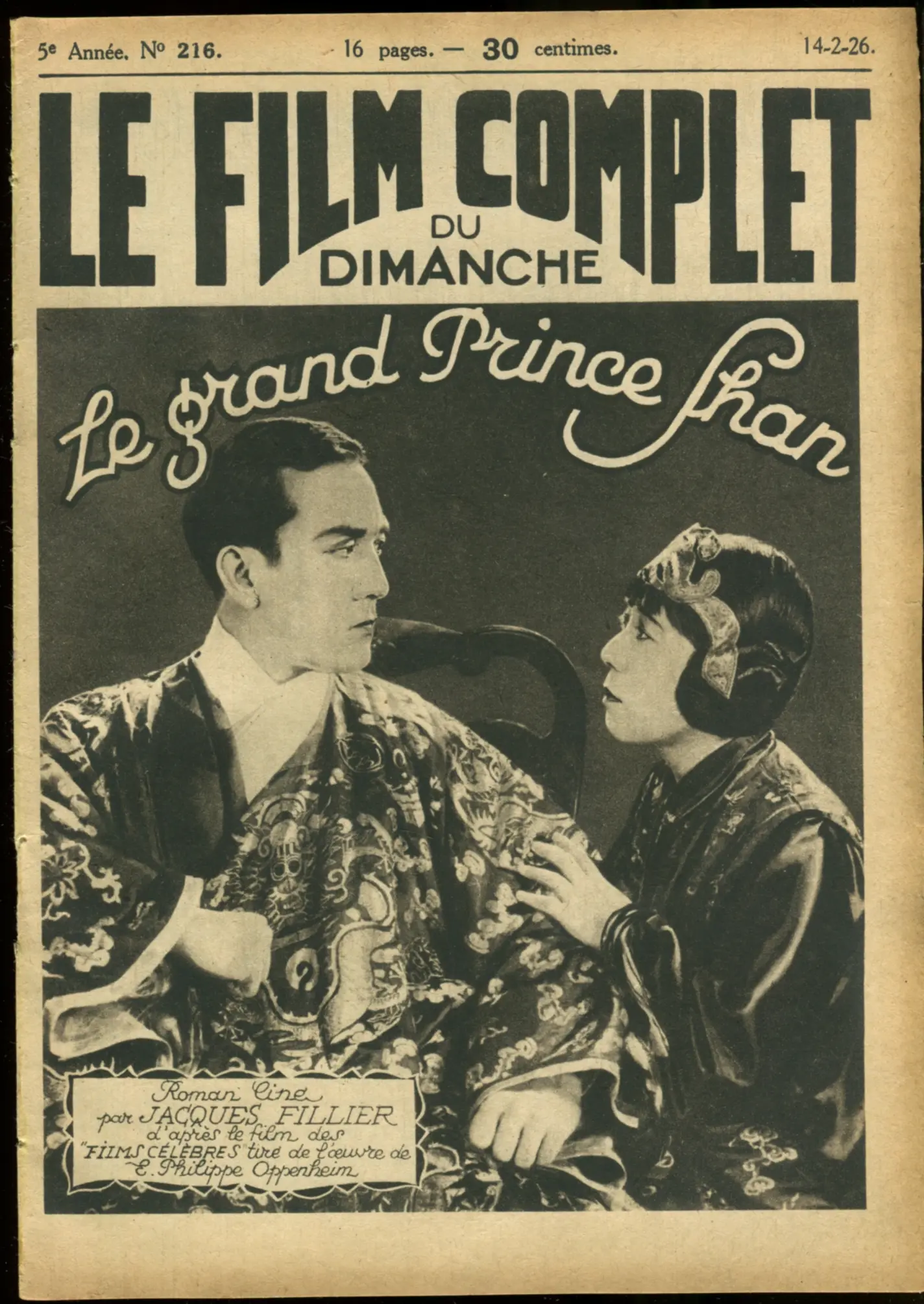
The 1924 cinematic landscape was a crucible of experimentation, yet few works managed to capture the intersection of racial anxiety and aristocratic dissolution as poignantly as A.E. Coleby’s The Great Prince Shan. Adapted from the prose of E. Phillips Oppenheim, the film serves as a visceral conduit into a world where the British Empire’s waning hegemony meets the perceived 'Yellow Peril'—a trope here handled with a surprising degree of nuance, primarily due to the magnetic presence of Sessue Hayakawa. Unlike the caricatures often found in The Evil Eye, Hayakawa’s Prince Shan is a figure of immense intellectual gravity and suppressed emotional depth.
Sessue Hayakawa remains the undisputed anchor of this production. His performance transcends the silent era’s tendency toward histrionics, opting instead for a minimalist approach that emphasizes the interiority of his character. In an era where many lead actors leaned into the frantic energy seen in The Foolish Age, Hayakawa utilizes his eyes and subtle shifts in posture to convey a man caught between his heritage and his global ambitions. The chemistry between him and Ivy Duke is not merely romantic; it is a geopolitical chess match. Duke, portraying Lady Joan, navigates the role of the bereaved daughter with a ferocity that challenges the typical damsel-in-distress archetype found in The Reward of Patience.
The central conflict—Joan’s refusal to marry the Prince, yet her willingness to become his mistress—is a daring narrative pivot for 1924. This choice elevates the film from a standard melodrama to a provocative social commentary. It suggests that the formal structures of Western society (marriage, title, legitimacy) are perhaps less vital than the raw exercise of agency and the pursuit of safety in a volatile world. This thematic darkness mirrors the moral complexities explored in Dangerous Lies, where the truth is often a casualty of survival. The Prince’s court becomes a gilded cage, yet it is one Joan enters with eyes wide open, a stark contrast to the naive protagonists often seen in Eve's Daughter.
A.E. Coleby, a director often overlooked in the pantheon of British greats, demonstrates a keen eye for spatial dynamics. The set design for Prince Shan’s residence is a masterclass in early 20th-century Orientalism—opulent, mysterious, and slightly claustrophobic. The lighting often casts long, jagged shadows, reminiscent of the atmospheric tension in The Face in the Moonlight. Every frame feels deliberate, constructed to emphasize the isolation of the characters within their respective social strata. The cinematography doesn't just record the action; it interrogates the distance between the East and the West, a distance that the characters are constantly trying to bridge or exploit.
The cast is bolstered by veteran performers like Fred Raynham and Henry Vibart, who provide a grounding stability to the more sensational aspects of the plot. Tsuru Aoki, Hayakawa’s real-life spouse, brings a quiet dignity to the screen, though one wishes her role were expanded to further explore the domestic intricacies of the Prince’s world. The interplay between these characters creates a dense narrative texture that is far more sophisticated than the episodic nature of Pied Piper Malone. Even the minor roles, such as those played by David Hawthorne and A.E. Coleby himself, contribute to a sense of a world in flux, where old loyalties are being tested by new realities.
To understand The Great Prince Shan, one must understand the British psyche of the early 1920s. The empire was reeling from the Great War, and the rise of Asian powers was viewed with a mixture of awe and terror. The film leans into this anxiety, making the Prince not just a lover, but a symbol of a shifting global order. This is not the historical pageantry of Sixty Years a Queen; it is a contemporary thriller that uses romance as a Trojan horse for political discourse. The dialogue, delivered via title cards, is often sharp and laden with double meanings, reflecting the 'shilling shocker' origins of Oppenheim’s source material while elevating the prose to something more operatic.
When placed alongside international contemporaries like the Chinese short Lao gong zhi ai qing, The Great Prince Shan feels remarkably global. It lacks the slapstick innocence of the former, opting instead for a heavy, European-influenced gloom. It shares some DNA with the high-society dramas of the era, such as La principessa Giorgio, particularly in its fascination with the scandals of the elite. However, the infusion of international intrigue gives it a unique edge. Where Cameo Kirby deals with personal honor on the Mississippi, Prince Shan deals with the honor of nations on a global stage.
The film’s pacing is surprisingly modern. While some silent films suffer from a lethargic middle act, Coleby keeps the tension taut. The assassination of Joan’s father is handled with a swift, brutal efficiency that sets the stakes immediately. The subsequent scenes of mourning and manipulation are balanced with moments of visual splendor. It possesses a certain grit that is absent in the more whimsical Teufelchen or the nautical adventures of Det døde Skib. It is a film that demands attention, rewarding the viewer with a complex portrait of a woman who finds power in a socially 'disgraceful' position.
Ultimately, The Great Prince Shan stands as a testament to the boldness of 1920s British filmmaking. It refuses to provide easy answers or a comfortable moral resolution. The relationship between Shan and Joan remains beautifully unresolved, a reflection of the fractured world they inhabit. It is as much a political manifesto as it is a romance, echoing the gravity of The Cavell Case in its depiction of individuals caught in the machinery of statecraft. For the modern viewer, it offers a fascinating, if sometimes problematic, window into the past—a time when the cinema was just beginning to realize its power to provoke, disturb, and enchant in equal measure. The film doesn't just tell a story; it captures a specific, ephemeral moment of cultural collision that continues to resonate with contemporary discussions of identity and power.
IMDb 6.4
1933
Community
Log in to comment.