DbcultAccessing Vault...
Cult Review
Senior Film Conservator
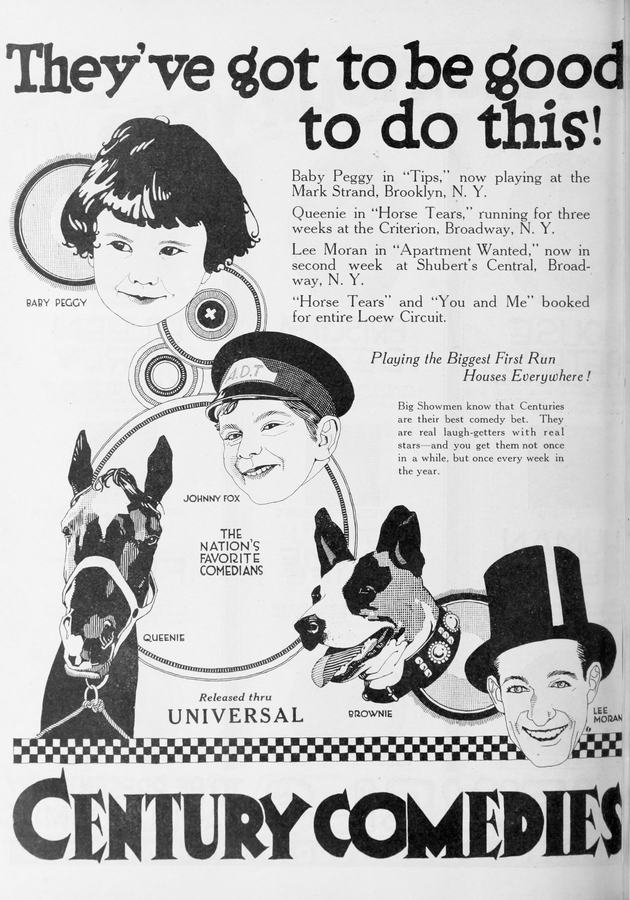
When discussing the pantheon of silent cinema, The Tattle Tail often occupies a curious niche—part satire, part moral fable, and entirely unapologetic in its celebration of a dog’s uncanny ability to sniff out vice. Directed with a blend of slapstick flair and proto-noir tension, this 1920s short film by Arvid E. Gillstrom leverages its star, Brownie the Dog, to craft a narrative that feels both quaint and eerily prescient. The story pivots around a clandestine operation: a gang of bootleggers, their illicit wares dispensed via a piano hitched to a wagon, which transforms each key struck into a gush of liquid sin. It’s a device that marries the mechanical precision of the Roaring Twenties with the absurdity of Prohibition’s contradictions.
At the heart of the film is Brownie, whose role as a “rum-hound” transcends the literal. He is both sleuth and symbol, his body a canvas for the evidence he collects—rolling in spilled liquor, his fur a physical ledger of the bootleggers’ crimes. The film’s most audacious sequence occurs when Brownie is cast into a lake, his tail the lone appendage spared from submersion. This aquatic denouement, shot with a stark beauty that recalls the chiaroscuro of German Expressionism, transforms the dog into a floating monument to justice. The liquor clinging to his tail, drained and used as irrefutable proof, becomes the linchpin of the film’s moral architecture: a tangible manifestation of sin’s inescapability.
The film’s humor derives from its juxtaposition of the mundane and the fantastical. The bootleggers’ piano, a literal money-making machine, is rendered absurd yet plausible—a testament to the ingenuity of silent film directors in repurposing everyday objects for narrative effect. The piano’s keys, when struck, emit not melodies but streams of whiskey, a visual gag that comments on the commodification of vice during Prohibition. This mechanical contraption, reminiscent of the Rube Goldberg machines popularized in the same era, serves as a metaphor for the industrialization of corruption. Yet, it is Brownie’s unflinching pursuit of truth, his ability to “soak up the evidence” without succumbing to the very vices he exposes, that elevates the film beyond mere farce.
In many ways, The Tattle Tail owes a debt to the German silent film Luksuschaufføren, which similarly employed animals as proxies for human folly. Both films use their non-human protagonists to critique societal decay, though Gillstrom’s approach is more whimsical. The inclusion of a small boy as an accomplice to Brownie adds a layer of generational commentary—a nod to the passing of moral responsibility from elders to youth. This dynamic is echoed in Der weisse Pfau, where a young woman’s naivety contrasts with the world-weariness of her peers. However, where Der weisse Pfau leans into melodrama, The Tattle Tail opts for a more absurdist tone, its humor rooted in the sheer improbability of a dog outwitting a gang of criminals through sheer olfactory intuition.
The film’s aquatic climax, where Brownie resists drowning by keeping his tail afloat, is a masterclass in visual storytelling. The lake, a symbol of purification, becomes the site of his redemption. The liquor clinging to his tail—a paradoxical blend of sin and salvation—is drained and presented as evidence, a resolution that feels both satisfying and thematically rich. This sequence, shot in a single unbroken take (a technique later popularized in the works of The Victory of Virtue), underscores the film’s technical ambition. The use of negative space in the scene—Brownie’s tail as the only object in motion against a static background—echoes the minimalist aesthetics of Bauhaus design, suggesting that even in its comedy, the film is steeped in the visual language of modernism.
Comparisons to Captivating Mary Carstairs are inevitable, given both films’ focus on women and water. Yet, while Mary Carstairs uses the sea as a metaphor for female autonomy, The Tattle Tail’s lake is a site of moral reckoning. Brownie’s tail, in this context, becomes a phallic symbol of authority—a literal and figurative appendage of justice that cannot be ignored. The film’s gender politics, while simplistic by modern standards, reflect the era’s paternalistic views, yet its use of the dog as a protagonist subverts these norms by placing an animal at the center of the moral universe.
The casting of Brownie himself is a triumph. Unlike the human actors, whose performances are constrained by the limitations of silent film acting—overly broad gestures, exaggerated expressions—the dog’s actions are rooted in authenticity. His rolling in the spilled liquor, his barking that punctuates the score, his tail’s defiant rise above the water—each movement is a performance that transcends the need for dialogue. This juxtaposition of mechanical and organic elements is a hallmark of Gillstrom’s style, one that anticipates the later works of The Moonstone, which similarly uses inanimate objects as narrative catalysts.
Thematically, The Tattle Tail can be read as an allegory for the Prohibition movement itself. The bootleggers, with their piano-wagon, represent the commercialization of rebellion, while Brownie embodies the idealistic enforcer of moral order. The film’s resolution—where evidence is not destroyed but preserved and presented—is a tacit acknowledgment of the futility of prohibition: the sin may be contained, but it cannot be eradicated. This duality is mirrored in The Lost Romance, where a forbidden love affair is both celebrated and condemned, its characters trapped between societal expectations and personal desire.
Visually, the film’s use of color—though it is a black-and-white production—is masterful. The piano’s keys, rendered in stark white against a shadowy background, evoke the purity of the law, while the spilled liquor’s dark tone symbolizes the corruption it seeks to expose. This interplay of light and shadow is reminiscent of the chiaroscuro techniques later refined in German Expressionist films like Das Modell, though Gillstrom’s approach is more functional than artistic. The mechanical precision of the piano’s contraption, with its gears and levers visible in close-up shots, invites comparisons to the industrial aesthetics of Trail of the Axe, where machinery often serves as a character in its own right.
Despite its brevity, The Tattle Tail manages to pack in a surprising amount of thematic density. The presence of a small boy as an ally to Brownie introduces a generational dimension, suggesting that the fight for moral clarity is a shared endeavor. This dynamic is further explored in Sapho (1917), where a young man’s idealism clashes with the cynicism of his elders, though Gillstrom’s treatment is more lighthearted. The film’s climax, with Brownie’s tail serving as the final piece of evidence, is a visual pun on the phrase “keeping one’s head above water,” a metaphor that extends beyond the aquatic setting to comment on the resilience required to uphold ethical standards in a morally ambiguous world.
Technologically, the film’s use of stop-motion and practical effects to depict the liquor-dispensing piano is noteworthy. The keys’ transformation from musical instruments to conduits of sin is achieved through a combination of mechanical set design and clever editing—techniques that would later be refined in the works of La voix d’or. The sequence where Brownie is thrown into the lake is particularly effective, with the tail’s continued elevation above the waterline achieved through a blend of suspension wires and careful camera angles. This attention to detail elevates the film from a simple comedy to a technical marvel, one that showcases the ingenuity of early filmmakers in an era before digital effects.
In conclusion, The Tattle Tail is a film that resists easy categorization. It is a comedy, a moral fable, a technical showcase, and a historical document all at once. Its use of a dog as a central character, while not unprecedented, is executed with such charm and precision that it feels uniquely its own. The film’s legacy lies in its ability to balance absurdity with insight, to find profundity in the mundane, and to use the tools of its time—silent film’s reliance on visual storytelling, the mechanical ingenuity of its era—to craft a narrative that remains engaging over a century later. For modern audiences, it serves as a reminder of cinema’s early days, when the line between reality and fantasy was as thin as the veil of Prohibition itself.
IMDb 6.5
1928
Community
Log in to comment.