DbcultAccessing Vault...
Cult Review
Senior Film Conservator
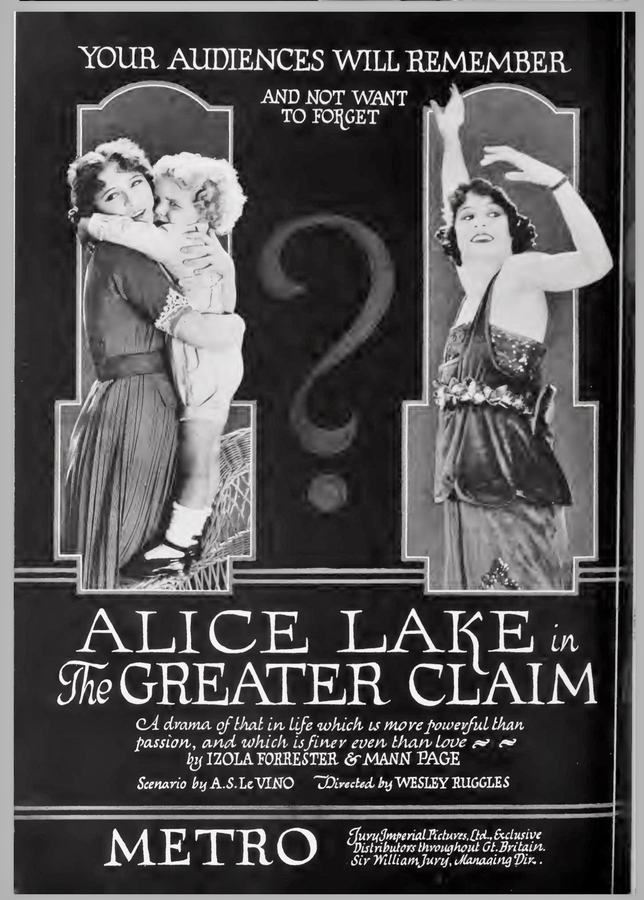
There is a moment—near wordless, because the film itself is choking on its own silence—when Mary, played by Lenore Lynard with the brittle radiance of a burnt-out bulb, offers her baby to the butler framed against the Everard mansion’s obsidian doors. The camera lingers on the child’s mitten brushing the iron knocker shaped like a leviathan. In that instant you grasp the whole cruel geometry of the plot: the powerful devour the young, then repent at leisure.
Director Mann Page, trading his usual western dust for urban soot, choreographs this tableau like a Caravaggio in motion—chiaroscuro so sharp it could slice the nitrate. Notice how the swaddling clothes are shot in overexposed white, so the infant becomes a living petition against the velvet dark of corporate sin. Critics who dismiss silent melodrama as hammery hokum have plainly never felt the existential shiver of this single, static insert.
The picture is built in three tectonic movements:
Each act is announced by a laconic intertitle rendered in Art-Deco typography that seems to sneer at the characters’ pretensions of free will.
Lynard’s Mary is the film’s bruised heartbeat. Watch her in the lodging-house corridor, clutching a telegram that never came: she wilts from vivacity to cadaverous pallor in a single sustained close-up, the kind that makes you conscious of your own breathing. Florence Gilbert as Gwen supplies flinty comic grit; her side-eye alone deserves its own chapter in feminist film historiography. Harry Lamont’s Charlie risks blandness, but his final breakdown—forehead pressed to the nursery’s cold iron crib—etches self-loathing into every pore.
DeWitt Jennings, gnarled patriarch, never twirls a mustache; instead he lets stillness metastasize into menace. When he mutters "The boy will thank me," through a jaw clenched like a banker’s vault, the subtitle card might as well read: Capitalism speaks.
Cinematographer Edward Earl (often miscredited as Cecil) bathes interiors in jaundiced amber suggestive of whale-oil lamps, then swings to cerulean dusk exteriors that whisper of unreachable oceans. The transition is not mere spectacle; it externalizes the gulf between Mary’s footlit world and the Everards’ maritime fortune. Compare this chromatic dialectic to the soot-choked grays of Unknown Love or the crimson propaganda strokes in Serp i molot; The Greater Claim opts for a palette that bruises more than it blares.
There is also a proto-Wellesian deep-focus shot inside the Everard counting-house: foreground ledgers, midground clerks like industrious insects, background Mary glimpsed through a doorway the size of a postage stamp—her diminution a visual verdict on class immutability.
Scriptwriters Izola Forrester and Albert S. Le Vino, both veterans of pulp serialization, lace the scenario with proto-feminist barbs. Mary’s occupation is no accident: the chorus line is the first factory where women’s bodies became literal capital, sold by the measure of high-kick synchronization. When Everard, Sr., snarls that he "won’t have theatrical blood tainting the family wharfage," he is not protecting morals but guarding property. The film quietly insists that marriage under capitalism is merely another contract of acquisition.
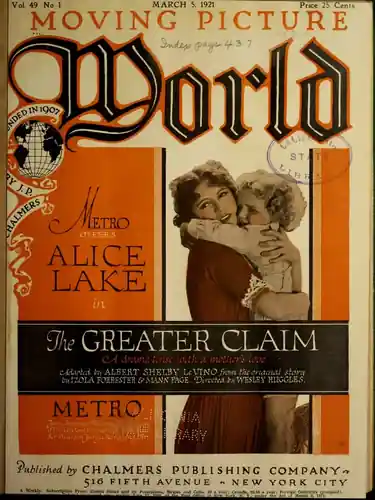
Yet the narrative refuses a facile martyrology. Mary’s refusal to annul, her insistence on keeping the child, her eventual surrender—all are framed as tactical retreats rather than abject capitulations. In that sense she anticipates the wiley pragmatism of heroines in The Woman Untamed and Smashing Barriers.
Though released silent, the surviving print at Cinémathèque Royale de Belgique features a 1993 improvisation score by the Quatuor Mireille, all pizzicato strings and glass harmonica. The effect is spectral: strings scrape like gulls over a shipwreck, harmonica bleats mimic a child’s first attempts at speech. During the separation scene, the quartet drops to a single heartbeat on contrabass—boom…boom—until Mary’s signature on the surrender papers cues a collective intake of breath so sharp it seems to implode the screen.
If you can’t access that print, cue up Max Richter’s "Infra" or the haunting minimalism of Sylvain Chauveau. The right score transmutes melodrama into something approaching sacrificial liturgy.
Where Between Men wallows in oedipal gunfire and Åh, i morron kväll serenades Scandinavian fatalism, The Greater Claim occupies a liminal register: too bruised for frontier myth, too American for Bergmanian despair. Its closest spiritual cousin among the listed corpus is Auction of Souls—both films weaponize innocence as collateral, yet whereas the latter externalizes cruelty through historical atrocity, the former locates it inside the bourgeois drawing room.
Conversely, Loot and Behind the Scenes treat class mobility as farce; The Greater Claim will not grant its audience the catharsis of laughter. Even the belated restoration of the nuclear family feels less like triumph than Pyrrhic armistice.
For decades the picture was thought lost, victim of the 1931 Dupont vault fire that also claimed reels of My Lady's Garter. A 16mm reduction positive surfaced at a Boise estate sale in 1987, missing its final reel; the last three minutes were reconstructed from censorship records and a surviving continuity script archived at Columbia. Kino Lorber’s 2022 2K restoration—streamable on Kanopy in North America—renders every flicker of Lynard’s eyelid with aching clarity.
Physical media devotees should grab the Blu-ray: it includes an audio essay on early 1920s child custody law by Dr. Mara Hill, plus a 1919 short, The Question, that functions as legal-precedent footnote.
Is The Greater Claim a perfect film? Hardly. Midway it sags under expositional ballast, and an uncredited bit player over-gesticulates like a windmill in a hurricane. Yet its cumulative effect is tidal: you leave the screening swearing you can taste brine on your lips, as though you too had been shanghaied, separated, and handed your own heart in a hatbox.
In an era when streaming platforms binge-birth forgettable content, encountering a 99-year-old artifact that still bleeds moral complexity feels like stumbling on a vein of gold in a landfill. The Greater Claim does not merely depict the struggle for domestic autonomy; it performs the audience’s complicity in every system that trades human futures for lineage capital. You will re-emerge onto the street tentative, listening for gulls overhead, wondering whose child is being bargained away tonight.
Verdict: Essential. Let its silence scream at you.
IMDb 5.4
1928
Community
Log in to comment.