DbcultAccessing Vault...
Cult Review
Senior Film Conservator
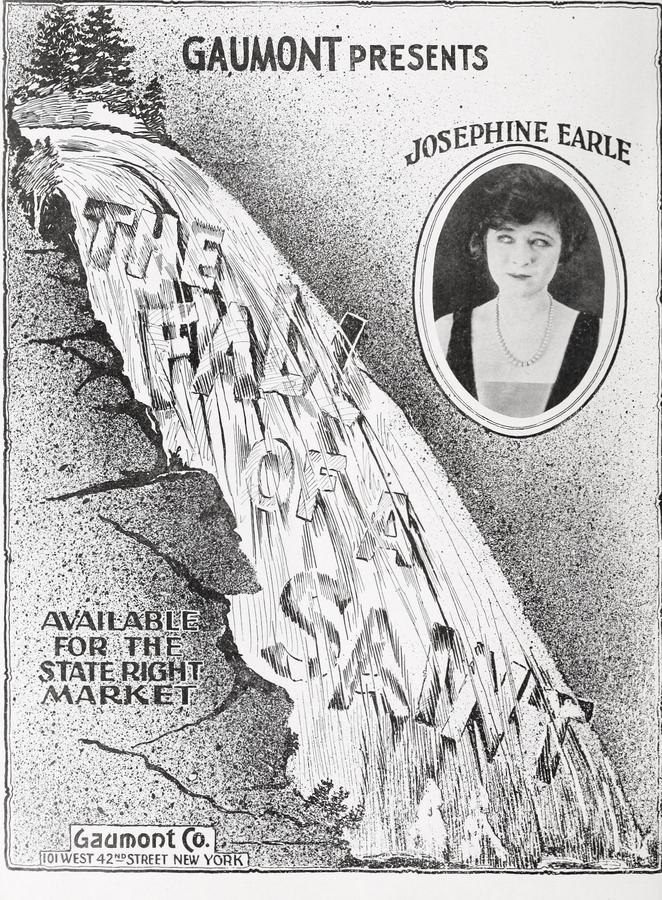
Step back into an era when cinema was still finding its voice, yet already masterfully articulating the deepest human frailties. 'The Fall of a Saint', a compelling piece from Eric Clement Scott's pen, plunges us into a world where moral rectitude is a fragile veneer, easily shattered by ambition, desire, and the chilling specter of past sins. This isn't merely a film; it's a stark psychological study, a brooding tapestry woven with threads of aristocratic intrigue, East End grit, and the insidious creep of corruption. It’s a testament to the silent era’s capacity for nuanced storytelling, proving that even without spoken dialogue, the human condition could be laid bare with profound eloquence.
At its core, the narrative orchestrates the tragic downfall of a benevolent Lord, a man whose earnest philanthropic endeavors in the squalor of the East End serve as his moral compass. His mission, a beacon of hope, becomes ironically the very crucible for his undoing. The film meticulously charts his seduction, not by overt villainy, but by the subtle, insidious charm of a Countess, a figure of captivating allure whose beauty belies a chilling past. Her tragic secret – the murder of his own brother – is the poisoned chalice she unknowingly offers, and the Lord, blinded by an intoxicating blend of infatuation and perhaps a subconscious yearning for something beyond his pious existence, drinks deeply. This initial transgression sets off a chain reaction, a domino effect of moral compromises that resonate with the classical tragedies of old. The narrative doesn't just present a plot; it dissects the very anatomy of a soul's surrender, exploring how even the most principled individuals can be led astray when their deepest vulnerabilities are expertly exploited.
The introduction of a shrewd detective elevates the drama from a mere domestic tragedy to a taut thriller. This character, far from being a straightforward hero, embodies a murky morality, a pragmatist who views the Lord's compromised position not with sympathy, but as an opportunity for personal gain. His blackmail forms the crucial pivot, transforming the Lord from a victim of circumstance into an active participant in his own spiraling disgrace. The film masterfully explores the psychological torment of being caught between a rock and a hard place: expose the Countess and shatter his own world, or succumb to the detective's demands and further entangle himself in a web of deceit. This struggle is palpable, rendered with an intensity that transcends the limitations of silent film. The thematic undercurrents ripple with questions of societal hypocrisy, the corrupting influence of power, and the devastating consequences of suppressed truths. It’s a narrative that feels both deeply personal and universally resonant, touching upon the eternal conflict between duty and desire, virtue and vice.
The success of 'The Fall of a Saint' hinges significantly on the extraordinary performances of its lead actors, who navigate the emotional complexities of their roles with a remarkable subtlety that belies the common misconception of silent film acting as overtly theatrical. Dallas Anderson, as the Lord, delivers a performance of profound pathos. His initial portrayal of a man genuinely committed to his charitable work radiates a quiet nobility, making his subsequent descent all the more heartbreaking. We witness his internal struggle through his expressive eyes and subtle shifts in posture, from the upright confidence of his early scenes to the stooped, haunted demeanor of his later ones. Anderson perfectly captures the anguish of a man torn between his moral obligations and the intoxicating, destructive pull of forbidden passion. His is a performance that lingers, a poignant depiction of a good man undone.
Josephine Earle, as the enigmatic Countess, is nothing short of captivating. She embodies the classic femme fatale archetype with a nuanced grace that avoids caricature. Her allure is not just physical; it's an aura of sophisticated danger, a magnetic pull that proves irresistible. Earle's portrayal hints at the depths of her character's past, suggesting a woman shaped by trauma and forced into desperate acts. Her expressions, at once seductive and subtly melancholic, convey the burden of her secret without ever needing to articulate it. The chemistry between Anderson and Earle is electric, a dangerous dance that propels the narrative forward with an almost palpable tension. Earle’s Countess is not just a villain; she is a complex figure, a victim of circumstance in her own right, making her actions all the more tragic.
Reginald Culhane, in the role of the blackmailing detective, injects a cynical realism into the proceedings. His character is the embodiment of opportunistic malevolence, a man unburdened by moral qualms. Culhane’s performance is a masterclass in controlled menace, his calculating gaze and measured movements conveying a predatory intelligence. He doesn't resort to overt villainy; instead, he presents a chillingly pragmatic individual, leveraging human weakness for his own gain. The interplay between Culhane’s detective and Anderson’s tormented Lord forms the dramatic backbone of the latter half of the film, a relentless cat-and-mouse game where the stakes are reputation, freedom, and ultimately, a man's very soul.
The supporting cast, including Gerald Lawrence, W.T. Ellwanger, R. Heaton Grey, and Thea Godfrey, provides robust support, fleshing out the societal tapestry against which this drama unfolds. Their presence, though often brief, contributes significantly to the atmosphere and credibility of the film's world, whether it's the earnestness of the mission workers or the detached grandeur of the aristocratic circles. Each actor, through subtle gestures and well-defined expressions, adds another layer to the intricate social fabric, ensuring that the central drama feels grounded and real.
The brilliance of 'The Fall of a Saint' is undeniably rooted in the intricate and psychologically astute writing of Eric Clement Scott. His screenplay is a testament to the power of a well-crafted narrative, eschewing simplistic morality tales for a more complex exploration of human nature. Scott doesn't offer easy answers; instead, he presents a world where good intentions can pave the road to hell, and where redemption, if attainable, comes at a steep price. The plot unfolds with a relentless logic, each development flowing naturally from the characters' choices and circumstances, building an inexorable sense of dread and inevitability. The dialogue, conveyed through intertitles, is sharp and purposeful, never extraneous, always advancing the plot or deepening our understanding of the characters' inner lives. Scott’s ability to weave together themes of class disparity, moral corruption, and the destructive nature of secrets is truly remarkable, solidifying his reputation as a master storyteller of his era. His work here stands as a compelling example of how early cinema, under the guidance of a skilled writer, could achieve profound dramatic impact.
Beyond the stellar performances and compelling script, the film's visual language plays a pivotal role in establishing its grim, yet captivating atmosphere. The cinematography, though characteristic of its time, effectively contrasts the stark reality of the East End mission with the opulent, yet morally compromised, world of the aristocracy. The deliberate use of shadow and light, a hallmark of early dramatic cinema, accentuates the moral ambiguity inherent in the narrative. Close-ups are employed judiciously, drawing the audience into the characters' inner turmoil, allowing the subtle nuances of their expressions to convey volumes of unspoken emotion. The set designs, from the austere, functional spaces of the mission to the lavish, ornate interiors of the Countess's abode, are not mere backdrops but active participants in the storytelling, reflecting the characters' social standing and psychological states. The overall visual aesthetic contributes significantly to the film's pervasive sense of impending doom and moral decay, making the "fall" not just a narrative event but a palpable visual experience.
Placing 'The Fall of a Saint' within the broader cinematic landscape of its era reveals its unique strengths and echoes familiar narrative currents. The film's exploration of a morally compromised detective and an intricate criminal plot brings to mind the early serials like Fantomas: The Mysterious Finger Print, though 'The Fall of a Saint' delves far deeper into the psychological ramifications of crime rather than merely its thrilling execution. Where Fantomas revels in the spectacle of villainy, Scott's work probes the internal erosion of a soul. The pervasive sense of entrapment and the dark undercurrents of human depravity also bear a thematic kinship with later, more overtly 'noir' films, even predating many of the genre's defining characteristics. One might even draw parallels to the stark psychological torment seen in films with more overt horror elements, like The Wolf Man, not in terms of supernatural horror, but in the monstrous transformation of a seemingly good man.
The film's incisive commentary on class structures and the moral decay within the upper echelons of society finds resonance in other contemporary dramas that scrutinized social strata. While films like A Gentleman from Mississippi or Marse Covington might tackle political corruption more directly, 'The Fall of a Saint' hones in on the personal cost of aristocratic entitlement and hidden transgressions. The juxtaposition of the Lord's East End mission with his aristocratic entanglements powerfully critiques the often-hypocritical philanthropy of the wealthy, a theme subtly explored in works that touch on social divides. The film also shares a somber, introspective quality with dramas that explore personal struggle, perhaps akin to the brooding intensity found in titles like Il campo maledetto, which often delve into the psychological weight of circumstance and fate. The tension between public image and private torment, a cornerstone of this film, is a timeless narrative device, here rendered with an early cinematic gravitas.
Furthermore, the subtle exploration of moral ambiguities and the slow, inevitable creep of fate in 'The Fall of a Saint' could be seen as a precursor to more complex character studies. It avoids the clear-cut good-versus-evil dichotomy often present in simpler adventure serials like Around the Clock with the Rookie or lighthearted comedies such as Pets and Pests. Instead, it aligns more with the dramatic weight of films like Still Waters or The High Horse, which similarly navigate the treacherous currents of societal expectations and personal failings. The film's ability to sustain such profound emotional and moral inquiry without spoken words is a remarkable feat, underscoring its enduring artistic merit and its significant place in the development of cinematic storytelling.
In an age often characterized by its burgeoning technical innovations, 'The Fall of a Saint' stands as a powerful reminder that the true heart of cinema lies in its capacity to dissect the human condition. It is a film that, despite its silent origins, resonates with a profound emotional depth, exploring themes of moral compromise, the seductive power of forbidden desire, and the relentless grip of past misdeeds. The narrative, expertly crafted by Eric Clement Scott and brought to life by a stellar cast, particularly Dallas Anderson and Josephine Earle, offers a timeless meditation on the fragility of virtue and the ease with which even the most upright individuals can succumb to the darker impulses of the soul. Its visual storytelling, with its stark contrasts and evocative close-ups, ensures that the audience is not merely observing a story but experiencing the agonizing unraveling of a man's life. This film is more than a historical artifact; it is a gripping drama that continues to speak volumes about the complexities of human nature, making it a crucial watch for anyone interested in the evolution of sophisticated cinematic narrative.
IMDb 5.6
1921
Community
Log in to comment.