DbcultAccessing Vault...
4.4/10
Senior Film Conservator
A definitive 4.4/10 rating for a film that redefined the boundaries of cult cinema. The Handy Man remains a cornerstone of transgressive art.
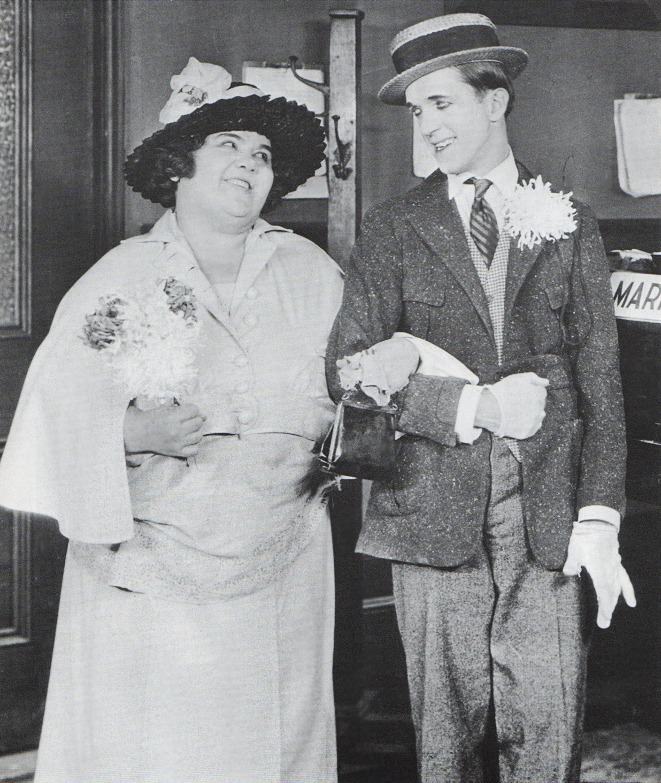
Stan Laurel’s *The Handy Man* (1927) is a marvel of silent-era comedy, a film that marries physical absurdity with narrative cunning. At its core, the film is a study in contrasts: the chaos of slapstick against the rigid structures of domestic life, Laurel’s manic energy juxtaposed with the stoic resilience of his supporting cast. The plot, deceptively simple, revolves around a handyman’s obsessive fascination with a plump cook, who turns out to be the missing spouse of a shadowy figure. What emerges is a series of escalating mishaps, each more improbable than the last, yet executed with such precision that the farce feels inevitable.
Laurel’s genius lies in his ability to transform mundane objects into instruments of chaos. A broom becomes a weapon, a ladder a stage for acrobatics, and a kitchen a battlefield of culinary farce. In one standout sequence, he attempts to repair a leaking faucet while juggling the demands of the cook and the stranger’s sudden reappearance—a scene that showcases his unparalleled timing and spatial awareness. His physicality is never mere spectacle; each gag serves the narrative, escalating the tension as the handyman’s world spirals into disarray. The film’s most memorable moment is a prolonged chase through a house, where Laurel’s limbs flail with the grace of a marionette in a storm, only to land him in a butter churn—a gag that is at once ridiculous and deeply human.
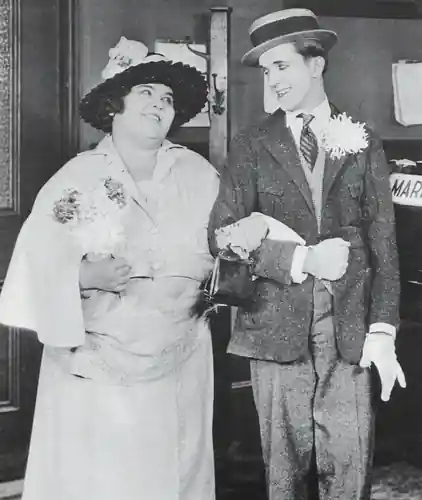
While Laurel commands the screen, the women in *The Handy Man* are its unsung architects of chaos. Merta Sterling, as the plump cook, balances slapstick with pathos. Her wide-eyed innocence masks a cunning that drives the plot’s central deception. When the stranger (Babe London) reappears, her performance shifts seamlessly from warmth to desperation, a testament to the emotional stakes buried beneath the comedy. London, meanwhile, embodies a brooding authority, his presence a dark counterpoint to Laurel’s lightness. The dynamic between these three characters forms a triangle of misunderstanding, where every glance and gesture is charged with subtext.
Bob Munson’s script is a masterclass in visual storytelling. Without dialogue, the film relies on expression, gesture, and mise-en-scène to convey its twists. The use of shadows and stark lighting in the stranger’s scenes adds a noir-like tension, a technique that would later define the suspense genre. The editing is brisk, with cuts that punctuate Laurel’s movements like a punctuation mark in a sentence. Even the sound design, though limited to live orchestration in screenings, enhances the slapstick—each thud, crash, and wail of the accordion underscoring the physicality of the comedy.
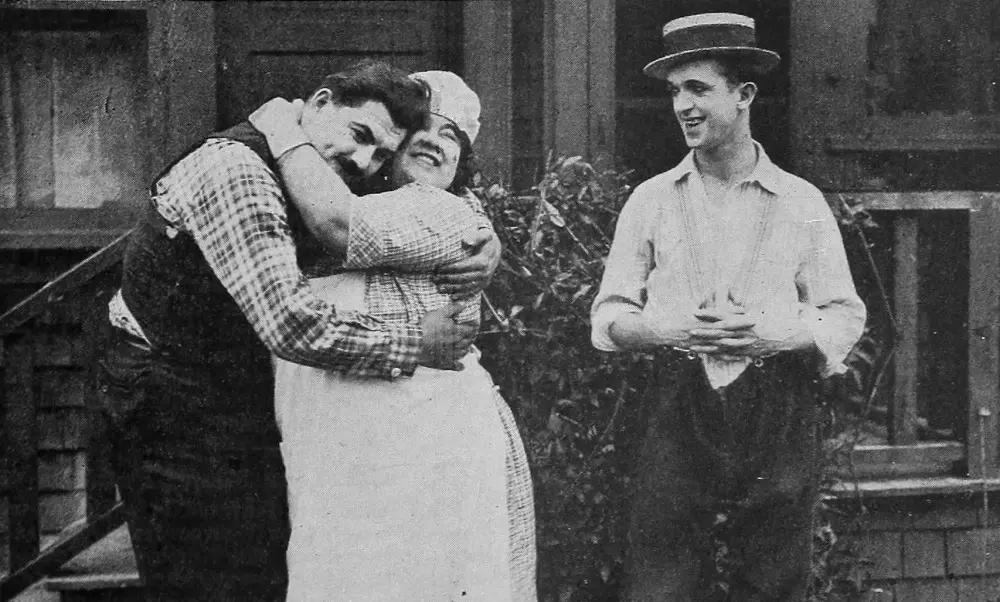
Placing *The Handy Man* within Laurel’s filmography reveals its significance. It predates his iconic partnership with Oliver Hardy, yet already displays the elements that would define their collaboration: a focus on the underdog, a love for domestic absurdity, and a balance between chaos and order. Comparisons can be drawn to *The Lamb and the Lion* (1927), another Laurel film where a misfit protagonist navigates societal expectations, though *The Handy Man* diverges in its heightened physicality. It also shares thematic DNA with *The Diamond Necklace* (1927), where mistaken identities drive the plot, but where *The Diamond Necklace* leans into romantic misadventures, *The Handy Man* doubles down on domestic farce.
Though *The Handy Man* is not as celebrated as some of Laurel’s later works, it remains a vital piece of early Hollywood comedy. Its influence can be seen in the slapstick of Buster Keaton and Charlie Chaplin, yet Laurel’s approach is uniquely human—his characters are bumbling, yes, but never cartoonish. The film’s exploration of identity and belonging resonates even today, a reminder that comedy can be both a mirror and a magnifying glass. For scholars, it offers a window into the evolution of narrative structure in silent films, while casual viewers will find it a delightful romp through the hall of laughs.
For those interested in similar works, *The Brute Breaker* (1927) and *Shadows of Suspicion* (1927) explore similar themes of mistaken identity and domestic intrigue. Meanwhile, *Kids and Kidlets* (1927) showcases Laurel’s ability to weave multiple subplots into a single narrative. To trace the lineage of Laurel’s style, *Sweet Kitty Bellairs* (1928) and *The Probation Wife* (1927) offer further insight into his comedic sensibilities.
In conclusion, *The Handy Man* is a testament to the enduring power of physical comedy. It is a film that rewards repeated viewings, each time revealing new layers of absurdity and artistry. For fans of classic cinema, it is an essential piece of the puzzle—a charming, chaotic, and ultimately human story told through the universal language of laughter.
IMDb 7.1
1933
Community
Log in to comment.