DbcultAccessing Vault...
Cult Review
Senior Film Conservator
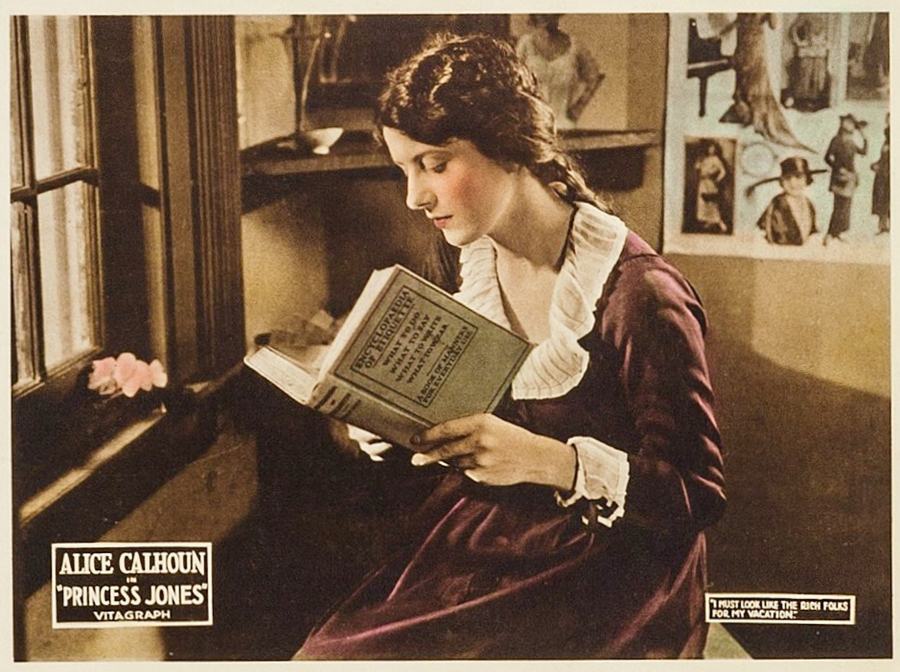
The first time we see Princess Jones, she is weighing a stick of licorice against a daydream, and the scale tips toward the dream. Alice Calhoun lets the licorice hover mid-air, her pupils dilated as though already tasting champagne; in that micro-gesture the whole film announces its creed: appetite is negotiable, aspiration is not.
Joseph F. Poland’s screenplay, lacquered with A. Van Buren Powell’s urbane intertitles, treats the Cinderella template like taffy—pulling it into screwball shapes long before the term existed. The country store is shot in high-contrast dusk, shelves etched like prison bars across Princess’s face; three reels later the resort’s ballroom erupts in tidal waves of confetti, each scrap of paper a pale stand-in for the social mobility she covets. Sam Taylor’s direction keeps the iris shots circular as coins, reminding us every privilege has a price tag.
Cinematographer Frank Zucker frames the gown’s unveiling like a secular annunciation: curtains part, a shaft of sea-blue (#0E7490) light spears the dark, the dress billows out of its box with the hush of papal silk. Calhoun steps into the beam and suddenly her shadow possesses ducal blood. The gag is paper-thin—nobody bothers to question why a Balkan princess travels alone without a lady’s maid—but the conviction with which the resort’s dowagers genuflect turns artifice into theology.
Compare this to the kidnapping sequence: night-for-night photography along gravel roads, headlamps carving yellow gashes through dust, the Packard itself a predatory cat. Silent-era thrillers more often rely onExpressionist shadows; here the danger is industrial, modern, a premonition of Bonnie-and-Clyde brutality. When Arthur—played by Vincent Coleman with a profile sharp enough to slice bread—leaps from roadside shrubbery onto the running board, the stunt feels perilously authentic, no under-cranked trickery.
Calhoun’s Princess never curtsies to virtue. She fibs, flirts, and for a heartbeat considers letting the deception ride all the way to a throne. Yet her eyes—huge, glass-bright—betray the terror that someone will call her bluff. It is the most human thing in a film otherwise devoted to artifice. Coleman’s Arthur, by contrast, exudes the blasé entitlement of the wealthy slumming for muses; when he realizes his wallet can purchase not just silk but identity, a flicker of revulsion crosses his face, as though he has glimpsed the void inside his own privilege.
Helen Dubois, as the bona-fide princess, glides through the final reel dispensing absolution like cigarette smoke. She has perhaps three shots yet imprints the film with continental ennui: her nod to Princess Jones is less sisterhood than recognition—we are both exiles, you from poverty, I from purpose.
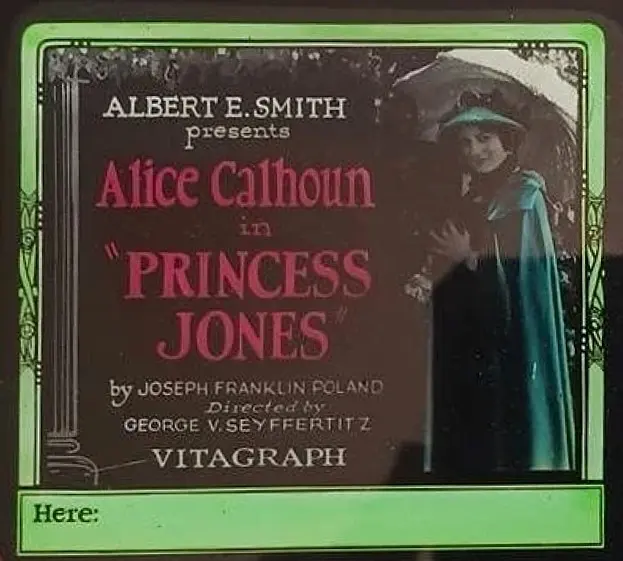
The screenplay’s sharpest barbs lurk in parentheticals. A dowager whispers: “Blue blood is merely red blood with better lighting.” The line lasts three seconds but reverberates through every gilded corridor. The gown itself—allegedly Parisian, probably Newark—functions like paper money detached from the gold standard: its value is consensual hallucination. Once Princess is shorn of the dress (kidnappers strip her to her slip), the illusion evaporates; identity, the film argues, is haute couture: sewn by perception, ripped by circumstance.
Still, the film refuses miserabilism. Arthur’s uncle, a robber-baron archetype straight from a Dreiser subplot, capitulates with suspicious ease—one senses Poland yanking the narrative back toward box-office sunniness. Yet even this capitulation carries a sting: the final intertitle reads, “Happily ever after—at wholesale prices.” The joke lands because we know the ledger is still ticking somewhere off-screen.
Surviving prints bear the ghost of a cue sheet: waltz for the lobby, gallop for the abduction, a fox-trot to send us home beaming. Contemporary festivals have commissioned new scores—strings, brushed snare, even a ukulele riff that underlines the film’s proto-screwball DNA. I caught a 4K restoration at Pordenone with a trio who leaned into klezmer clarinet whenever the Balkan error was mentioned; the anachronism felt apt, a reminder that Europe’s fractured kingdoms were themselves comic fabrications.
As of this month, Princess Jones streams on Classix in a 2K transfer, and a Blu-ray from Grapevine Video offers the aforementioned cue sheet plus a commentary by historian Lara Putnam. Algorithms will steer you toward better-known flapper comedies like Puppy Love or All Kinds of a Girl, yet neither matches the sly class commentary nesting inside this country-mouse caper.
No director remade Princess Jones during the sound era, though its DNA resurfaces in Miss Hobbs (1934) and even the Claudette Colbert vehicle The Easy Road. The trope of mistaken royalty became a screwball staple, but the original’s sting—poverty as original sin—was sanded down into harmless froth. Viewers who discover this 1923 precursor often report a vertiginous chill: the realization that ninety years later we still rent the gown, swipe the card, chase the chandelier reflection.
So revisit Princess Jones not for epochal grandeur but for its pocket-mirror wit, its willingness to let a country girl bite the apple and discover both the sweetness and the rot. The film ends on a kiss silhouetted against a terrace sunset—standard tableau—yet Calhoun’s eyes stay open, scanning the horizon as though already plotting her next reinvention. In that unblinking gaze lies the film’s enduring, slightly dangerous, enchantment.
IMDb 5.7
1930
Community
Log in to comment.