DbcultAccessing Vault...
Cult Review
Senior Film Conservator
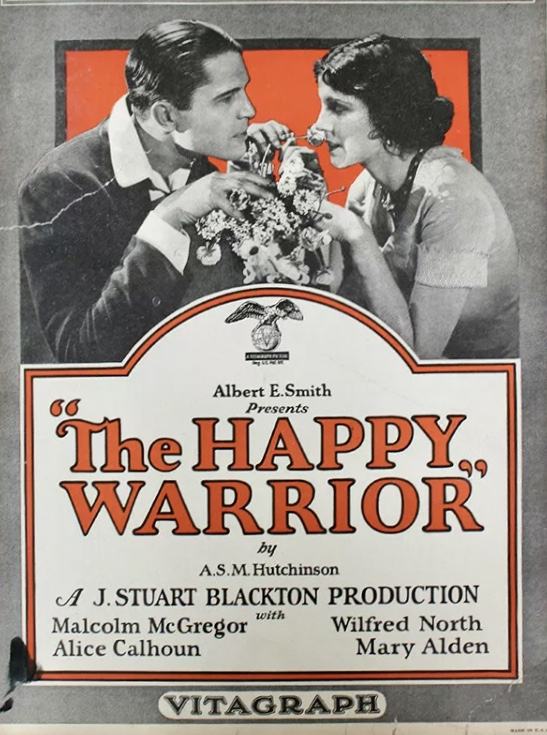
In the annals of classic cinema, certain narratives transcend their era, speaking to universal human experiences with an enduring resonance. Such is the case with The Happy Warrior, a film that, despite its vintage, delivers a remarkably nuanced exploration of identity, duty, and the often-painful crucible of moral choice. This isn't merely a period piece; it’s a profound meditation on what it means to be truly honorable, particularly when the stakes involve both inherited legacy and cherished relationships. It’s a story that asks us to ponder the true cost of patrimony versus personal integrity, a question as relevant now as it was when the film first graced the silver screen.
At its core, The Happy Warrior presents a protagonist whose life is, from its very inception, a study in displacement and eventual self-discovery. We are introduced to a young man, raised under the benevolent, if humble, roof of a postmistress, a woman whose act of adoption, though simple, sets in motion a chain of events with profound aristocratic implications. This is not the typical tale of a lost heir suddenly thrust into luxury; rather, it's the more compelling narrative of an individual forging his own identity far from the inherited trappings of wealth and status. His chosen path, that of a professional boxer, is a stark contrast to the life he was born into. The boxing ring, with its raw physicality and stringent codes of conduct, becomes his school of hard knocks, shaping his understanding of fairness, perseverance, and the dignity of earned achievement. It's a fascinating juxtaposition: a man destined for a life of inherited ease, instead choosing to define himself through the sweat and grit of a working-class sport. This early trajectory immediately sets him apart from the entitled characters often found in similar narratives, lending his eventual moral dilemma a much greater weight. The film implicitly critiques the notion that true worth is solely derived from birthright, suggesting instead that character is forged in the fires of personal struggle and the choices made under duress.
The film’s emotional core is undeniably anchored by Leslie Howard’s nuanced portrayal of the protagonist. Howard, a master of understated intensity, imbues the character with a quiet dignity and an internal struggle that is palpable. He avoids the pitfalls of melodrama, instead opting for a portrayal that speaks volumes through subtle glances, hesitant gestures, and a weary intelligence in his eyes. When the truth of his birthright is finally unveiled, it's not met with gleeful ambition, but with a profound sense of perplexity and even a touch of reluctance. This is not a man who craves power or status; he simply seeks to understand his place in the world. Howard beautifully conveys the character’s moral compass, which has been honed in the honest, if brutal, world of the boxing ring. His understanding of fair play and honorable conduct is deeply ingrained, making the subsequent betrayal all the more devastating. His performance is a masterclass in conveying complex emotions without overt histrionics, reminding one of his equally compelling, yet vastly different, portrayal in The Greyhound, where a protagonist's journey of self-discovery also involves overcoming external obstacles and internal conflicts, albeit in a different milieu. Here, Howard's strength lies in his character's quiet resolve, a strength that is tested to its absolute limits.
The narrative’s pivotal moment arrives with the shocking revelation that his closest friend, a figure he has trusted implicitly, is, in fact, a usurper. This isn't merely a legalistic dispute over an inheritance; it's a profound personal betrayal that strikes at the very heart of the protagonist's sense of loyalty and justice. The film doesn't shy away from the agonizing ethical dilemma this presents. To reclaim his rightful title would mean dispossessing a man he considers a brother, shattering a bond that, however flawed, has been a significant part of his life. To abdicate, however, would be to renounce his birthright, to allow injustice to stand, and perhaps to betray a deeper sense of duty to his lineage. This is where The Happy Warrior truly distinguishes itself. It elevates the conflict beyond mere property dispute into a profound philosophical inquiry into the nature of right and wrong, loyalty and integrity. The film's brilliance lies in its refusal to offer easy answers, instead dwelling on the protagonist's internal torment as he grapples with an impossible choice. One might draw parallels to the profound moral quandaries faced by characters in films like The Price of Tyranny, where the struggle against an unjust power often comes at a steep personal cost, or even the societal pressures and familial disputes explored in The Mill on the Floss, though here the stakes are uniquely personal for the protagonist.
While Leslie Howard rightfully commands the screen, the film's strength is bolstered by a finely tuned supporting cast. Winifred Evans, as the compassionate postmistress who adopts the young heir, brings a warmth and grounded sensibility to her role. Her character represents the moral bedrock from which the protagonist draws his initial values, a stark contrast to the aristocratic world he is destined to inherit. Roy Byford, Sydney Lewis Ransome, and the other members of the ensemble, including Jeff Barlow, H. Agar Lyons, Harry Lorraine, Evelyn Boucher, James Knight, Minna Grey, and Joan Legge, each contribute to the rich tapestry of the narrative, creating a believable world around our central figure. The character of the usurper friend, in particular, is crafted with enough complexity to avoid becoming a one-dimensional villain. He is not simply evil, but rather a man driven by ambition and perhaps a misguided sense of entitlement, making his eventual comeuppance, or lack thereof, resonate more deeply. The film excels at showcasing how these peripheral figures, each with their own motivations and vulnerabilities, impact the protagonist’s journey and the ultimate decisions he must make.
The choice to make the protagonist a boxer is far from arbitrary; it serves as a powerful, overarching metaphor for the film's central themes. The boxing ring, with its clear rules, its demands for fair play, and its brutal honesty, mirrors the moral arena in which the protagonist must ultimately fight his greatest battle. In the ring, one earns victory through skill, endurance, and adherence to the rules. There are no inherited titles, no unearned privileges. This background profoundly shapes his character, instilling in him a sense of integrity that clashes sharply with the duplicity and entitlement he encounters in the aristocratic world. His training, his discipline, and his understanding of an honest fight inform his approach to the much larger, more complex battle for his inheritance and his sense of self. It’s a compelling narrative device that grounds the more abstract concepts of honor and justice in a tangible, visceral reality. The physical struggles in the ring become a precursor to the immense psychological and ethical struggles outside of it, preparing him, perhaps unwittingly, for the ultimate confrontation with betrayal and the weight of an unasked-for legacy.
While specific directorial credits are not provided, the film's narrative craft speaks volumes about its thoughtful execution. The pacing is deliberate, allowing the emotional weight of each revelation to sink in, rather than rushing through plot points. The cinematography, typical of its era, focuses on character expression and dramatic staging, effectively conveying the internal turmoil and external conflicts. The film manages to build considerable tension not through explosive action, but through the slow, agonizing unraveling of truth and the moral quandaries it presents. This approach creates a timeless quality, ensuring that the film's themes remain potent regardless of technological advancements in filmmaking. It’s a testament to the power of strong storytelling and compelling character development over spectacle. The Happy Warrior, therefore, stands as a quiet but formidable example of classic cinema's ability to explore profound human truths with grace and intelligence. Its legacy lies not in being a blockbuster, but in its persistent ability to provoke thought and empathic engagement with its characters' struggles. The film reminds us that sometimes, the greatest battles are fought not with fists, but with principles, and the truest victories are those of the spirit.
In conclusion, The Happy Warrior is far more than a simple period drama about an inheritance dispute. It is a deeply affecting character study, propelled by a superb performance from Leslie Howard, exploring the intricate dance between fate and free will, between inherited status and self-made integrity. The film asks us to consider what truly constitutes a 'happy warrior' – is it one who fights for material gain, or one who battles for the preservation of his own moral compass, even at great personal cost? The protagonist's ultimate decision, imbued with both sacrifice and profound personal conviction, resonates long after the credits roll. It’s a powerful reminder that true nobility often lies not in the titles we bear, but in the choices we make when confronted with the most challenging of ethical dilemmas. This is a film that rewards careful viewing, offering layers of meaning for those willing to delve beneath its surface, proving that tales of honor and integrity, when told with such finesse, truly stand the test of time.
IMDb 5
1928
Community
Log in to comment.