DbcultAccessing Vault...
Cult Review
Senior Film Conservator
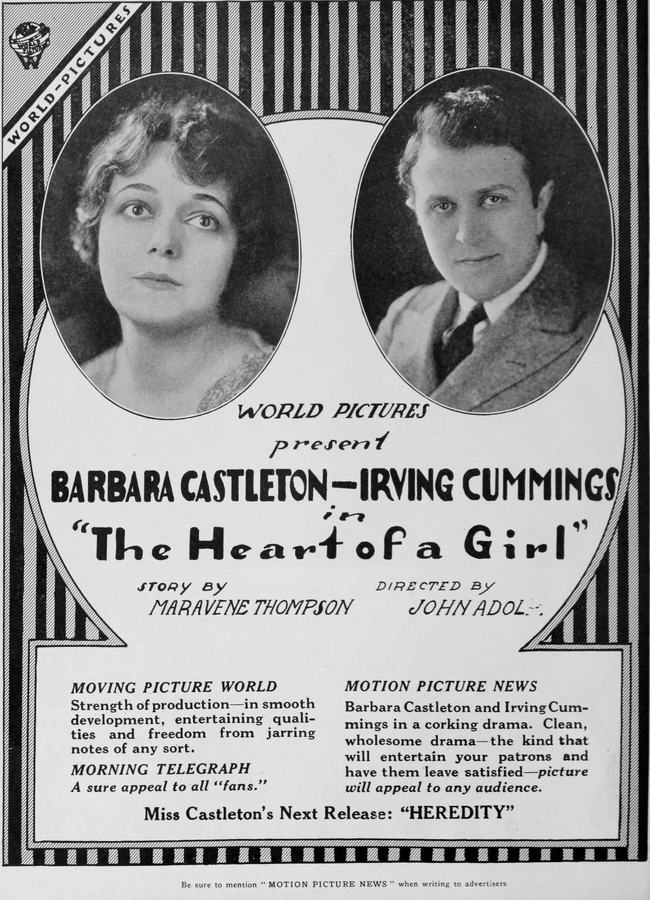
In the annals of early cinema, certain narratives emerge not merely as entertainment but as potent reflections of societal anxieties and aspirations. The Heart of a Girl, a film seemingly steeped in the gentle conventions of its era, transcends its initial appearance to deliver a surprisingly robust commentary on political ethics, the insidious nature of rumor, and the burgeoning power of female agency. It is a work that, while adhering to the romantic tropes of its time, skillfully weaves a tale of innocence imperiled and ultimately redeemed through an unexpected display of courage. Directed with a keen eye for human drama, and penned by the collaborative talents of Maravene Thompson and George DuBois Proctor, this film presents a compelling tableau of Washington, D.C. society, where personal affections and public ambitions collide with often dramatic consequences.
The narrative unfurls within the seemingly placid environs of the nation's capital, where Betty Lansing, portrayed with a captivating blend of vulnerability and inner strength by Gladys Valerie, finds herself drawn back into the orbit of Brandon Kent, a young Congressman on the cusp of significant political advancement. Charles Wellesley imbues Kent with an earnestness that makes his character immediately sympathetic, his aspirations clear, and his potential pitfalls palpable. Their rekindled acquaintance quickly blossoms into a tender romance, painting a picture of idyllic courtship that feels both genuine and aspirational. However, this burgeoning affection is not permitted to flourish in tranquility. The film subtly introduces elements of societal engagement through the charitable whist games hosted by Betty and her mother, a seemingly innocuous pastime designed to benefit worthy causes. These gatherings, while appearing to be mere social functions, serve as a crucial narrative device, establishing the moral compass of the Lansing household and, paradoxically, setting the stage for unforeseen turmoil.
It is during one of these very whist parties that the veneer of polite society is abruptly shattered by the arrest of Drake, an embezzler. This event, initially unconnected to Kent, becomes a weapon in the hands of Oakland, played by John Tansey with a chilling blend of calculated malice and smoldering resentment. Oakland, a jilted suitor and political rival, seizes upon Kent's incidental presence at the party to craft a pernicious lie. His visit to the campaign headquarters of Johnson, Kent's competitor for the gubernatorial nomination, is a masterclass in political subterfuge, where truth is distorted and rumor weaponized. Oakland’s calculated insinuation that Kent was involved in a gambling raid is a move of audacious cynicism, designed to dismantle his rival’s reputation and career. The film expertly illustrates how quickly a whisper can become a roar, how an unfounded accusation can gain traction, particularly within the cutthroat arena of political campaigning.
The escalating tension is palpable as the narrative progresses towards the state convention. The initial optimism surrounding Kent’s nomination begins to wane, replaced by an unsettling uncertainty as delegates, swayed by the fabricated scandal, withdraw their support. The film effectively conveys the fragility of a public figure’s standing, demonstrating how easily a carefully constructed career can be jeopardized by a well-placed lie. Here, The Heart of a Girl touches upon themes remarkably resonant even today, highlighting the enduring power of misinformation and character assassination in the political landscape. The stakes are raised considerably, not just for Kent’s career, but for Betty’s personal happiness and her belief in justice.
The true heart of the film, however, lies not in Kent’s political struggle, but in Betty Lansing’s extraordinary transformation. As Kent’s prospects dim, Betty refuses to be a passive observer. Her character arc is perhaps the most compelling, evolving from a gracious hostess and romantic interest to a formidable advocate for truth and justice. She enlists the support of Mrs. Ogden, a suffrage leader whose presence in the narrative is not merely ornamental but deeply symbolic. Mrs. Ogden, likely portrayed by Kate Lester or Ricca Allen, embodies the burgeoning force of female empowerment, lending her gravitas and strategic acumen to Betty’s cause. This collaboration underscores a significant societal shift, where women were increasingly asserting their voices in public spheres, challenging traditional gender roles, and influencing political outcomes. The inclusion of a suffrage leader is a poignant nod to the contemporary movement for women's voting rights, imbuing Betty's actions with broader cultural significance.
The climax of the film, Betty’s speech on the convention platform, is a masterful stroke of narrative design. It is here that Gladys Valerie truly shines, delivering a performance that must have been electrifying for audiences of the time. Without the benefit of spoken dialogue, her expressions, gestures, and overall demeanor would have conveyed an intensity that transcended mere words. Her rousing address, meticulously exposing Oakland as a liar and championing Kent’s integrity, serves as the ultimate turning point. It’s a powerful demonstration of how moral courage, when articulated with conviction, can sway public opinion and dismantle even the most entrenched falsehoods. This scene not only exonerates Brandon Kent but also elevates Betty Lansing to the status of a true heroine, a woman who, through her intellect and bravery, directly influences the political fate of her beloved.
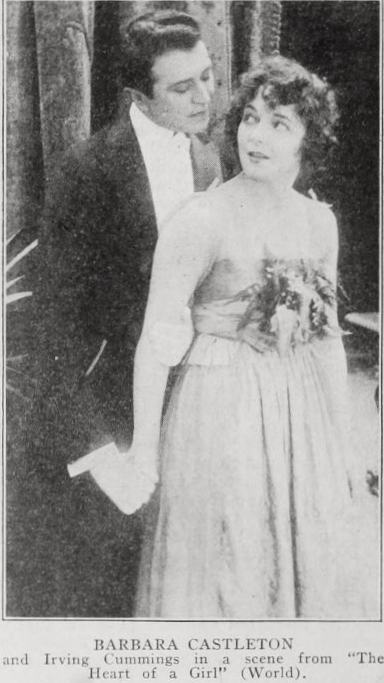
The ensemble cast contributes significantly to the film's overall impact. Gladys Valerie's Betty Lansing is the emotional core, her journey from romantic interest to political savior being both believable and inspiring. Charles Wellesley's Brandon Kent, while central to the plot's political machinations, relies heavily on Betty's ultimate intervention, making him a sympathetic but somewhat less proactive figure. John Tansey's Oakland is a compelling villain, his motivations of jealousy and ambition driving much of the conflict. The supporting players, including Inez Shannon, Barbara Castleton, William T. Carleton, and the aforementioned Kate Lester and Ricca Allen, round out a believable socio-political milieu, each contributing to the film's nuanced portrayal of D.C. society. The direction, while adhering to the stylistic conventions of early 20th-century cinema, demonstrates a clear understanding of dramatic pacing and character development. The use of close-ups would have been crucial for conveying the emotional weight of Betty’s speech and Oakland’s villainy, allowing the actors’ nuanced expressions to carry the narrative effectively.
The writers, Maravene Thompson and George DuBois Proctor, deserve commendation for crafting a narrative that is both engaging and thematically rich. They navigate the complexities of political slander and personal integrity with skill, ensuring that the plot never feels overly simplistic despite its melodramatic elements. The pacing builds effectively towards the climactic convention scene, making Betty’s intervention feel earned and impactful. The film’s structure, moving from innocent romance to public scandal and then to heroic vindication, is a testament to effective storytelling that resonates across cinematic eras.
At its core, The Heart of a Girl is a film about the power of truth and the courage required to uphold it. It explores the fragile nature of reputation, particularly in the public eye, and the ease with which it can be tarnished by malicious intent. The juxtaposition of the seemingly benign charity whist games with the arrest of an embezzler highlights the underlying moral complexities that can exist beneath a polished surface. This thematic thread finds a compelling echo in films like Charity Castle, where the concept of philanthropy often serves as a backdrop for deeper human dramas, revealing the true character of those involved. Both films use the veneer of charitable activity to explore more profound questions of integrity and societal contribution.
Furthermore, the film’s depiction of political machinations and the use of slander to undermine an opponent is a timeless observation on human nature and ambition. The smear campaign against Brandon Kent, based on a flimsy connection to a criminal act, is a tactic that remains distressingly common in political discourse. In this regard, it shares thematic DNA with films such as When False Tongues Speak, where the destructive power of gossip and calumny forms the central conflict. Both narratives underscore the profound damage that can be inflicted by baseless accusations and the arduous journey required to clear one's name.
Perhaps the most striking aspect of The Heart of a Girl, however, is its powerful portrayal of female empowerment. Betty Lansing's decisive action, supported by the suffrage leader Mrs. Ogden, positions her as a proto-feminist icon. She is not merely a damsel in distress awaiting rescue; she is the architect of her beloved's salvation. This resonates with the spirit of films like Molly Entangled or even Arms and the Girl, where female protagonists navigate complex situations and often take charge of their destinies, challenging the passive roles often assigned to women in earlier cinematic narratives. Betty's journey reflects the broader societal changes occurring in the early 20th century, a period marked by significant advancements in women's rights and their increasing participation in public life. Her ability to command the political stage and sway a convention full of men is a potent symbol of this evolving landscape.
While The Heart of a Girl may not be as widely discussed as some of its more famous contemporaries, its thematic richness and compelling character arcs ensure its enduring appeal. It offers a valuable glimpse into the moral and political sensibilities of its time, while simultaneously delivering a universal message about integrity, courage, and the power of love to inspire heroic acts. The film serves as a reminder that even in an era often characterized by rigid social structures, individuals, particularly women, could rise to challenge injustice and shape their own narratives. It is a testament to the fact that a strong, principled character can, against all odds, triumph over deceit and manipulation.
The film’s simple yet powerful title, The Heart of a Girl, perfectly encapsulates its central theme: the unwavering spirit and moral compass of its heroine. It suggests that true strength lies not in political power or social standing, but in the purity of one’s intentions and the courage to act upon them. This is a story that, despite its period setting, speaks to contemporary audiences about the importance of standing up for what is right, even when faced with overwhelming opposition. It is a classic in its own right, deserving of renewed appreciation for its thoughtful exploration of timeless human dramas and its pioneering depiction of female heroism.

IMDb —
1924
Community
Log in to comment.