DbcultAccessing Vault...
7.1/10
Senior Film Conservator
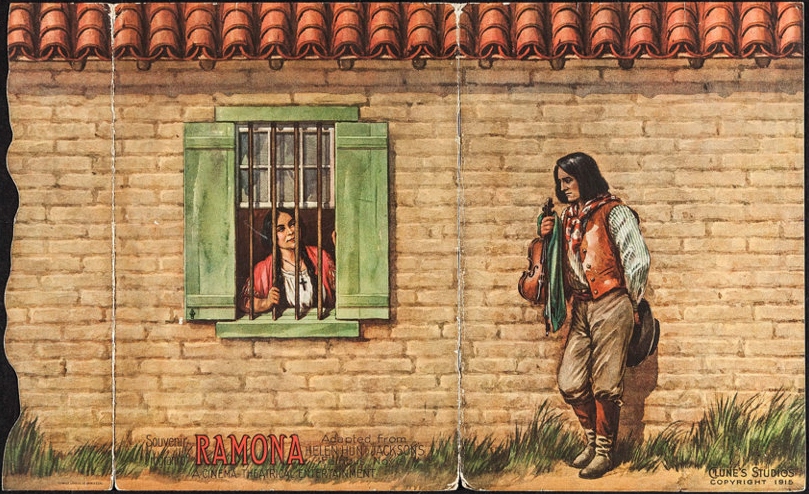
A definitive 7.1/10 rating for a film that redefined the boundaries of cult cinema. Ramona remains a cornerstone of transgressive art.
A heat-haze tremor ripples across the opening iris shot, and already the film announces its operatic ambitions: California’s mission arcades stand like ossified prayers while cattle graze beneath bell towers that once tolled for souls. Director Edwin Carewe, adapting Helen Hunt Jackson’s sentimental blockbuster, refuses to deliver mere melodrama; instead he weaponizes the pastoral postcard, turning every bougainvillea into a bloodstain-in-waiting.
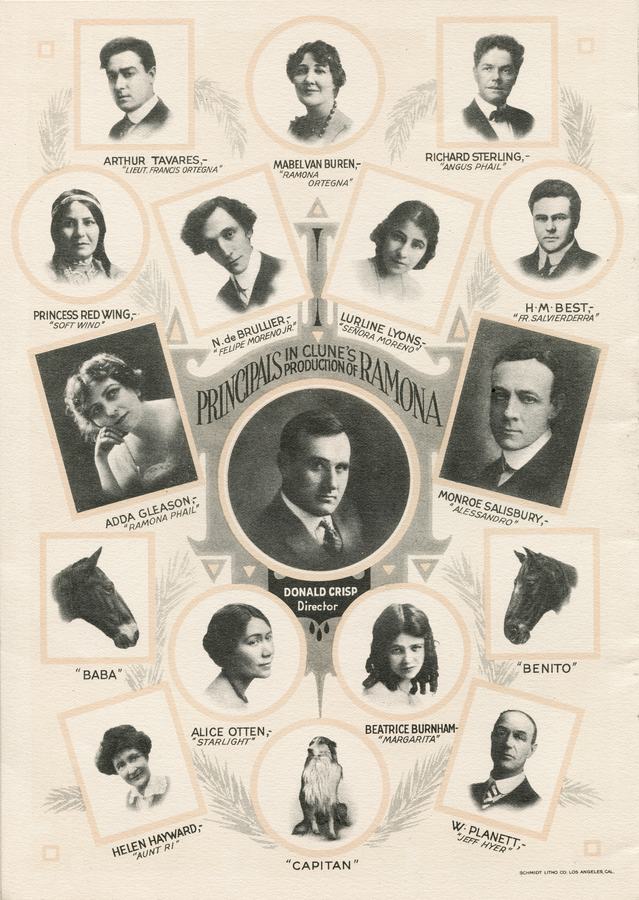
Ann Dvorak’s Ramona enters barefoot, her tangled hair absorbing sunlight like loomed copper. Notice the micro-gesture: she fingers a torn lace collar as though it were a relic, already sensing the creed stitched into her garments will soon unravel. Across the courtyard, Monroe Salisbury’s Alessandro tunes his violin; the instrument becomes the film’s second mouthpiece—its vibrato foretelling doom more eloquently than any title card. Their first eye-lock lasts perhaps four seconds, yet Carewe prolongs the moment via an interpolated flash-cut to wild mustard blooms swaying in double exposure—an oneiric premonition that love will root itself in fertile soil only to be poisoned by history’s brine.
Señora Moreno—played by Mabel Van Buren with such icy hauteur that her rosary beads seem to clack in Morse code for supremacy—embodies the landed gentry’s cognitive dissonance: she genuflects before a brown-skinned Madonna yet forbids her heir from fraternizing with the very people who carved the pews. One dinner sequence stages this hypocrisy with surgical precision. The camera dollies past silver chalices, wax-sealed land grants, and a servant boy fanning peacock feathers; when Ramona requests permission to marry, the senora’s fork freezes mid-air, a slab of roast bleeding onto Sevillian china. Cut to an extreme close-up of Ramona’s pupils dilating—a silent earthquake. The mise-en-scène weaponizes tableware as colonial artillery.
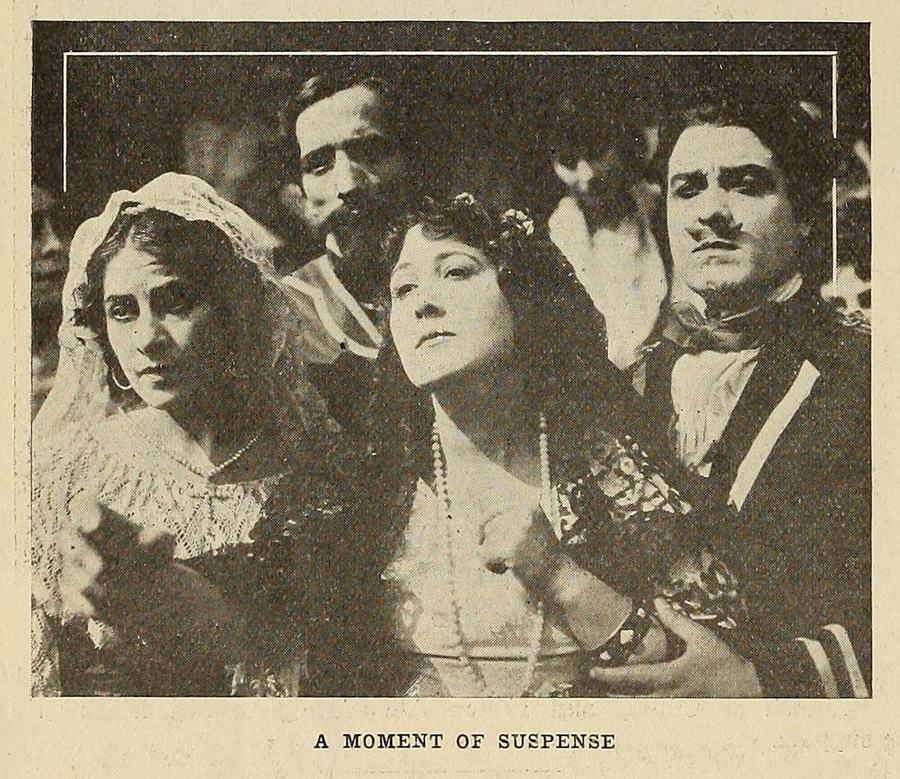
After the lovers’ midnight elopement, the film’s palette desaturates; tungsten interiors give way to plein-air vastness captured in Griffith-style wide shots, yet the land no longer appears Edenic. Instead, the chaparral bristles with Manifest Destiny’s detritus: surveyors plant stakes where grizzlies once roamed, and a prospector nonchalantly rifles through a corpse’s pockets. In one devastating vignette, Alessandro attempts to buy grain with a silver-mounted saddle only to have the storekeeper flip a “No Indians Served” placard—a chunk of wood that lands with the thud of a tombstone.
Because the film predates synchronized dialogue, every emotion must erupt through visual synecdoche. When Alessandro’s village is torched, Carewe withholds the conflagration itself; instead we see ash landing on a child’s abandoned cedar flute, the instrument’s mouthpiece blackening like a cancerous tooth. The absence of crackling Dolby foley paradoxically amplifies horror—the viewer’s imagination fills the void with phantom crackles, a phenomenological sleight worthy of Poe.
Donald Crisp, essaying the role of a genocidal sheriff, wields silence as sadistic weapon. He corners Alessandro against a redwood trunk; the intertitle reads merely “Move along, boy,” yet Crisp’s lips stretch into a grin so languid it feels like barbed wire unspooling. The camera tilts up to the tree’s canopy, implying centuries of empire towering over one man’s breath. No orchestral swell, no crash cymbal—just cicadas, until the pistol coughs. The cutaway to Ramona clasping her ears inside a distant cave literalizes the concept of acoustic trauma: even unheard, violence reverberates.
Contemporary viewers might glance at the plot—star-crossed lovers, racist America—and yawn, “Been there, As Ye Sow.” Yet Ramona diverges from moralistic melodramas of its era by refusing the catharsis of comeuppance. The sheriff never faces trial; Señora Moreno’s final close-up reveals her weeping beneath a gold-leaf altar, yet her tears read less as remorse than mourning for a vanishing way of life—colonial guilt dissolved into self-pity. The film’s true coup is embedding this indictment inside a lush romantic weepie, smuggling subversion past studio gatekeepers who only saw “exotic” sets and box-office receipts.
Compare it to The Devil’s Needle (1916), which sensationalizes urban drug abuse with scare-tactics aplomb; Ramona likewise depicts societal rot but locates the needle not in some bohemian den rather in the very marrow of nation-building. Or weigh it against Way Outback’s rugged mateship, where landscape functions as crucible for white virility; here the same expanses devour the marginalized, turning frontier myth inside out.
Ann Dvorak, only fifteen during principal photography, channels adolescence’s voltaic uncertainty—her Ramona ricochets between tremulous defiance and operatic despair without ever lapsing into the arm-flailing histrionics that date many silent performances. Watch the scene where she bargains with a Catholic padre: she kneels, seems ready to accept penitential whipping, then suddenly stands, eyes blazing like votive candles tipped sideways. The moment crystallizes the character’s epiphany that institutions cannot sanctify love.
Monroe Salisbury, often dismissed as a pretty face, actually modulates Alessandro’s arc from poised dignity to shell-shocked specter. After his village’s massacre he sits amid smoldering rubble, cheekbones flickering in firelight; the actor lets his lids flutter half-mast, a micro-acknowledgement that warrior stoicism has cracked. It’s the kind of detail Brando would later trademark, yet here it flickers unnoticed, like a confession whispered into a corpse’s ear.
Though monochromatic, the film’s tinting strategy functions as emotional chromotherapy. Sepia interiors denote feudal stasis; sapphire night scenes suggest ontological uncertainty; amber dusk sequences, suffused with California poppies, prefigure blood that will later seep into soil. Costume designer Alice Davenport drapes Ramona initially in Andalusian lace—an intertextual nod to Spain’s colonial project—then progressively swaps fabric for homespun cotton until the final act finds her in a threadbare shawl indistinguishable from neighboring Gabrieleño women. The visual erosion of privilege parallels the narrative’s erasure of identity.
Recurring iconography of horses deserves scrutiny. The animals first appear as extensions of ranchero glamour, their saddles studded with Mexican silver. Post-elopement, however, the mounts grow skeletal, ribs protruding like cathedral spires. In the penultimate sequence, Alessandro attempts to outride a posse on a lathered mustang; when the beast collapses, the dust plume resembles a mushroom cloud—silent cinema forecasting apocalyptic cinema decades later.
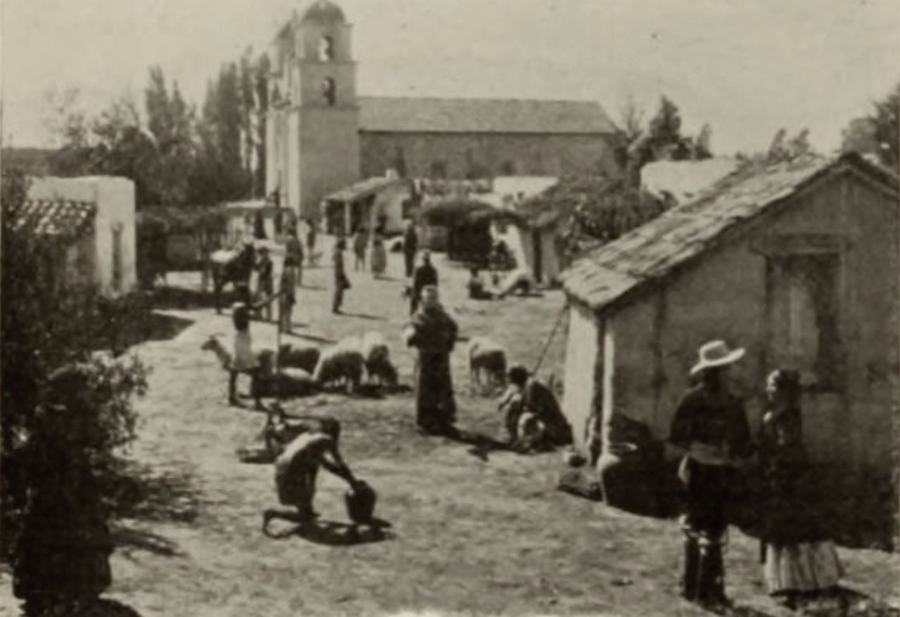
Ramona’s body becomes contested territory long before her wedding night. Señora Moreno caresses her adopted daughter’s tresses while simultaneously plotting to marry her off to a criollo cousin, turning filial affection into speculative real estate. Later, a U.S. marshal eyes Ramona with the same covetous gaze he levels on acreage, implying that westward expansion operates through twin engines: territorial seizure and patriarchal conquest. The film’s most radical gesture is allowing its heroine to survive Alessandro, to wander the chaparral as a vagabond prophetess, her mournful ululation a perpetual curse against extraction economies.
One could read this as proto-ecofeminist: the land, feminized and raped, retaliates via Ramona’s voice echoing through canyons. Yet the film complicates such reductive valorization; Ramona’s final soliloquy (delivered via intertitle superimposed over crashing surf) confesses that even she, dispossessed, still dreams of property—an admission that settler ideology has metastasized inside the colonized psyche. The circularity is Sophoclean: victim becomes accomplice becomes lamenting chorus.
Fast-forward to the 21st century: Kelly Reichardt’s Meek’s Cutoff also stages westward migration as existential cul-de-sac, while Terrence Malick’s The New World aestheticizes colonial encounter through voice-over reverie. Both owe a debt—perhaps unacknowledged—to Carewe’s trailblazing synthesis of landscape portraiture and historical critique. Even the frenetic zip of In Search of the Castaways can’t fully obscure the same dread: that every paradise map conceals a burial mound.
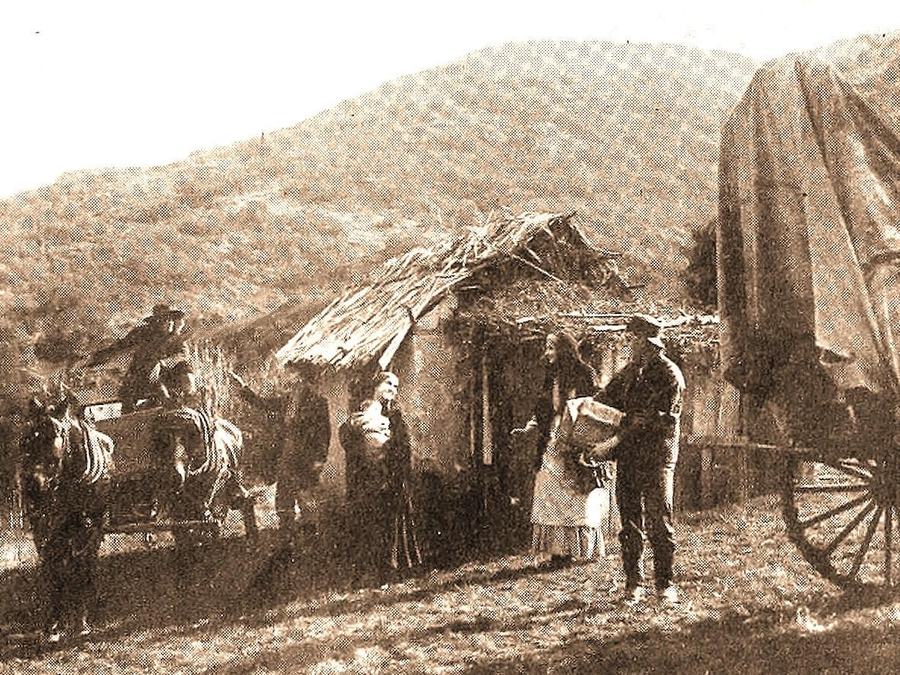
Meanwhile, the 1936 talkie remake with Loretta Young sands off the tale’s serrated edges, tacking on a redemptive finale where Ramona’s mixed-race child symbolizes reconciled America. Such revisionism illustrates how each era remythologizes the past to soothe its guilty conscience. The 1928 silent version, by dint of its uncompromising bleakness, feels startlingly contemporary—like an artifact fallen through a time-warp, scorching the palms of anyone who tries to domesticate it.
For decades the film languished in 16mm purgatory, mislabeled in studio vaults as “Spanish melodrama.” A 2018 4K restoration by the UCLA Film & Television Archive, culled from a Czech nitrate print and an American “camera negative,” reinstated tints and approximated the original 104-minute runtime. Stream it via criterion-channel or snag the Flicker Alley Blu-ray; both preserve Maurice Baron’s 1928 orchestral score re-orchestrated for 5.1 surround, transforming your living room into a mission nave echoing with ghost choirs.
Yet cinephile giddiness should be tempered by ethical reflection. The film’s Indigenous extras were paid half the white extras’ wage; Chief Standing Bear, portraying a tribal elder, received a flat $50 for what amounts to a pivotal cameo. Watching today implicates us in a century-old economy of exploitation. One response is to pair viewing with scholarship—say, Philip J. Deloria’s Indigenous Sensibilities & Cinema—or donate to the ongoing Land Back movements reclaiming territories depicted onscreen.
Great art doesn’t comfort; it lacerates and then leaves the wound exposed to salt breeze. Ramona does precisely that, orchestrating a Beauty-and-the-Beast aria where Beauty ends up widowed amid scorched sagebrush and the Beast is America’s voracious appetite for dominion. It’s a film that knows landscapes are never neutral, that every citrus-scented breeze carries molecules of displacement. To watch it is to inhale that history, to let it settle in your alveoli until you cough up the ash of recognition.
So if you crave a quaint period romance, queue up Sunday or The Pretenders. If you want your retinas seared by a vision as politically incendiary as it aesthetically ravishing, surrender to Ramona. Just don’t expect catharsis—expect a scar that will itch every time you drive past a California mission souvenir shop.
IMDb 6.4
1922
Community
Log in to comment.