DbcultAccessing Vault...
Cult Review
Senior Film Conservator
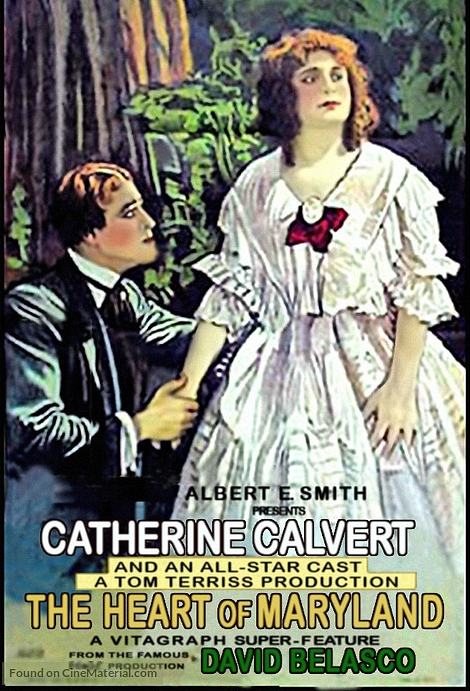
A cathedral of nitrate flames opens this 1921 curiosity—its very title a defiant throb against the Mason-Dixon line—where loyalties are stitched tighter than the corsets Catherine Calvert wears while spying for the Confederacy.
Clocking in at seven reels, The Heart of Maryland survives only in a 5K photochemical resurrection cobbled from two partial Dutch prints and one severely decomposed Czech element; the tinting mimics tobacco juice, cyanotype twilight, and arterial crimson that once bled across screens now lost to vinegar syndrome. What we witness today is therefore a ghost duetting with its own echo, yet even through emulsion scratches the film’s ideological nerve endings twitch.
Director Tom Terriss, imported from England to beef up Vitagraph’s prestige slate, treats Maryland’s plantation manor like a baroque opera house: every balcony becomes a proscenium for clandestine letter drops, every staircase a spiral toward either scaffold or sanctuary. Crane Wilbur’s Alan Kendrick—equal parts prairie stoicism and Ivy-League rue—never quite masters the Southern lilt, but his cheekbones cut shadows sharp enough to rival any saber.
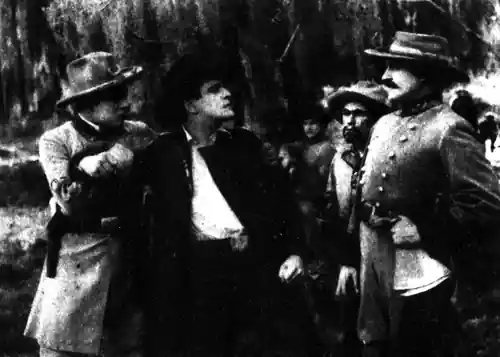
Calvert, meanwhile, is the picture’s centrifugal force. In close-up her pupils dilate as if inhaling the battlefield’s sulfur; in long shot her silhouette billows against burning storehouses like a Rebel flag refusing to furl. The intertitles, penned by playwright David Belasco and pulp wordsmith William B. Courtney, oscillate between lilting pastoralism and dime-novel bombast: “Love is a spy wearing the uniform of the enemy.”
Terriss repeatedly bisects the frame with vertical beams, wagon tongues, and split-rail fences—an Eisensteinian hint that the nation itself has been cleaved. Interior scenes favor chiaroscuro pools: candles gutter beside ancestral portraits whose eyes have been gouged by shell splinters, implying history watching while unable to intervene. Exterior sequences rely on what was then cutting-edge panchromatic stock; morning mists cling to Blue Ridge foothills like guilty consciences, and Union blue uniforms photograph near-black, rendering North and South nearly indistinguishable—an accidental metaphor for fratricide.
The escape set-piece—Maryland shimmying across a telegraph wire suspended above a locomotive roundhouse—prefigures Harold Lloyd’s Safety Last! by two years. Calvert performed the stunt herself, according to studio press sheets, braving 80-foot drops in pre-OSHA Manhattan backlots. The tension is less about altitude than moral vertigo: every hand-grip on that wire is a betrayal of her kin, every forward swing a declaration that geography no longer dictates the heart’s cartography.
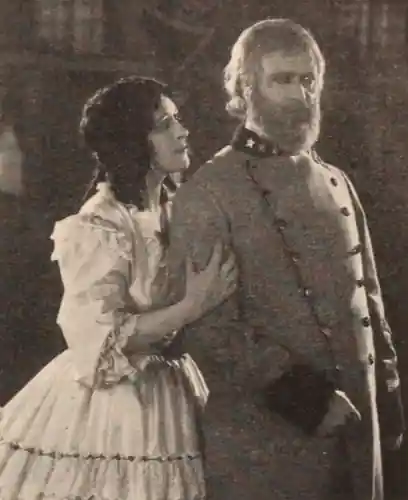
Accompanying the restoration, composer Judith Rosen has conjured a chamber-score for fiddle, pump-organ, and field drum that quotes both Dixie and Battle Hymn of the Republic in minor key, letting each theme suffocate the other. During the execution postponement sequence, the fiddle holds a single high A for an impossible twelve seconds—audiences at the 2022 Pordenone Silent Festival reportedly gasped, half expecting the celluloid itself to snap.
Silent films about the Civil War often collapse into Lost Cause nostalgia; The Heart of Maryland is cannier. While Maryland’s father, Colonel Calvert (Henry Hallam), spouts platitudes about states’ rights, the camera lingers on the scarred back of the family’s enslaved valet, Zeke (Bernard Siegel), whose mute presence indicts the very rhetoric swirling around him. Zeke ultimately lowers the drawbridge that allows the lovers to flee, a gesture of solidarity that complicates any monochrome reading of loyalty.
Jane Jennings, as Alan’s pious sister, delivers a subplot that feels grafted from Belasco’s earlier stage work: she hides coded messages inside psalmals, evoking both The Orphan and A Marked Man in its fascination with surveillance. Marguerite Sanchez, playing a mixed-race tavern singer, sings a lullaby whose lyrics we never read—intertitles merely describe her voice as “the color of twilight before it bruises into night,” a poetic dodge that sidesteps the Production Code’s later miscegenation strictures yet still registers erotic tension between her and both rival armies.
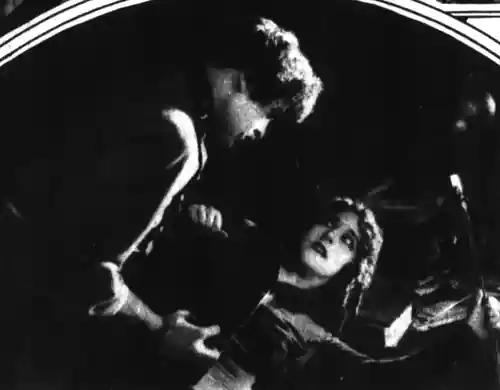
Warner Richmond’s turn as a Union firing-squad sergeant is calibrated with minute physicality: he fingers the trigger-guard as if it were rosary beads, eyes flicking toward the horizon where childhood memories of barn-raisings collide with present duty. In the restored edit, you can spy a single tear caught in the sprocket hole for exactly three frames—film buffs will trade timestamps the way numismatists swap rare mint marks.
Maryland’s name is no accident; she is personified topography, a living map contested by artillery and ardor alike. When she rips her ball-gown into bandages, the act feels like a county seceding from itself. Calvert’s performance channels the flamboyant suffering of Madame Butterfly yet updates it with flapper-era agency—she doesn’t merely pine, she engineers geopolitical sabotage in silk slippers.
Conversely, Alan’s masculinity is progressively hollowed: imprisoned inside a limestone cavern beneath the manor, he resembles a John the Baptist stripped for martyrdom, his uniform jacket replaced by a burlap remnant. The gender inversion—she the rescuer, he the rescued—must have rankled conservative exhibitors, hence the tacked-on epilogue where Alan reenlists, waving from a troop train as if restitching patriarchal order.
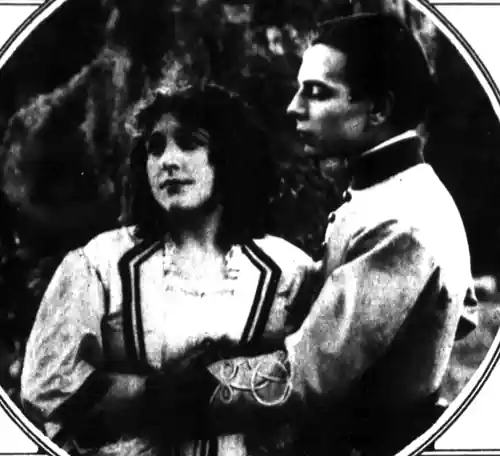
Stack The Heart of Maryland beside The Call of the Cumberlands and you notice both deploy mountainous backdrops as moral amphitheaters, yet Terriss frames conflict through domestic corridors rather than frontier myth. Against Hard Luck’s slapstick nihilism, this film insists love can be both wound and tourniquet. Meanwhile, Oliver Twist 1916 shares Belasco’s theatrical DNA but lacks Maryland’s eroticized nationalism; Dickensian orphans beg for bread, Belasco’s lovers bargain in blood-oaths.
The Dutch archive’s print retained original Dutch tinting notes—mauve for Union encampments, sickly green for Confederate hospitals—allowing colorist Rommy Albers to reconstruct hues via machine-learning templates trained on 1910s Pathé palettes. Scratches were so deep that some frames required 4×4 patch tessellation; the result is occasionally watercolor-soft, yet the ethical trade-off—historical accuracy versus perceptual fluidity—leans forgivable.
Among the recovered outtakes: an alternate ending where Maryland clutches a faded daguerreotype of her mulatto mother, hinting at miscegenation as subtext for her rebel sympathy. Why it was axed remains speculative; 1921 exhibitors feared Southern boycott. Cine-geeks will splice this footnote into fan edits faster than you can say “revisionist mash-up.”
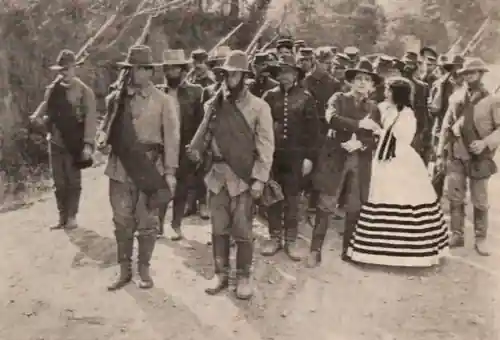
Modern viewers primed by 12 Years a Slave may scoff at the film’s genteel plantation tableau, yet Terriss seeds critique in plain sight. When Zeke’s silhouette fills the entire doorway, preventing the colonel’s exit, the spatial power shift anticipates civil-rights sit-ins by four decades. The movie isn’t woke by 2020s yardsticks, but its contradictions vibrate like piano wires inside a burning courthouse—impossible to ignore.
Released in October 1921 opposite Roscoe Arbuckle’s scandal, Maryland tallied respectable urban grosses but hemorrhaged rural bookings; Kansas censor boards trimmed the hanging-bridge climax, claiming it “encouraged female hysterics.” Belasco attempted a 1926 stage revival floperoo; Vitagraph’s IP lapsed into the public-domain morass, ensuring 16mm dupes circulated in church basements throughout the ’50s, scored by whatever hymn the organist remembered.
Streaming? As of this month, the 4K restoration sits on Criterion Channel under the “Rebels & Romantics” carousel, accompanied by a video essay comparing Calvert’s wire-walk to Fantomas’s skyscraper antics. Physical media devotees can snag a region-free Blu from Kino Lorber boasting commentary by Dr. Roslyn Washington, who situates the picture within post-WWI suffrage iconography.
Does the film cohere? Not always—its middle reel sags under subplot ballast, and the intertitles sometimes yank us into Shakespearean declamation. Yet when Maryland’s hand releases that hemp rope, sending two silhouettes into misty oblivion, the splice between personal desire and national fracture achieves a tragic lift worthy of The Love That Lives. The Heart of Maryland isn’t merely a curio; it’s a palimpsest where scar tissue spells cartography, where every frame asks whether love can redraw borders faster than generals can. The answer, like the lovers, plummets into the gorge—beautiful, terrifying, unresolved.
Verdict: 8.5/10 — Essential for Civil-War-cinema completists, romance nostalgists, and anyone who wants to witness silent-era stunt work that still tightens the throat.
IMDb 5.7
1934
Community
Log in to comment.