DbcultAccessing Vault...
Cult Review
Senior Film Conservator
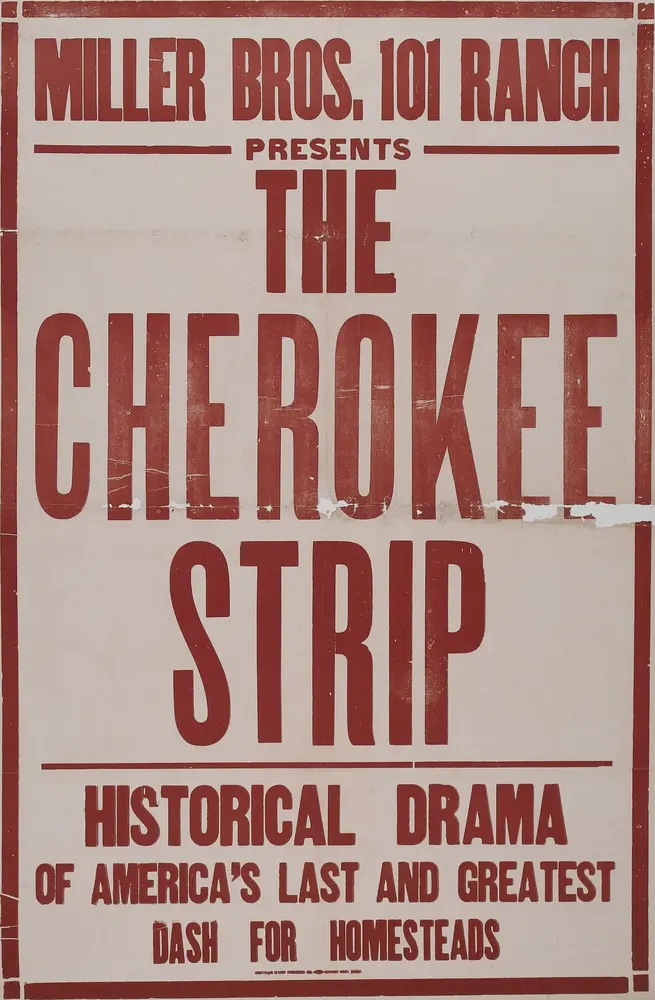
Is The Cherokee Strip worth watching today? Short answer: yes, but only if you view it as a historical artifact rather than a Saturday night popcorn flick.
This film is for the cinematic archaeologist and the Western purist who values grit over glamour; it is absolutely not for those who require high-definition pacing or a clear-cut hero’s journey. It is a demanding watch that rewards patience with a sense of genuine, unvarnished history.
To understand this film, one must accept that it operates outside the modern rules of engagement. It works. But it’s flawed.
1) This film works because it captures the sheer, terrifying scale of the 1893 Land Rush with a level of physical authenticity that modern CGI cannot replicate.
2) This film fails because its narrative cohesion is frequently sacrificed for spectacle, leaving the human subplots regarding oil rights feeling like afterthoughts.
3) You should watch it if you want to see Lucille Mulhall, a real-life rodeo legend, command the screen with a physical presence that puts many modern action stars to shame.
The Cherokee Strip is unique because it utilizes the actual landscape and techniques of the late 19th-century West, often featuring performers who lived through the era. Unlike later Hollywood Westerns that sanitized the frontier, this film preserves the chaotic, often violent energy of the land grab. It serves as a bridge between the lived experience of the pioneers and the emerging art of motion pictures.
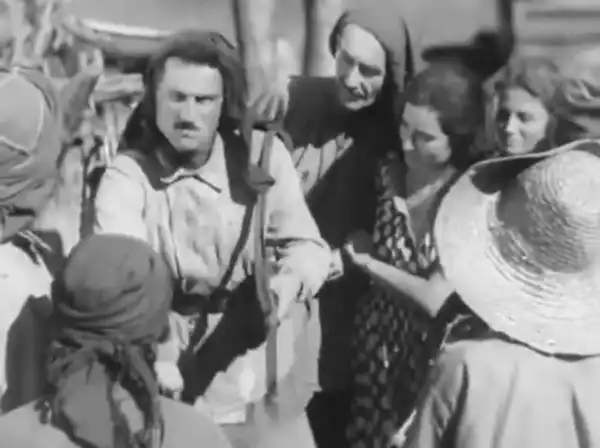
The centerpiece of the film is, naturally, the race itself. There is a primal energy in the way the camera captures hundreds of wagons and riders charging into the void. It lacks the safety-first choreography of a modern production. You can almost taste the dust in the air. This isn't the choreographed dance of Manhattan; it is a sprawling, messy, and dangerous collision of bodies and wood.
Consider the scene where the homesteaders first stake their claims. There is a desperation in their movements that feels less like acting and more like a captured memory. The film doesn't shy away from the darker side of the 'Sooners'—those who cheated the system by sneaking into the territory early. This adds a layer of moral ambiguity that was surprisingly sophisticated for its time.
The conflict between the cattlemen and the oilmen provides the thematic backbone. While the 'land rush' is the hook, the 'land use' is the message. We see the early seeds of the industrial revolution clashing with the agrarian dream. It’s a transition period captured in real-time. The oilmen are portrayed with a certain predatory slickness that contrasts sharply with the rugged, almost stoic homesteaders.
Lucille Mulhall is the secret weapon of this production. Known as the 'Queen of the Range' in real life, she doesn't just ride a horse; she dominates it. In an era where female roles were often relegated to the 'distressed damsel' or the 'circus performer' seen in A Circus Romance, Mulhall is a revelation. She is capable, stern, and entirely believable as a woman who could survive the Oklahoma sun.
Herbert Bethew provides a steady, if somewhat traditional, masculine lead. His performance is grounded, avoiding some of the more theatrical gesticulations common in silent cinema of the 1910s. When he interacts with the homesteaders, there is a sense of genuine community. He isn't a superhero; he's a man trying to navigate a changing world.
However, the chemistry between the leads is secondary to the chemistry between the characters and the land. The environment is the true protagonist here. The way the actors interact with the terrain—digging into the soil, shielding their eyes from the glare—tells us more about their characters than the intertitles ever could. This is physical storytelling at its most basic and effective.
The direction is surprisingly ambitious for its time. While many films of 1913 were still struggling with staginess, like the static nature of Still Waters, The Cherokee Strip moves. The camera is placed in the thick of the action during the rush, creating a proto-documentary feel that is jarringly modern in its intensity.
The use of deep space is particularly effective. In the wide shots of the strip, we see multiple layers of action: homesteaders in the foreground, cattle in the mid-ground, and the endless, shimmering horizon in the back. This gives the film a sense of scale that smaller, more contained dramas like The Fatal Sign simply cannot match. It feels expensive, even if it was made on a shoestring by modern standards.
The pacing, however, is where the film shows its age. There are long stretches where the narrative seems to stall, focusing on the minutiae of land claims and legalities. While historically interesting, these moments kill the momentum built up by the opening race. The film struggles to balance its epic scope with its intimate human stories, a problem that would plague Westerns for the next century.
If you are looking for a masterpiece of narrative structure, look elsewhere. But if you want to see the birth of a genre, The Cherokee Strip is essential. It is one of the few films that captures the 'Old West' while the 'Old West' was still a living memory for its creators. It possesses a feral energy that was lost once Hollywood moved into the studio system.
The film’s portrayal of the oil industry is particularly fascinating. It presents the oilmen as a disruptive force, a theme that remains relevant today. It doesn't offer easy answers or a happy ending where everyone gets their piece of the pie. It shows the winners and the losers of the American Dream with a cold, almost clinical eye.
Pros:
Cons:
The Cherokee Strip is a rough-hewn gem. It isn't polished, and it certainly isn't 'easy' to watch by modern standards, but it contains a soul that many polished blockbusters lack. It is a vital piece of the Western canon that deserves to be remembered for its ambition and its refusal to simplify the complex reality of the Oklahoma Land Rush.
The Cherokee Strip doesn't just tell you about the West; it drags you through the dirt and demands you witness its birth. It is a visceral, if clunky, testament to the American spirit of expansion.
Ultimately, the film stands as a fascinating bridge. It lacks the theatricality of The Masquerader but possesses more historical weight. It is a film of mud, sweat, and greed. If you can handle the silence, the reward is a front-row seat to the end of the frontier.
IMDb —
1922
Community
Log in to comment.