DbcultAccessing Vault...
Cult Review
Senior Film Conservator
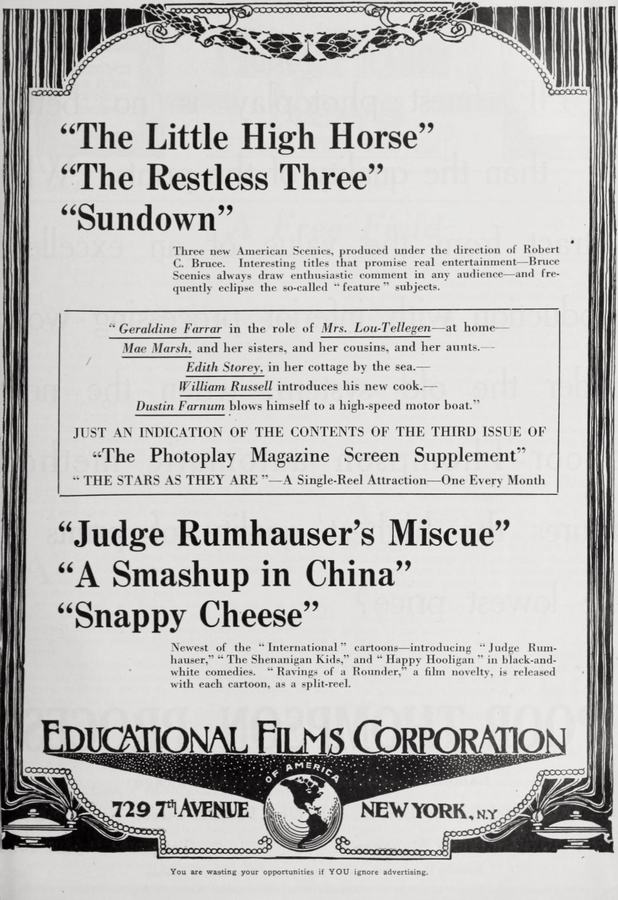
From the moment the opening credits unfurl, The High Horse establishes itself as far more than a mere period drama; it is a meticulously crafted character study, a poignant elegy to a vanishing world, and a searing indictment of the human folly of unyielding pride. Robert C. Bruce, who not only commands the screen with a performance of staggering depth but also pens the screenplay, delivers a singular vision. This is not a narrative that rushes; instead, it luxuriates in the slow, agonizing descent of Captain Alistair Finch, a man whose identity is so inextricably linked to his lineage and his equestrian past that he becomes a prisoner of his own antiquated ideals. The film doesn't just tell you about Finch's pride; it immerses you in its suffocating embrace, allowing you to witness, in excruciating detail, how it systematically dismantles his life and those around him.
Bruce's portrayal of Finch is nothing short of masterful. He embodies the titular 'high horse' not with overt arrogance, but with a quiet, almost melancholic stubbornness. His eyes, often distant and clouded, betray a man perpetually lost in the gilded memories of yesteryear, while his physical demeanor – the ramrod straight posture, the precise, almost ritualistic movements – speaks volumes of a life rigidly structured by tradition. Every subtle gesture, every clipped word, every lingering glance at the decaying grandeur of Aethelgard, contributes to a portrait of a man utterly incapable of bending, let alone breaking, from his self-imposed pedestal. It’s a performance that resonates with the quiet despair of a king ruling over a kingdom of dust, reminiscent in its psychological intensity to the internal struggles depicted in Who Killed Simon Baird?, though Finch's conflict is entirely self-inflicted rather than externally imposed.
The screenplay, also from the formidable pen of Robert C. Bruce, is a testament to the power of nuanced storytelling. Dialogue is sparse but potent, each line laden with subtext, revealing the chasm between Finch's perception of reality and its brutal truth. The narrative structure itself mirrors Finch's decline, a gradual erosion rather than a sudden collapse. We are not presented with a clear antagonist, save for the relentless march of time and the unforgiving nature of financial reality. Instead, the conflict is internal, a battle waged within the confines of Finch's own formidable ego. Bruce meticulously crafts a world where the very air seems thick with history and impending loss, making the crumbling estate of Aethelgard a character in itself, a physical manifestation of Finch's internal decay. The writing is so robust that it elevates the film beyond simple melodrama, transforming it into a profound meditation on legacy, identity, and the perils of an unyielding spirit.
The thematic richness of The High Horse is its beating heart. At its core, it scrutinizes the destructive nature of pride, not as a cardinal sin, but as a tragic flaw that blinds one to salvation. Finch's refusal to adapt, to acknowledge the shifting sands beneath his feet, is a universal human failing, amplified here by the aristocratic context. The film elegantly explores the tension between tradition and progress, the inherent beauty of a bygone era juxtaposed with the urgent demands of the present. Eleanor, Finch's daughter, serves as the voice of pragmatism, a bridge to the modern world that Finch so adamantly rejects. Her pleas, initially met with disdain, gradually morph into a desperate struggle to save her father from himself, highlighting the agonizing burden placed upon those who love someone shackled by their own convictions. This dynamic, the clash between the old guard and the new pragmatism, echoes the societal shifts explored in True Nobility, albeit with a more intimate, familial lens.
Cinematographically, the film is a feast for the eyes, even in its depiction of decay. The director (whose vision is undeniably shaped by Bruce's writing) employs a palette that is at once opulent and melancholic. Warm, golden hues illuminate the fading glory of Aethelgard's interiors, contrasting sharply with the stark, often grey reality of its exterior dilapidation. The camera often lingers on details – a tarnished silver trophy, a frayed tapestry, the cracked leather of an old saddle – each shot a silent testament to a world slowly fading into oblivion. The equestrian scenes, particularly those involving Eclipse, are handled with a reverence that borders on the spiritual. The bond between Finch and his horse is portrayed with an almost mythical quality, the animal becoming an extension of Finch's soul, carrying not just his physical weight but the immense burden of his pride and his past. The visual storytelling here is exceptional, conveying emotion and narrative progression without the need for extensive dialogue.
The pacing of The High Horse is deliberate, a slow burn that allows the audience to fully absorb the atmosphere and the incremental erosion of Finch's world. This unhurried tempo is crucial; it allows the psychological weight of Finch's choices to accumulate, making his eventual, devastating epiphany all the more impactful. The film resists easy resolutions or sudden dramatic turns, opting instead for a slow, agonizing waltz towards an inevitable confrontation with reality. This narrative rhythm might challenge viewers accustomed to faster-paced cinema, but for those willing to surrender to its measured cadence, the rewards are profound. It’s a film that demands patience and offers, in return, a deeply resonant and emotionally complex experience.
The dynamic between Finch and Eleanor is particularly compelling. Eleanor is not merely a foil; she represents the future, a necessary, albeit painful, evolution. Her love for her father is palpable, yet it is constantly tested by his intransigence. Her attempts to intervene, to introduce logic into a situation governed by sentiment and pride, are heartbreakingly futile. Robert C. Bruce’s writing ensures that Eleanor is not a one-dimensional character; her frustration is tinged with a deep respect for her father’s history, even as she recognizes its destructive power. This nuanced relationship adds another layer of emotional complexity to the narrative, making the film’s ultimate tragedy resonate on a deeply personal level. The portrayal of family struggle under the weight of an unyielding patriarch brings to mind the intricate domestic dynamics sometimes hinted at in films like The Little Mademoiselle, though with a distinctively more modern and psychologically intense approach.
The sound design further enhances the film's immersive quality. The creak of old floorboards, the distant whinny of a horse, the rustle of leaves in the neglected gardens – each auditory detail contributes to the oppressive atmosphere of Aethelgard. The score, subtle and elegiac, never overwhelms the narrative but rather underscores its emotional beats, swelling with a melancholic beauty during moments of quiet contemplation and intensifying with a sense of foreboding as Finch's fate becomes increasingly clear. It's a testament to the film's holistic approach to storytelling, where every element works in concert to build a cohesive and impactful experience.
The decision to center the climax around the regional equestrian competition is a stroke of narrative genius. It is not merely a contest of skill but a symbolic battleground for Finch's soul. His meticulous, almost delusional training regimen for Eclipse, juxtaposed with the stark reality of his crumbling finances and Eleanor's growing despair, creates an unbearable tension. The competition itself is less about winning and more about a final, desperate assertion of identity, a last stand against the inevitable. The film masterfully builds to this moment, allowing the audience to feel the weight of Finch's hopes and the crushing burden of his pride. It’s a moment of profound theatricality, yet grounded in the raw, human emotion that Robert C. Bruce so expertly cultivates throughout the film.
Ultimately, The High Horse is an extraordinary cinematic achievement, a film that lingers long after the credits roll. Robert C. Bruce, as both actor and writer, has crafted a work of art that is both deeply personal and universally resonant. It compels us to reflect on our own attachments, our own 'high horses,' and the often-painful process of letting go. It doesn't offer easy answers or neat resolutions, but rather a profound exploration of the human condition, rendered with exquisite detail and unflinching honesty. The film’s impact lies in its refusal to sensationalize, preferring instead to delve into the quiet devastation wrought by an unyielding spirit. It's a powerful reminder that sometimes, the greatest battles are fought within, and the most poignant victories are found in surrender. This film is a must-see for anyone who appreciates cinema that dares to explore the depths of character and the complexities of the human heart, standing proudly alongside other profound character studies, though perhaps with a more tragic, internal focus than even something like Du sollst keine anderen Götter haben's more overt philosophical explorations.
The legacy of The High Horse will undoubtedly be its meticulous attention to character and its unblinking gaze at the consequences of an unexamined life. Robert C. Bruce has not merely created a film; he has forged a mirror, reflecting the often-unseen struggles of pride and tradition against the relentless tide of change. The film's conclusion, rather than offering a simplistic resolution, provides a poignant, devastating moment of clarity for Finch, a realization that shatters his carefully constructed world. This shattering is not one of violence or dramatic outburst, but of quiet, internal collapse, a testament to the film's sophisticated understanding of human psychology. It’s a film that demands multiple viewings, each revealing new layers of meaning and nuance, solidifying its place as a significant contribution to contemporary cinema, much like the enduring appeal of timeless narratives that delve deep into the human psyche without resorting to overt spectacle.
IMDb 6.1
1933
Community
Log in to comment.