DbcultAccessing Vault...
Cult Review
Senior Film Conservator
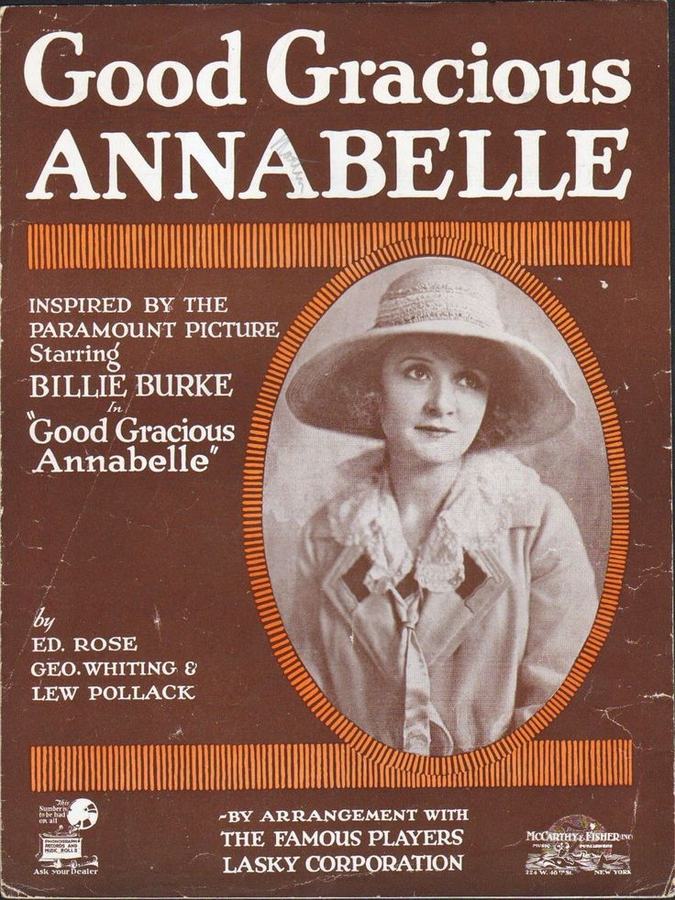
In the vast, often overlooked archives of early cinema, there exist countless treasures waiting to be unearthed, films that offer not just a glimpse into the past but a vibrant, engaging narrative that transcends their silent origins. Among these, Good Gracious, Annabelle, a 1919 offering, stands out as a particularly delightful confection. Penned by the ingenious Clare Kummer, this picture is a masterclass in comedic timing, intricate plotting, and the enduring appeal of mistaken identity. It's a film that, despite its century-old vintage, still manages to elicit genuine smiles and appreciative chuckles, proving that true wit is timeless.
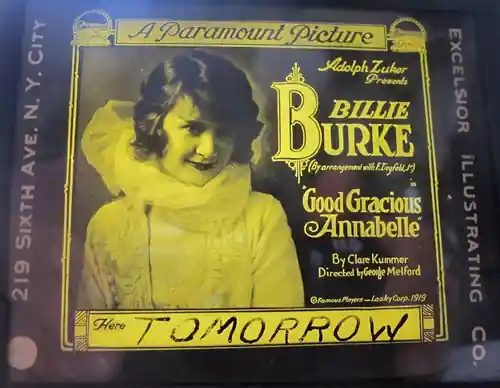
The narrative, as convoluted and charming as a well-spun yarn, begins with a moment of profound trauma for our protagonist, Annabelle Leigh. We are introduced to her as a young woman whose world is irrevocably shattered by the violent death of her father, a casualty of a fierce dispute over a mine claim. This isn't merely a plot point; it's the crucible in which Annabelle's resilience, and indeed her eccentricity, is forged. What follows is a series of events that could only exist in the fantastical realm of early cinema: her unconventional marriage to John Rawson, a bearded hermit who, in a bizarrely protective gesture, kidnaps her. It’s a twist that immediately signals this isn't your run-of-the-mill romance; instead, it promises a journey into the delightfully absurd. Rawson's subsequent decision to send her away, claiming her persistent lamentations were too much to bear, adds another layer of tragicomic irony to their nascent, bewildering union. Delle Duncan, in the titular role, navigates these early, tumultuous scenes with a delicate balance of vulnerability and an underlying strength that hints at the spirited woman she will become. Her portrayal of Annabelle's initial bewilderment and sorrow is nuanced, laying the groundwork for the character's later, more outwardly comedic antics.
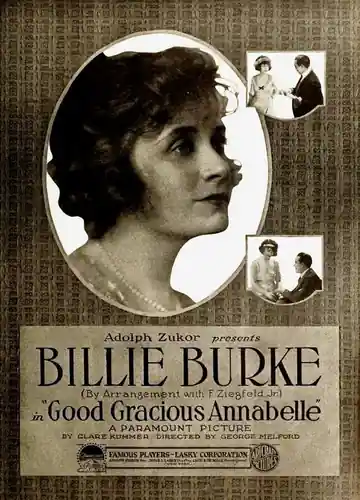
Years later, we find Annabelle Leigh inhabiting a world far removed from the rustic wilderness of her initial marital entanglement. She is now ensconced in the fashionable, albeit frivolous, milieu of New York society, maintaining a luxurious lifestyle funded by mysterious payments from her estranged husband, John Rawson. This opulent existence, however, is a fragile facade, perpetually on the brink of collapse due to Annabelle's prodigious spending habits and mounting debts. It's a classic cinematic setup, one that allows for both social commentary on the trappings of wealth and the inherent humor in characters navigating their way out of self-imposed predicaments. Her financial desperation reaches a crescendo when she makes the fateful decision to sell her inherited mining stock, a tangible link to her past trauma, to the unscrupulous financier George Wimbledon. Wimbledon, portrayed with a suitably villainous relish by Crauford Kent, embodies the kind of opportunistic shark prevalent in both silent film narratives and, let's be honest, real life. The film cleverly uses Annabelle's financial woes to propel the plot forward, demonstrating how even in an era of silent storytelling, the anxieties of class and capital were potent narrative engines. Her predicament is further exacerbated by the looming threat of being named co-respondent in a scandalous divorce suit, a social disgrace that could utterly ruin her. This compounding pressure pushes Annabelle to an act of audacious ingenuity, persuading Wimbledon's butler, a character whose moral flexibility proves crucial, to hire her as a cook at the financier's sprawling Long Island estate. The irony is delicious: the woman accustomed to grand hotels and fine dining now dons an apron, ready to serve the very man who holds her financial fate, and her father's legacy, in his hands. This shift in social standing, from society belle to domestic servant, is a trope explored in various forms throughout cinematic history, from the more dramatic arcs in films like The Nation's Peril, which often depicted women facing dire circumstances, to lighter fare that embraced the comedic potential of such a reversal.
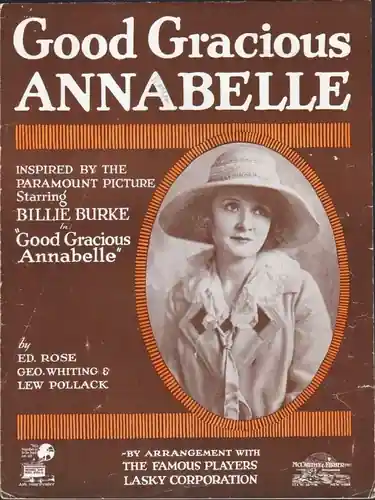
Concurrently, the other half of our peculiar marital equation, John Rawson, makes his own dramatic re-entry into the narrative. Having shed his hermit's beard and, presumably, some of his reclusive tendencies, Rawson arrives in New York with a singular purpose: to acquire the very mining stock Annabelle has just offloaded to Wimbledon. His goal is to gain controlling interest in the mine, thereby securing a future that, unbeknownst to him, is inextricably linked to his long-lost wife. The dramatic irony here is palpable and forms the backbone of the film's comedic brilliance. Rawson, now a polished man of affairs, encounters Annabelle without recognizing her. This classic device of mistaken identity, so expertly deployed in films like Beverly of Graustark or even the more dramatic Kidnapped, becomes a fertile ground for humor and romantic tension. Gilbert Douglas, as the transformed Rawson, plays his part with a charming earnestness, his burgeoning affection for the unrecognized Annabelle both sweet and entirely understandable given her spirited nature. The plot thickens further when Rawson, drawn by an inexplicable pull, surreptitiously rents the very Long Island mansion from Wimbledon's complicit butler. This arrangement places both husband and wife under the same roof, albeit in vastly different capacities and utterly unaware of their true relationship. The stage is set for a series of near-misses, awkward encounters, and comedic misunderstandings that are the hallmark of top-tier farce. The film revels in the absurdity of the situation, allowing the audience to delight in the characters' obliviousness while eagerly anticipating the inevitable moment of recognition. This narrative technique, where the audience is privy to information the characters are not, creates a compelling sense of anticipation and engagement, drawing us deeper into the unfolding romantic comedy.
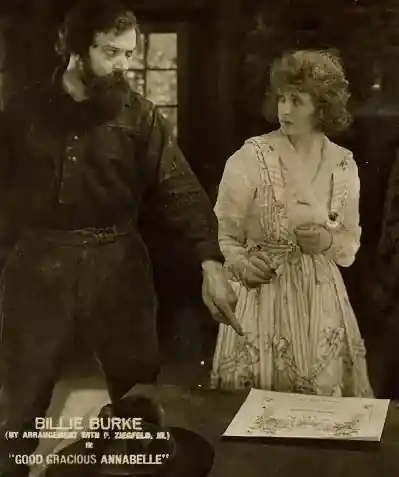
The Long Island estate becomes a crucible for the film's most amusing interactions. Annabelle, masquerading as a cook, frequently crosses paths with Rawson, who, under his new guise, is utterly smitten. Their conversations are laced with unspoken irony, with Annabelle often expressing her longing for her mysterious husband, unaware that he stands before her. The supporting cast, including Thomas Braidon as the opportunistic butler and Olga Downs in a smaller role, contribute significantly to the comedic tapestry, their reactions and complicity adding layers to the central deception. The film skillfully builds suspense not through overt threats, but through the delicate balance of maintaining the charade. Each close call, each moment where a slip of the tongue or a forgotten detail could unravel the entire scheme, adds to the delightful tension. It's a testament to Clare Kummer's writing that these moments never feel forced or contrived; instead, they emerge organically from the characters' situations and motivations. The physical comedy, a staple of silent cinema, is employed judiciously, often stemming from Annabelle's attempts to navigate her new domestic role while maintaining her dignity and pursuing her hidden agenda. Comparisons could be drawn to the intricate social dances found in films like Love or Justice, though Good Gracious, Annabelle maintains a distinctly lighter, more farcical tone. The film's pacing, crucial for silent comedies, is impeccable, allowing the jokes to land and the emotional beats to resonate without ever dragging. The visual storytelling, through expressive acting and clever staging, ensures that even without dialogue, the audience fully comprehends the humor and the heart of the story.
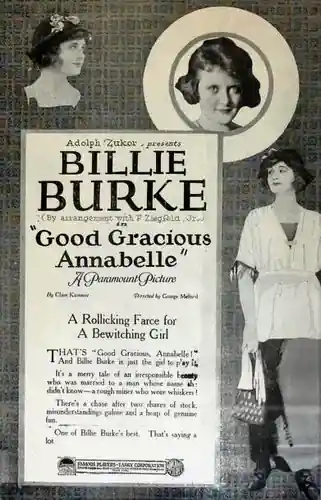
The narrative crescendo arrives with Annabelle's daring retrieval of the pivotal mining stock from a thoroughly inebriated George Wimbledon. This act of cunning and bravery underscores Annabelle's transformation from a helpless socialite to a resourceful agent of her own destiny. The scene is imbued with a palpable sense of risk and triumph, as she deftly reclaims what was rightfully her father's, and by extension, hers. With the stock secured, Annabelle, still oblivious to Rawson's true identity, expresses her deep-seated desire to finally locate her long-lost husband. It’s a moment charged with emotional weight, a yearning for resolution that has been building throughout the film. Her confession to the very man she seeks, unknowingly, is a masterful stroke of dramatic irony. The subsequent revelation of Rawson’s identity is handled with a charming simplicity that allows the emotional impact to shine through. Annabelle's initial shock quickly gives way to a profound, pleasant surprise, culminating in a reunion that is both heartwarming and deeply satisfying. It's a resolution that ties together all the disparate threads of the plot, affirming the enduring power of love and the often circuitous path it takes. The film, in its final moments, delivers on the promise of its intricate setup, providing a conclusion that feels earned and genuinely joyful. The chemistry between Delle Duncan and Gilbert Douglas, which has been simmering beneath layers of mistaken identity, finally ignites, offering a truly charming romantic payoff. This kind of satisfying, well-earned resolution is a hallmark of expertly crafted romantic comedies, a tradition that Good Gracious, Annabelle proudly upholds.
Clare Kummer's screenplay for Good Gracious, Annabelle is a testament to her remarkable talent for crafting intricate, witty narratives. Her ability to weave together elements of tragedy, romance, and outright farce into a cohesive and engaging whole is truly commendable. The dialogue, conveyed through intertitles, is sharp and often humorous, propelling the story forward with grace and wit. The direction, while perhaps less overtly stylized than some of its contemporaries, focuses on clear storytelling and character expression, ensuring that the audience is always invested in Annabelle's predicament and Rawson's quest. The visual language of the film, through its set design and costume choices, effectively communicates the stark contrast between Annabelle's former opulent life and her temporary role as a domestic servant, as well as Rawson's transformation. The performances across the board are excellent, with Delle Duncan carrying the film with charisma and comedic timing. Gilbert Douglas provides a strong, sympathetic foil, making his journey of unwitting affection entirely believable. Even the smaller roles, filled by talents like Billie Burke and Herbert Rawlinson, contribute to the film's overall charm and comedic effectiveness. The ensemble works in harmony, a testament to the collaborative nature of silent film production. While the film doesn't delve into the darker psychological depths seen in a thriller like The Strangler's Grip or the moral dilemmas of The Criminal, its exploration of identity, social expectations, and the unpredictable nature of love is no less profound, simply delivered with a lighter touch. It demonstrates that silent cinema was far from a monolithic entity, capable of a vast spectrum of emotional and narrative complexities.
In conclusion, Good Gracious, Annabelle is far more than a historical curiosity; it is a vibrant, engaging piece of cinematic artistry that deserves a wider audience. Its intricate plot, memorable characters, and delightful comedic sensibility ensure its enduring appeal. For anyone with an appreciation for classic cinema, for tales of romance and mistaken identity, or simply for a well-crafted story that leaves you with a smile, this film is an absolute must-see. It reminds us that even in an era without spoken dialogue, the power of visual storytelling, coupled with clever writing and expressive performances, could create narratives that captivated and charmed audiences then, and continue to do so now. It's a film that echoes the spirit of playful deception found in films like His Sweetheart but with its own unique, effervescent charm. The thematic undercurrents of financial precarity and social maneuvering, though presented comically, resonate even today, showcasing the universality of human concerns. This movie stands as a testament to the ingenuity of early filmmakers and writers, proving that a compelling story, told with wit and heart, truly knows no temporal bounds. Go forth and discover this enchanting piece of cinema; you won't regret it.
IMDb —
1926
Community
Log in to comment.