DbcultAccessing Vault...
Cult Review
Senior Film Conservator
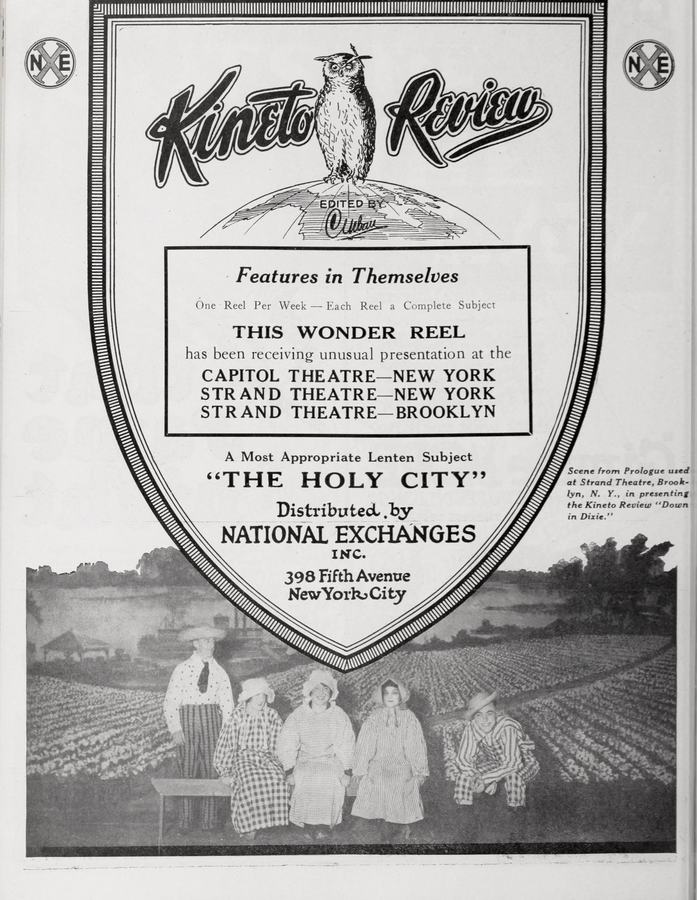
The first time you witness the bell-ringer’s silhouette against a bruised pewter sky, you realise this film will not sermonise; it will scar.
The Holy City arrives like contraband scripture—dog-eared, smuggled beneath the cassock of mainstream cinema—reeking of incense, salt and cordite. Director Tarek Halaby refuses the cushioned piety of religious kitsch, opting instead for a visceral pilgrimage through cobblestone arteries where the sacred and the profane share a single, trembling heartbeat. Echoes of Rossellini’s Rome, Open City flit through the frame, yet Halaby’s gaze is more heretic than humanist: he thrusts a hand into the wound and pulls out a fistful of gold leaf.
Plot, in the conventional sense, dissolves like communion bread on a desperate tongue. The city—never named, but cartographically close to a port-struck Seville—exists in a perpetual dusk where baroque facades oo candle wax and loudspeakers bark decrees of a bankrupt cardinal. We follow five orbitals of sin and grace: the bell-ringer Mateo (Luis Bermejo), whose vocal cords rasp like rusted iron; the relic-forger Clara (Najwa Nimri), hiding stigmata beneath kid-skin gloves; the war-desserted captain Tomás (Alex Brendemühl) dragging a musket carved with the names of the children he couldn’t save; the child acrobat Aixa (the luminous Safa Elabdi) who trades somersaults for cigarette papers; and the itinerant projectionist Donato (Manuel Morón), convinced every reel of nitrate contains a splinter of the True Cross.
Halaby cross-cuts their trajectories with a diarist’s obsession for texture: a scalding close-up of frying churros, the squeak of a rat in a reliquary, the phosphorescent sizzle of a match held to a heroin spoon. These fragments accumulate into a mosaic of yearning. The camera, operated by Joan Vila, lingers on surfaces until they exhale secrets—a plaster saint whose painted eyes have been scratched out sees more than the pilgrims kneeling before it.
Sound design deserves a liturgy of its own.
Submerged bells clang beneath the floorboards, distant fireworks mimic artillery, and a cathedral organ wheezes out a tango that collapses into a death-rattle. Composer Lucia H. Morales weaves Sephardic laments with analogue synths, producing a score that feels like a fresco flaking in real time. When Mateo finally rings the cracked bell at the finale, the vibration is so bass-heavy you expect the seats to splinter.
Comparisons? Think of The Empress if it stripped off ermine to reveal suppurating stigmata, or The Last Payment minus the consolatory kiss of revenge. Halaby’s city is closer to the limbo of The Streets of Illusion, yet trades noir nihilism for something more incandescent: the possibility that grace might erupt precisely where grace is outlawed.
Performances oscillate between neo-realist grit and mystic rapture. Bermejo’s Mateo utters perhaps twenty lines, but his eyes—raw as peeled grapes—bleed penitence. Nimri, channeling a post-millennial Maria Maddalena, turns every marketplace haggle into a Stations of the Cross. Watch the scene where she bargains a forged shin-bone of Saint James for a packet of quinine: her smile cracks like old varnish, revealing the terror of being believed. Elabdi, a nine-year-old discovery, somersaults across rooftops with a physical candour that would make even Playing with Fire’s acrobats gasp.
The screenplay, penned by Halaby and poet-blasphemer Irene Zurdo, drips with apocryphal aphorisms.
“A city without miracles is just a morgue with better marketing,” spits the captain. “Faith is the art of pawning your shadow and pretending you still walk,” whispers Clara. Dialogue arrives like slanted hail—sharp, sudden, leaving dimples in the skin. Yet the film never succumbs to the curse of quotable cool; each line aches with the bruise of lived experience.
Visually, colour is theology. Vermilion roses bloom against iodine-brown walls; a stolen monstrance glints gold until gunpowder smuts it into burnt umber; candlelight pools citrine across the cheek of a sleeping prostitute, transfiguring her, for two heartbeats, into the Virgin of Guadalupe. Halaby and Vila shoot on 35 mm, grain left deliberately coarse so that light itself seems to sweat.
Structure defies three-act obedience.
The film is a liturgy of interruptions: an apparent flashback turns out to be a film-within-film projected onto a bed-sheet; a documentary voice-over about urban planning intrudes, only to be swallowed by a tide of choral voices. Temporal orientation disintegrates—clocks are missing hands, calendars stop at October 1936, yet a smartphone screen flickers in one blink-and-miss frame. Such modernist pranks never feel gimmicky; they underline the cyclical captivity of hope.
Where does this leave the viewer? Haunted, undoubtedly. I walked out sensing incense in my hair, brine on my lips. Yet there is also something violently liberating in Halaby’s refusal to offer absolution. Unlike When Nature Smiles, where redemption arrives via pastoral montage, The Holy City insists that the only resurrection worth a damn is the one you forge from your own compost of guilt.
Critics will carp about “opacity,” about a supposed surplus of symbolism—rats licking communion chalices, a blindfolded choir humming advertising jingles. But opacity is the point: faith, like cinema, is an optic experiment. You squint, you adjust aperture, and suddenly the blurred silhouette resolves into your own face reflected in the silvered back of a junk-shop icon.
Technicals: aspect ratio shifts from 1.85 to 4.3 whenever Donato screens his clandestine footage, a nod to early missionary films; Dolby Atmos mix makes plaster dust rain from the ceiling; the subtitled translation retains Andalusian slang, so “hostia” becomes “communion wafer” one moment, “holy hell” the next.
Box office prophets predict a niche life, but niche is where cults germinate. Expect Criterion conversation, expect midnight screenings where viewers bring their own candles, expect dissertations linking the film to Bakhtin’s carnivalesque, to Benjamin’s angel of history, to the 1936 bombings of Córdoba. Expect, above all, arguments in the lobby about whether the final long take—an eight-minute tracking shot that slithers from belfry to sewer to a child’s paper boat—rivals the bravura logistics of One-Thing-at-a-Time O’Day’s railway sequence. It does; moreover, it bleeds.
Verdict? The Holy City is not a film you comprehend; it is a film you survive. It implicates you, stains you, sends you home with the taste of copper pennies under your tongue. In an age when streaming platforms churn out algorithmic parables of self-love, here is a work that dares to suggest salvation might smell of gun-oil and rosewater, that miracles might be indistinguishable from scams, that the only honest prayer is the gulp of a man drowning in his own reflection.
Go. Take someone whose heart already has hairline fractures. Sit in the front row. Let the bell shiver your ribs. When the lights rise, you will not discuss cinematography; you will check your pockets, half-expecting to find a pilgrim’s scallop shell you didn’t own ninety minutes earlier.
Runtime: 147 min | Language: Spanish, Ladino, Latin | Country: Spain–Morocco co-production | Budget: €4.7 m | World Premiere: San Sebastián, where it shared the Silver Shell with a stunned giraffe documentary | US Distributor: indie boutique Alabaster Slate, platforming in NY and LA before a slow arthouse crawl | Oscar submission: shortlisted but disqualified for a day-and-date VOD experiment, prompting Halaby to quote Saint Augustine: “You made us for yourself, and our hearts are restless until they find… better streaming deals.”
IMDb —
1917
Community
Log in to comment.