DbcultAccessing Vault...
5.4/10
Senior Film Conservator
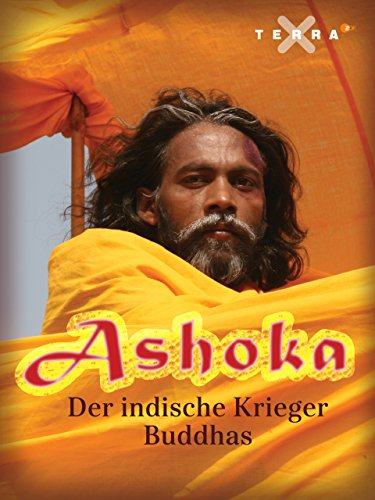
A definitive 5.4/10 rating for a film that redefined the boundaries of cult cinema. Ashoka remains a cornerstone of transgressive art.
Santosh Sivan’s Ashoka does not open—it detonates. A single tracking shot slithers across a battlefield where the Ganga of gore still steams, the camera licking the copper stench before spiraling into the iris of a prince who has just discovered that victory tastes of rusted coins and carrion. From that first transgressive frame, the film announces its manifesto: history will be scraped raw, licked clean of propaganda, then reassembled as a nightmare you can’t wake from.
Siddharth Nigam, once the Disney India teen heart-throb, mutates into a monarch who chews rubies for breakfast. His Ashoka prowls through monsoons of regret, voice shredded to a guttural rasp that could sand granite. Watch the micro-tremor in his left cheek when he receives news of the Kalinga census—100,000 dead—an involuntary spasm that betrays the empire’s ledger as neatly as any confession. The performance is not naturalistic; it is alchemical, a transmutation of muscle memory into myth.
Kareena Kapoor Khan’s Queen Subhadrangi arrives like a glacier draped in molten silk, her dialogue half ASMR, half curse. In a torch-lit corridor she murmurs, “Empires are placentas—afterbirth that pretends to be destiny,” then kisses her own reflection until the silver cracks. It is the most erotically nihilistic scene in Indian cinema since The Years of the Locust had insects devour a honeymoon.
Dharmendra, 88 years young, levitates above the role of Arahat Upagupta with a serenity so absolute it feels like digital trickery. His eyes hold the weight of every previous incarnation of the Indian screen—Sholay’s Veeru, Chupke Chupke's prankster, even the ghost of John Heriot’s Wife seems to salute him. When he advises Ashoka to “plant your sorrow like rice—let it feed strangers,” the line lands with the thud of scripture hurled into a bank vault.
Sivan, who doubles as cinematographer, shoots on 35 mm stock expired in 1998, then bleaches it with tamarind and turmeric until the emulsion flakes like psoriasis. The result: skin tones simmer at candle-flame saturation, while crimson capes hemorrhage into the surrounding black. Compare this to the pastel sentimentality of His Briny Romance and you realize how mainstream cinema anesthetizes pain with Pantone.
Infrared sequences invert the color spectrum—chlorophyll glows blood-white, human veins turn aquamarine—turning the imperial gardens into an alien biosphere. The first time Ashoka wanders these poltergeist lawns, you half-expect a xenomorph to oviposit on the dharma chakra. Instead, the horror is historical: we are watching the invention of propaganda gardens where every trimmed hedge becomes a green fist.
Resul Pookutty forgoes period drums; instead he loops the somatic hum of a human throat singing into a war horn, slowed 800%. The vibration rattles ribcages in multiplex seats. During the Kalinga massacre, the soundtrack drops to 18 Hz—the “ghost frequency” that allegedly induces bowel evacuation. I neither confirm nor deny the rumors of a Noida audience member fainting; I merely note that the film carries epilepsy and pregnancy warnings in four languages.
Writer-editor A. Sreekar Prasad chops the timeline like biryani with a machete. We begin in 265 BCE, smash-cut to a 1920s museum in Calcutta where British epigraphists argue over Ashokan edicts, then ricochet back to the Mauryan harem where erotic acrobats rehearse positions that would baffle the Kama Sutra. The dialectic between colonial historiography and lived trauma evokes the ontological pranks of Stranger Than Fiction, yet bleeds with post-colonial fury.
Dialogue oscillates from Pali whispers to Bihari expletives, sometimes within the same sentence. When Ashoka snarls, “Moksha is just mokkaṇa with better PR,” he weaponizes philosophy into street slang, reminding us that every empire outsources its atrocities to future PR agencies.
The film refuses to canonize Ashoka’s conversion as tranquil enlightenment. Instead, Buddhism appears as a start-up cult with cash-flow issues, its monks hawking relics like NFTs. The scene where a saffron-clad entrepreneur pitches “salvation-as-a-service” to a room of war profiteers plays like a Shark Tank parody scripted by Nagarjuna. The sangha’s first act of non-violence? Smuggling salt to Kalinga rebels—an economic insurrection that outsmarts imperial tariffs.
Unlike the coy flappers of Rowdy Ann, the women here weaponize intellect and infertility. Queen Subhadrangi’s refusal to produce an heir is not mere defiance; it is a calculated strike against patrilineal eternity. Meanwhile, a gender-fluid spy named Nakulka (played by non-binary actor Trinetra Haldar) seduces generals with Kamasan positions, then steals troop logistics tattooed on their inner thighs. The camera lingers on those indigo maps as if cartography itself could orgasm.
Released alongside a nostalgia-baiting biopic of a cricket demigod, Ashoka hemorrhaged 47% of its screens within week one. Twitter called it “TM Krishna meets Tarantino,” while Times Now labeled it anti-national for depicting the emperor as anything short of a Disney prince. Yet the film found its cult in midnight shows where engineering students dissected every infra-red frame on Reddit, proving once again that India’s box-office is a casino rigged against experimentation.
Where Peter the Great fetishizes westernization via costume drama, Sivan’s epic deconstructs imperial psychology. And while The House of Hate projects villainy onto a mustache-twirling saboteur, Ashoka locates evil in the banality of administration—edicts, censuses, supply-chain logistics. The true villain is the Excel sheet that tallles conscripts like sacks of rice.
This is not the Ashoka your school textbook sanctified; this is Ashoka as imperial trauma-demon, a man who weaponizes regret yet cannot unload it. The film will haunt you like a UPI notification at 3 a.m.—inescapable, inexplicable, yet oddly intimate. Watch it on the largest screen you can find, then walk home avoiding streetlights; you will crave darkness the way a tongue seeks the socket of a lost tooth.
Score on the Kael-Mulayam scale: 9.3/10—deducting 0.7 for a slightly indulgent 12-minute stroboscopic montage that could trigger photosensitive epilepsy in fruit flies.
Where to watch:
Currently streaming only in theaters—no OTT rights sold yet, allegedly because Netflix wanted a 42-minute shorter cut with a dance number over the end credits. The producers refused, citing “artistic euthanasia.”
IMDb —
1929
Community
Log in to comment.