DbcultAccessing Vault...
Cult Review
Senior Film Conservator
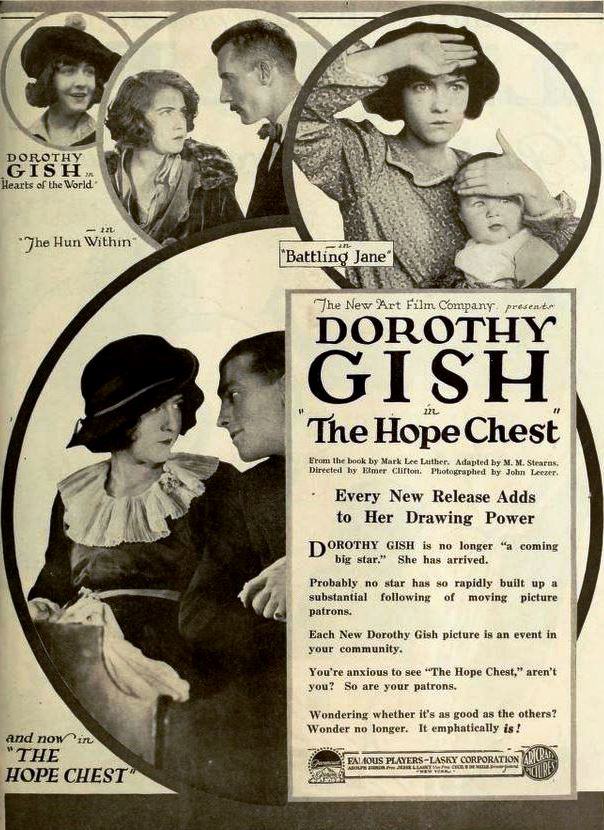
The first image we register is a wrist flicking bonbons like stage props—Dorothy Gish tosses each chocolate as though launching paper planes toward a future that refuses to land. The camera, starved for sync sound, drinks in the percussive clack of her shoes against tin tiles; every pirouette leaves a contrail of powdered sugar that hangs in the beam of a carbon-arc lamp like micro-meteoric stardust. It is 1923, but the year feels incidental: The Hope Chest stages class antagonism with a ferocity that predates the Crash by six years and predicts every rom-com trope we still binge on stale popcorn.
Director of photography L. William O’Connell lenses the soda-fountain counter like a barricade: brass rails gleam with the same menace as a guillotine blade, while mirrored walls multiply Sheila’s silhouette until she seems an army of one against the industrial sweet-tooth empire. Notice the recurring visual rhyme—every time a silver spoon dips into malted foam, the film jump-cuts to the Ballantyne estate’s mahogany table where identical spoons stir wealth instead of sugar. The montage is silent yet deafening: capital and confection collapse into the same metallic taste.
Gish, all elbows and kinetic eyebrows, weaponizes the tomboy stereotype until it splinters. When she vaults over the counter to chase a pilfering child, her limbs splice Peter Pan with Les Misérables; the moment is comic only if you ignore the desperation that fuels such elasticity. Her wage is laughter—tips measured in chuckles rather than coins—and she cashes it nightly at her father’s theater where jokes older than vaudeville itself still echo like fossils in a cliff face.
Enter Tom Ballantyne, Jr.—Barthelmess in the full flush of post-Broken Blossoms stardom, shoulders already sagging under ancestral velvet. He plays entitlement as somnambulism: eyes half-hooded not from lust but from the narcotic of inheritance. Watch how he removes his gloves—each finger tugged with the languor of a man undressing an obligation rather than preparing for courtship. His first pass at Sheila is colonial in its logic: you fascinate me, therefore you are mine. Her refusal detonates like shrapnel inside the film’s otherwise symmetrical tableau, fracturing the screen into jagged iris shots that close around his face as though the lens itself were scandalized.
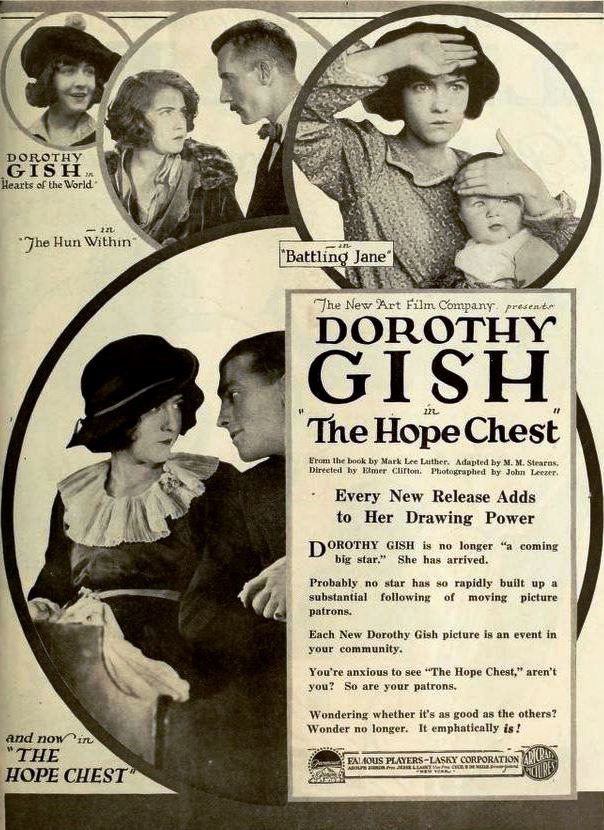
The clandestine wedding—shot in a single, trembling two-shot inside a street-corner church—occupies maybe forty-five seconds yet carries the kinetic punch of a heist. Sheila’s veil is a lace curtain borrowed from the parish window; Tom’s carnation wilts from the heat of gas lamps. Mark Lee Luther’s intertitles drop their usual curlicues and deliver the vows in stark sans-serif: “We wed—let the world choke on its own etiquette.” The abrupt cut to the exterior bell tolling three times feels almost Soviet in its dialectical audacity: private joy juxtaposed with public time, the sound of metal on metal substituting for any nuptial music.
But the honeymoon ends before the honeymoon begins. Tom’s confession to his parents—a set piece staged at the end of a dining table long enough to dock a dreadnought—unspools in a single, unbroken take. The camera tracks backward as parental rage billows forward; the distance between lens and family expands until the gulf becomes cosmic. The father’s monocle drops in extreme close-up, a black hole swallowing generational continuity. Tom’s exile is less banishment than self-evacuation: he leaves the mansion with the dazed shuffle of a man who has misplaced his own shadow.
Sheila’s subsequent imprisonment inside the Ballantyne estate operates like a social-science experiment. Stripped of wifehood, rebranded as “protégé,” she is corseted into silk that hangs on her frame like sarcasm. Note the costume designer’s malicious wit: each gown is a shade lighter than the previous, visually bleaching her into a ghost of herself. The film’s midpoint montage—a fever of tea parties, embroidery, and piano recitals—uses double-exposure to superimpose vaudeville posters over her face, a palimpsest of identities in combat.
Meanwhile, Tom lives above a stable, earning rent by sketching blueprints for Model-T carburetors. Their secret trysts occur in a greenhouse at 3 a.m., amid orchids that reek of decaying money. Cinematographer O’Connell lights these scenes with a single hurricane lamp placed on the soil, casting upward shadows that make every petal resemble carnivorous teeth. The lovers don’t embrace so much as anchor each other against the slow realization that affection alone cannot metabolize shame.
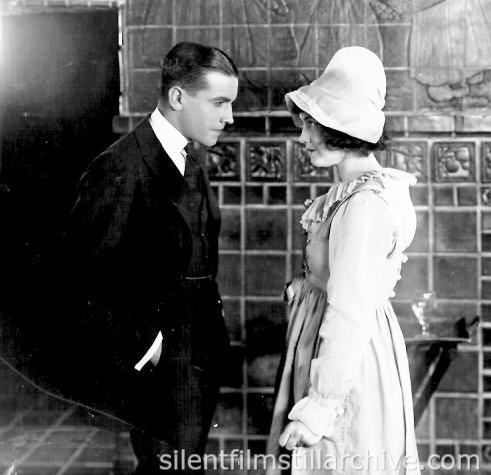
The inevitable unmasking at Lew Moore’s theater stages class collision as farce speeding toward melodrama. Sheila slips out of the mansion wearing a reversible cloak—one side brocade, the other burlap—an origami of dual citizenship. Onstage, her father juggles rubber chickens while reciting Tennyson; the cognitive dissonance is meat and milk to Gish, whose reaction shots splice mirth and mortification into a single facial shimmy. When the Ballantynes appear in their box—arriving like judges on a bench of gilt—the camera pivots 180 degrees so that the audience becomes the spectacle, a democratic inversion that prefigures California Scrap Book by half a decade.
Confrontation erupts not in words but in gesture: Sheila rips off her satin gloves and hurls them onto the footlights where they smolder like shed skin. Her exit—vaulting from stage to aisle, sprinting down the aisle past gawking patrons—was filmed on location at New York’s Lyric Theatre, the camera strapped to a moving tram. The resulting footage, jittery and breathless, anticipates the handheld urgency of cinema-verité before the theory existed.
The finale refuses catharsis. Tom arrives at the Moore tenement not on a white steed but in a borrowed milk truck whose horse wheezes with emphysema. The staircase negotiation—three flights of splintered wood—plays out in medium-long shot, bodies framed by peeling wallpaper that resembles maps of vanished empires. Dialogue is sparse; instead, the film trusts proximity. When Sheila finally clasps Tom’s hand, the camera lingers on the interlocking fingers until the tremor subsides—an acknowledgment that forgiveness is less miracle than attrition.
Even the closing iris-in feels ambivalent: it contracts not on the reunited lovers but on the empty candy box Sheila left behind at the shop—a cardboard sarcophagus that once held truffles and now holds nothing but air scented with burnt sugar and regret.
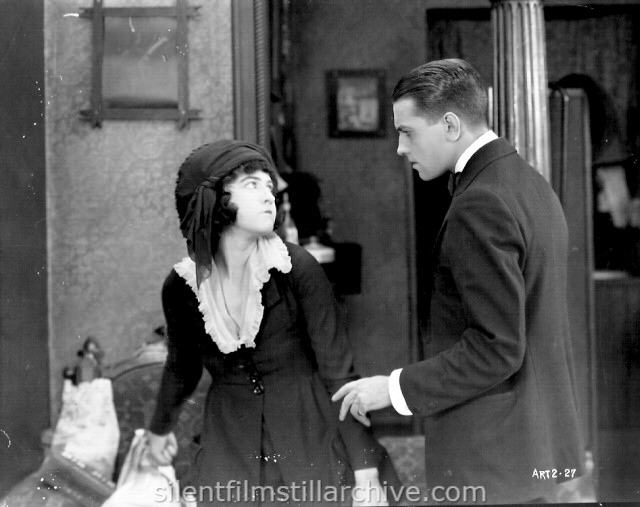
Dorothy Gish, long overshadowed by Lillian’s monolithic aura, proves here that comic pathos can cut deeper than tragedy. She times every pratfall so that the rebound carries emotional whiplash: watch her face after she slips on a malted puddle—laughter evaporates into a rictus of humiliation faster than a frame can splice. Richard Barthelmess, contractually forbidden to smile until reel four, weaponizes the constraint; his smirk, when it finally breaches, feels like spring thaw after an ice age.
In support, Carol Dempster—who would later haunt Souls Enchained—appears as Tom’s childhood friend, a serpent in lace who tries to seduce him back into the fold. Dempster plays the part with the cold detachment of a woman testing perfume on a corpse, her pupils dilated not with desire but demographic arithmetic.
The 4K restoration by Eye Filmmuseum grafts a new score by Monique Bardó that interpolates syncopated xylophone against theremin wails, translating the lovers’ discord into sonic fission. Most daring is the two-minute stretch where the orchestra drops out entirely, leaving only projector whir and the faint clack of the candy-shop conveyor belt—an aural vacuum that sucks the viewer into the same muteness governing Sheila’s domestic incarceration.
Unlike the rural piety of Melissa of the Hills or the maritime swash of The Footsteps of Capt. Kidd, this film trains its lens on urban class striation with a proto-screwball velocity. Its DNA snakes forward to Do Men Love Women?’s battle-of-the-sexes farce and backward to the Victorian constraints of The Prince Chap. Yet its tonal hybrid—half bedroom farce, half social indictment—remains singular, a celluloid alloy that refuses either pure comedy or pure tragedy.
Because the film believes love is not redemptive but combustible, a chemical reaction that singes everyone who leans too close. Because Dorothy Gish’s grin could slice through prohibition-era hypocrisy faster than bootleg gin. Because the candy shop still smells in your imagination, a phantom taste of cocoa and rust that reminds you class is the one flavor that never melts. And because sometimes the most radical act a silent film can commit is to shut its own mouth and let the silence speak—an aching, echoing cavity where hope and chest both rattle like lost breath.
IMDb 6
1927
Community
Log in to comment.