DbcultAccessing Vault...
6/10
Senior Film Conservator
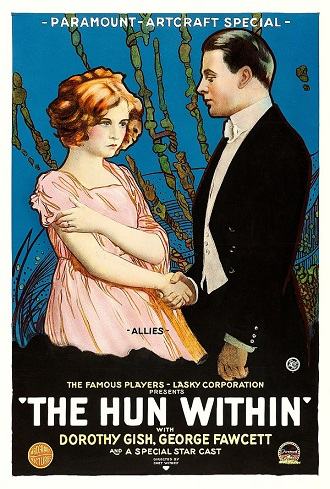
A definitive 6/10 rating for a film that redefined the boundaries of cult cinema. The Hun Within remains a cornerstone of transgressive art.
Stepping back into the cinematic landscape of the early 20th century, one encounters 'The Hun Within,' a silent film that, despite its age, resonates with a surprising contemporary relevance. Released during the tumultuous backdrop of World War I, this motion picture isn't merely a historical artifact; it's a searing exploration of identity, loyalty, and the devastating personal cost of national conflict. Directed with the keen narrative eye associated with D.W. Griffith, who also contributed to the writing alongside Stanner E.V. Taylor, the film plunges viewers into a moral quandary that feels as potent today as it must have a century ago.
At its core, 'The Hun Within' is a domestic drama writ large against an international canvas. It tells the story of a German-American family in the United States, grappling with the profound anxieties and prejudices of a nation at war with its ancestral homeland. The central figure is the patriarch, portrayed with a profound sense of quiet dignity and inner turmoil by Charles K. Gerrard. Gerrard's character is a man who has embraced America as his own, his loyalty to the Stars and Stripes unwavering. He represents the ideal of the assimilated immigrant, a testament to the melting pot ethos, yet his heritage becomes a source of suspicion and, ultimately, a wedge driven deep into his family unit.
The narrative's dramatic tension escalates through the actions of his son, a younger, more impressionable soul who, perhaps out of a misguided sense of kinship or youthful naiveté, becomes entangled with German agents. This is where the formidable Erich von Stroheim makes his indelible mark, embodying the sinister charm and manipulative machinations of the enemy. Von Stroheim, even in these nascent stages of his career, possessed a magnetic screen presence, a certain urbane menace that made his characters both alluring and terrifying. His portrayal here is less overtly villainous than some of his later work but carries a subtle, insidious quality that perfectly serves the film's propaganda-tinged narrative.
The film’s brilliance lies in its ability to humanize a seemingly clear-cut conflict. It doesn't present a simplistic 'good versus evil' dichotomy, at least not entirely within the family's internal struggle. Instead, it forces us to confront the agonizing choice faced by Gerrard's character: to betray his own son, his flesh and blood, to uphold his adopted nation's security, or to protect his child, thereby compromising the very principles he holds dear. This isn't just a plot device; it's a universal theme that transcends the specific historical context, exploring the eternal tension between familial bonds and broader societal obligations. Lillian Clark, Kate Bruce, and Dorothy Gish, among others like Herbert Sutch, George Fawcett, Max Davidson, Robert Anderson, Douglas MacLean, and Adolph Lestina, round out the cast, each contributing to the fabric of this tense domestic landscape, though it is Gerrard's internal agony that truly anchors the film.
The directorial choices, likely bearing the unmistakable influence of D.W. Griffith, are evident in the film's pacing and visual storytelling. There's a deliberate build-up of suspense, a careful orchestration of emotional beats that allows the audience to fully grasp the gravity of the father's predicament. The melodrama, a hallmark of the era, is employed not for cheap thrills but to amplify the moral stakes. Close-ups, though perhaps not as pronounced as in later Griffith works, are used effectively to convey the silent suffering and internal conflict of the characters, particularly Gerrard's. The visual language of the film, even without spoken dialogue, communicates volumes, allowing the actors' expressions and body language to carry the narrative weight.
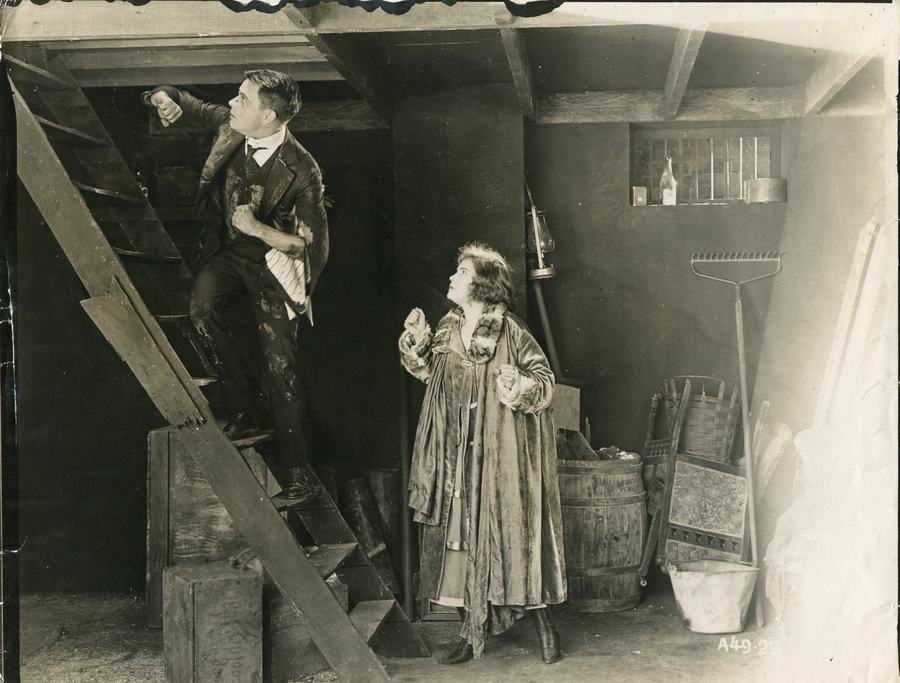
One cannot discuss 'The Hun Within' without acknowledging its role as a piece of wartime propaganda. Released at a time when anti-German sentiment was rampant in America, films like this served to galvanize public opinion and reinforce loyalty to the Allied cause. The 'Hun' in the title itself is a pejorative term, reflecting the dehumanization of the enemy prevalent during the conflict. Yet, even within this propagandistic framework, the film manages to pose complex questions about what it means to be a 'true American' when one's heritage is called into question. It implicitly critiques the xenophobia that often accompanies wartime fervor, even as it champions national unity. This delicate balance, or perhaps an unwitting subversion of its own intent, makes the film particularly fascinating for historical analysis.
The writing by Stanner E.V. Taylor and D.W. Griffith crafts a narrative that is both timely and timeless. They understood the power of a personal story to illustrate grander themes. The plot, simple in its premise, becomes incredibly rich through the emotional depth given to the characters. The conflict isn't just external; it's internal, a civil war within a man's soul. This psychological dimension elevates 'The Hun Within' beyond mere jingoism, offering a glimpse into the human cost of ideological battles. While the film's resolution ultimately aligns with the nationalistic fervor of its time, the journey to that resolution is fraught with genuine human emotion and moral complexity.
Comparing 'The Hun Within' to other films of its era or even later works reveals its unique position. While it shares thematic elements with other wartime dramas, its specific focus on the German-American experience during WWI provides a distinct lens. One might draw a thematic parallel to films like The Heart of a Hero, if it too explores the profound sacrifices demanded by loyalty and courage in the face of daunting odds. The internal struggle for an individual caught between two worlds, or two loyalties, is a powerful narrative device, often seen in stories where personal ethics clash with national duty. Similarly, the intergenerational conflict and the clash of values, though not necessarily wartime specific, could find echoes in films like Old Dutch, if that film delves into the complexities of familial relationships under societal pressure. However, 'The Hun Within' carves its own niche by directly addressing the immigrant experience during a time of intense scrutiny and suspicion, a narrative thread that remains powerfully resonant even today.
The performances are key to the film's enduring impact. Charles K. Gerrard delivers a masterclass in silent film acting, conveying immense emotional depth without a single word. His eyes, his posture, his every gesture speaks volumes of a man torn asunder. Erich von Stroheim, as mentioned, is captivating in his understated villainy, a precursor to the more flamboyant antagonists he would later embody. Dorothy Gish, a frequent collaborator with Griffith, brings a delicate vulnerability to her role, adding another layer of human emotion to the unfolding tragedy. The ensemble cast works cohesively to create a believable, albeit heightened, reality, drawing the audience into their predicament.
From a technical perspective, the film showcases the evolving craft of early cinema. The cinematography, though rudimentary by today's standards, is effective in establishing mood and guiding the viewer's eye. The use of intertitles is skillful, providing necessary exposition and dialogue without disrupting the flow of the visual narrative. The overall production design, while perhaps not lavish, successfully evokes the period and setting, grounding the dramatic events in a tangible reality. It's a testament to the ingenuity of early filmmakers working with nascent technology to tell compelling stories.
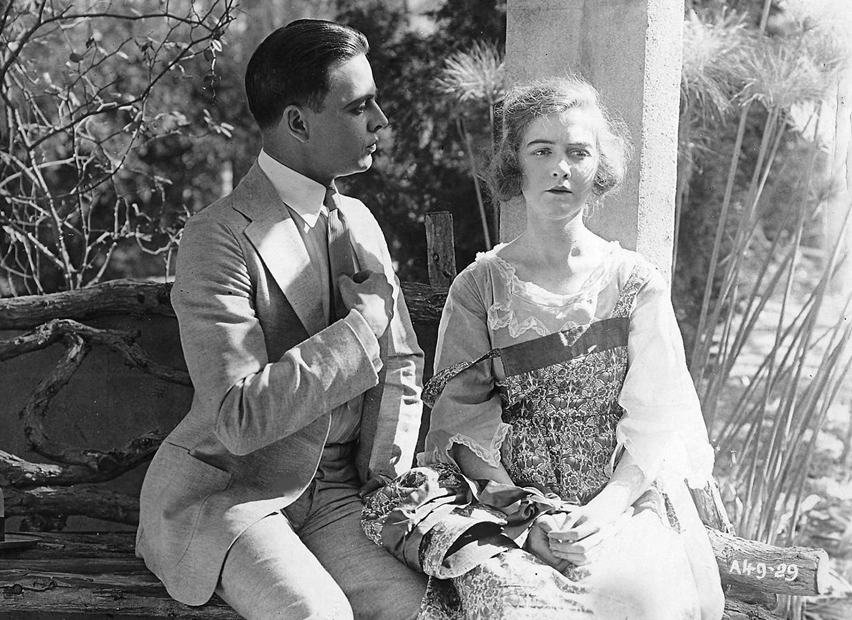
In retrospect, 'The Hun Within' serves as a vital historical document, offering insight into the cultural and political climate of World War I America. It reflects the anxieties about 'fifth columns' and divided loyalties, fears that have re-emerged in various forms throughout history. Yet, beyond its historical context, the film's exploration of loyalty, identity, and the moral compromises demanded by conflict remains profoundly universal. It forces us to ponder the true meaning of patriotism and the ethical boundaries one is willing to cross in its name. The film doesn't offer easy answers, instead leaving the audience to grapple with the profound implications of its central dilemma.
Ultimately, 'The Hun Within' is more than just a silent film; it's a powerful statement on the human condition under duress. It's a reminder that even in times of national unity, individual lives can be shattered by the choices forced upon them by circumstance and conflict. The father's agonizing decision, the son's misguided allegiance, and the pervasive fear of the 'other' all combine to create a cinematic experience that, while perhaps born of a specific historical moment, speaks to the enduring complexities of human nature. It's a film that deserves to be rediscovered, studied, and appreciated not just for its historical significance but for its potent and timeless dramatic power. The enduring struggle between heart and homeland, between kin and country, is rendered here with a stark, unforgettable clarity, leaving a lasting impression long after the final frame.
The film's exploration of the fragility of identity in the face of nationalistic fervor is particularly striking. How does one reconcile a birthright with an adopted loyalty when the two are pitted against each other so violently? This question, central to the father's torment, elevates the film from a simple wartime narrative to a profound philosophical inquiry. The societal pressure to conform, to unequivocally declare allegiance, is palpable, yet the film, through Gerrard's nuanced performance, allows for the complexity of human emotion to shine through. It’s a testament to the power of early cinema that such intricate themes could be conveyed with such emotional resonance, without relying on spoken dialogue. The silence, in fact, amplifies the internal struggles, making the characters' choices and their consequences all the more stark.
The portrayal of the German agents, led by von Stroheim's character, is also worth noting. They are not cartoonish villains but rather calculated individuals, preying on vulnerability and exploiting familial ties. This depiction, while still framed within a clear 'enemy' context, lends a degree of realism to their nefarious activities. It highlights the insidious nature of espionage and the psychological warfare that accompanies physical conflict. The film serves as a cautionary tale, illustrating how easily individuals, especially the impressionable, can be manipulated when caught between conflicting loyalties. The very notion of 'divided loyalties' becomes a character in itself, shaping the destinies of all involved.
For those interested in the evolution of cinematic storytelling, 'The Hun Within' offers valuable insights into how filmmakers of the era tackled complex moral dilemmas. It demonstrates a sophisticated understanding of dramatic structure and character development, proving that early cinema was far from simplistic. The film's legacy lies not just in its historical context but in its enduring ability to provoke thought and stimulate discussion about the timeless themes of family, nation, and personal sacrifice. It remains a powerful reminder of a turbulent period, viewed through the deeply personal lens of one family's unimaginable choices.
IMDb 6.7
1936
Community
Log in to comment.