DbcultAccessing Vault...
Cult Review
Senior Film Conservator
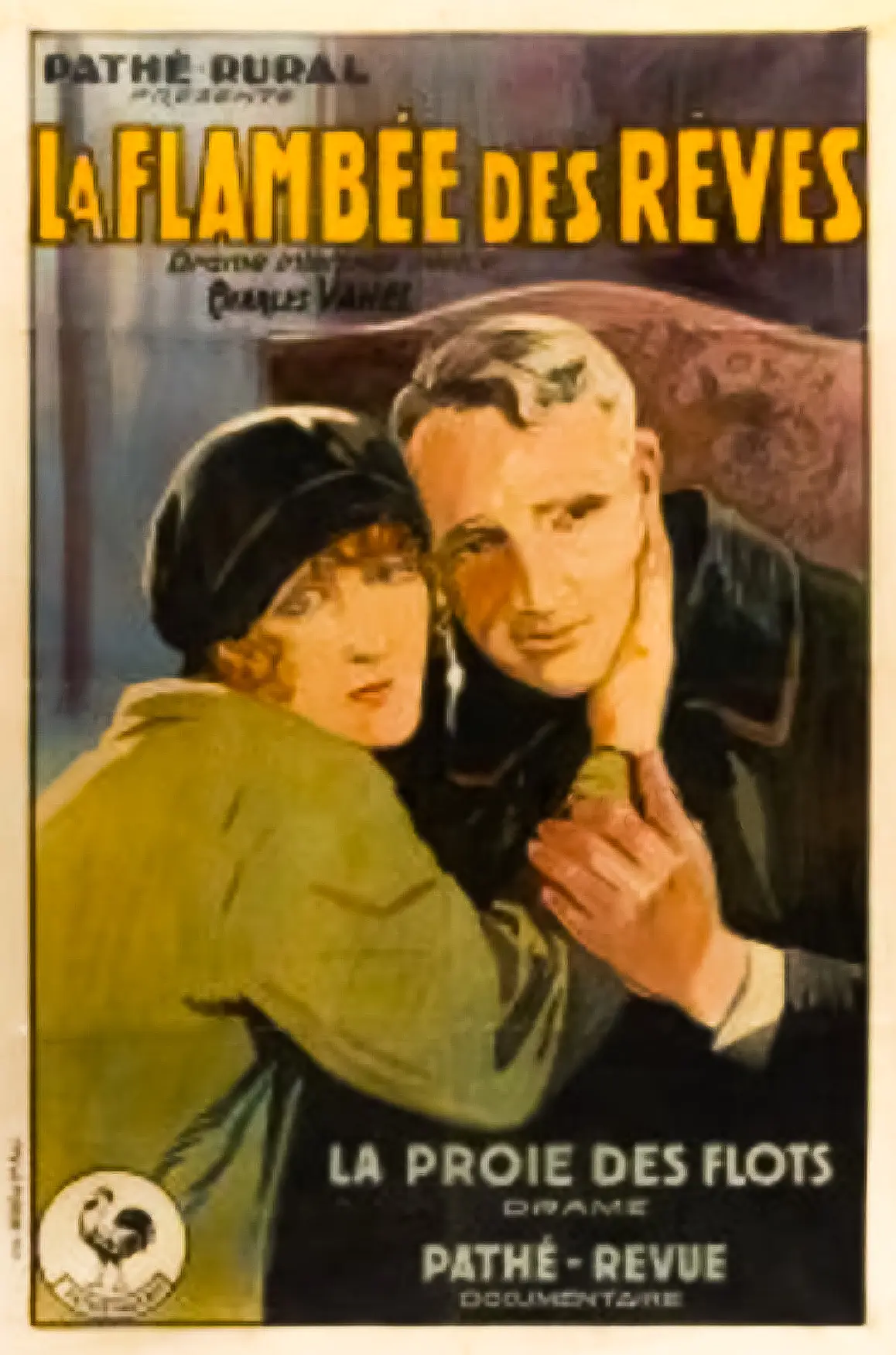
In the shimmering tapestry of early 20th-century French cinema, where the silent screen conveyed volumes through gesture and gaze, Jacques de Baroncelli’s La flambée des rêves emerges as a particularly poignant and psychologically astute drama. This isn't merely a tale of infidelity; it's a profound exploration of existential yearning, the suffocating weight of societal expectation, and the incandescent, often destructive, power of rekindled passion. Baroncelli, a director celebrated for his nuanced approach to human emotion, crafts a narrative that feels both deeply personal and universally resonant, transcending the temporal confines of its era.
At its heart lies Claire, portrayed with luminous fragility and growing determination by Noémi Seize. Claire is, to all outward appearances, a woman of enviable fortune. Married to the elderly, affluent owner of a sprawling brewery, her life is one of material comfort and social standing. Yet, beneath the veneer of this gilded existence, a profound ennui festers. The grand halls of her marital home, the clinking of glasses, the hum of industry – all serve as a stark counterpoint to the quiet desperation brewing within her soul. Seize’s performance is a masterclass in silent acting, conveying Claire's internal landscape with subtle shifts in expression, a lingering glance, or a barely perceptible sigh. We see her not as a villain, but as a prisoner of circumstance, a woman whose spirit yearns for a vibrancy her current reality cannot provide.
The catalyst for this inner upheaval arrives in the form of René, brought to life with charismatic intensity by Eric Barclay. René is not just a man; he is a ghost from Claire’s past, a living embodiment of youthful dreams and unfulfilled promises. His reappearance is less an intrusion and more an awakening, stirring dormant desires and challenging the carefully constructed facade of Claire’s life. Barclay infuses René with an alluring blend of charm and perhaps a touch of recklessness, making him an irresistible force against Claire’s carefully cultivated restraint. Their connection is immediate, palpable, a dangerous spark threatening to ignite the very foundations of her world. It’s a classic narrative arc, yet Baroncelli elevates it through a meticulous focus on psychological realism, portraying the gradual erosion of Claire's resolve rather than a sudden, impulsive leap.
The elderly brewery owner, Claire’s husband (likely portrayed with understated dignity by Charles Vanel, though the cast list is broad, his presence would lend weight to the role), is not depicted as a monstrous figure, but rather as a symbol of the life Claire has outgrown. He represents stability, tradition, and perhaps a certain paternalistic affection, but crucially, he embodies a love that lacks the passionate fire Claire craves. His blindness to her burgeoning unhappiness, or perhaps his quiet resignation to it, underscores the tragic isolation inherent in their marriage. The brewery itself becomes a potent metaphor: a place of industry and production, but also one of confinement and the slow, methodical process of fermentation, mirroring Claire's own desires slowly bubbling to the surface.
Baroncelli's direction is masterful, employing the visual lexicon of the silent era to its fullest potential. His use of light and shadow is particularly striking, often reflecting Claire’s emotional state. Dimly lit interiors emphasize her entrapment, while fleeting moments of bright sunlight or the glow of a fireplace hint at the warmth and passion she seeks with René. The pacing is deliberate, allowing the audience to fully absorb the emotional weight of each scene, building tension through lingering close-ups and carefully composed tableaux. The film understands that in silence, every gesture, every flicker of an eye, carries immense narrative power, and Baroncelli exploits this to create a deeply immersive experience.
The supporting cast, including Suzanne Bianchetti, Andrews Engelmann, and Sandra Milovanoff, contribute significantly to the film's rich texture, populating Claire's world with figures who either reinforce societal norms or subtly comment on her predicament. Bianchetti, often known for her regal portrayals, might here embody a more traditional, perhaps even judgemental, female figure, highlighting the societal pressures Claire faces. Engelmann and Milovanoff, as other members of the ensemble, flesh out the world, adding layers of social interaction that define the boundaries of Claire's existence.
La flambée des rêves is more than just a period piece; it's a fascinating document of societal anxieties concerning marriage, female autonomy, and the pursuit of individual happiness in early 20th-century France. The post-World War I era, while often depicted as a time of liberation, also saw a conservative backlash, particularly concerning women's roles. Claire's struggle can be seen as emblematic of a broader societal tension between tradition and modernity, duty and desire. The film doesn't offer easy answers, instead presenting the complex, often tragic, consequences of choices made under duress and longing.
When considering other films of the era that grapple with similar themes, one might draw parallels to the moral quandaries explored in The Devil-Stone, where characters face intense ethical dilemmas driven by desire and ambition. Similarly, the complex romantic entanglements and societal pressures found in Who Loved Him Best? resonate with Claire’s predicament, though perhaps with a different emphasis on the resolution. Baroncelli’s film, however, distinguished itself by its particular French sensibility, a blend of romanticism and fatalism that often characterized the nation's cinematic output during this period.
The screenplay, penned by Jacques de Baroncelli himself, alongside the uncredited contributions of other writers, demonstrates a keen understanding of dramatic structure and character development. The narrative unfolds with an organic inevitability, each scene building upon the last to heighten the emotional stakes. There’s a poetic quality to the storytelling, even in its starkest moments, that speaks to the power of silent cinema to communicate profound truths without uttering a single word. The film trusts its audience to interpret subtle cues, to feel the unspoken desires and fears that animate its characters.
The escalation of Claire and René’s affair is handled with a delicate balance of passion and trepidation. Their stolen moments are imbued with a desperate urgency, a sense that they are dancing on the precipice of discovery and ruin. The film cleverly uses the contrast between the vibrant, clandestine world they inhabit and the rigid, public facade Claire must maintain, creating a palpable tension that keeps the audience captivated. The sheer audacity of their rebellion against societal norms is thrilling, yet Baroncelli never shies away from hinting at the potential devastation such an affair could wreak.
The climax of La flambée des rêves is an emotional tsunami, not necessarily through grand gestures, but through the shattering of illusions and the painful confrontation of reality. The consequences of Claire’s pursuit of passion are explored with an unflinching gaze, forcing both the characters and the audience to grapple with the complexities of moral choice and personal sacrifice. It’s a testament to the film’s enduring power that these resolutions, often stark and uncompromising, still resonate today, prompting reflection on the cost of happiness and the nature of true fulfillment.
The performances across the board are uniformly strong, a testament to Baroncelli’s direction of his actors. Noémi Seize carries the film with an extraordinary grace, embodying Claire’s transformation from a repressed wife to a woman fully embracing her desires, even at great personal cost. Eric Barclay’s René is the perfect foil, a magnetic force that both liberates and imperils Claire. Their on-screen chemistry, conveyed through shared glances and subtle physical intimacy, is utterly convincing and forms the emotional backbone of the narrative. Even smaller roles are etched with care, contributing to a believable and deeply felt world.
Beyond the central love triangle, La flambée des rêves offers a rich visual experience. The set designs, whether depicting the opulent yet sterile interiors of Claire's home or the more intimate, perhaps bohemian, spaces where she meets René, contribute significantly to the storytelling. Costumes too, are carefully chosen to reflect character and status, with Claire's attire often evolving to mirror her internal journey. These meticulous details elevate the film from a simple melodrama to a sophisticated work of art, demonstrating the comprehensive vision of its creators.
In the pantheon of French silent cinema, La flambée des rêves holds a significant place. It stands as a powerful example of how the medium, even in its early stages, could delve into the intricate psychology of its characters and explore complex societal issues with profound sensitivity. It’s a film that demands active engagement from its audience, inviting them to interpret the nuances of performance and visual metaphor, rewarding those who do with a rich and deeply moving experience.
For modern viewers, this film offers a fascinating window into a bygone era, yet its themes remain remarkably contemporary. The struggle for personal authenticity, the allure of forbidden love, the constraints of social expectations – these are timeless human concerns. Baroncelli’s artistry ensures that Claire’s dreams, and their fiery consequences, continue to resonate, proving that true cinematic brilliance transcends the limitations of sound or era. It’s a testament to the enduring power of storytelling, and a vital piece of cinematic heritage that deserves to be rediscovered and cherished.
The film’s title, 'The Blaze of Dreams,' is itself deeply evocative. It speaks to the intensity of Claire’s desires, the potentially destructive force of passions left unchecked, and the ephemeral, yet incandescent, nature of true yearning. It’s a title that perfectly encapsulates the film’s core conflict: the internal fire of individual desire clashing against the cold, hard realities of social convention. Baroncelli masterfully navigates this conflict, creating a film that is both a romantic tragedy and a compelling psychological study, leaving an indelible mark on the viewer long after the final frame fades to black.
Ultimately, La flambée des rêves is a film that speaks volumes in its silence. It's a testament to the power of human emotion, the complexities of choice, and the timeless struggle between duty and desire. It invites us to consider the hidden lives beneath polished surfaces and the courage it takes to pursue one's own truth, no matter the cost. A truly remarkable cinematic achievement, it continues to burn brightly in the annals of film history.
IMDb 5.8
1933
Community
Log in to comment.