DbcultAccessing Vault...
Cult Review
Senior Film Conservator
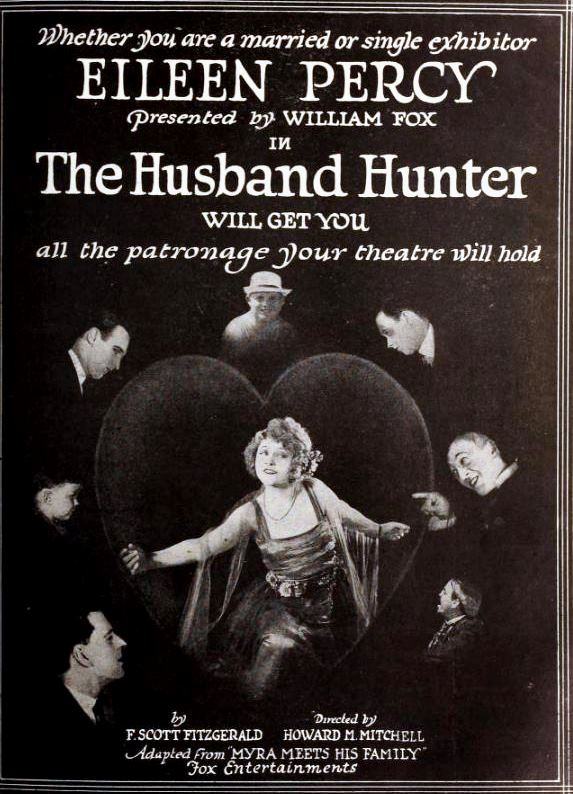
The first time you meet Myra Hastings you swear you can smell Mitsouko perfume and ozone—the scent of lightning about to strike a safe.
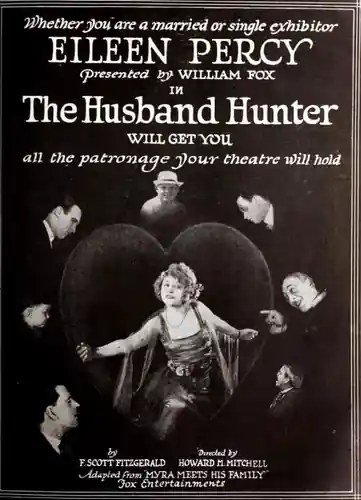
She glides into a ballroom the way a yacht knife-cuts a moonlit inlet: effortless, inevitable, leaving lesser vessels bobbing in her wake. The Husband Hunter—a 1920 seven-reel firecracker—captures that moment and loops it, like a silver necklace shaken free of its clasp, until pearls scatter everywhere. Paramount released it with modest ballyhoo, yet the picture has the kick of bootleg gin because the story credit reads F. Scott Fitzgerald. Yes, that Great Gatsby phantom, jazz chronicler, professional disappointment in his own bank balance. Fitzgerald’s fingerprints—slick, opalescent—are all over the intertitles, even if studio hacks like Joseph F. Poland sanded off the serial numbers.
Myra’s M.O. is simple arithmetic: flirt with nine, propose to three, get one down the aisle, cash the settlement check before the honeymoon steamer docks. Enter Kent Whitney—wide shoulders, narrow reading list—whose father’s oil derricks spurt liquid gold like drunk geysers. Bob Harkness, tossed aside like yesterday’s boutonniere, plays Greek chorus and saboteur. Together the men stage a revenge masque so crude it borders on folk art: they invite Myra to the ancestral manse, promising Gatsby-level refinement, then uncage a circus of vulgarity. Picture this: Dad (Edward McWade) greets her in suspenders and a cigar stump, roaring, “Welcome to the manor, toots!” while Mom reclines on a fainting couch, six Pomeranians yapping at the ceiling fan like it’s the Second Coming. The dinner bell is a cowbell; the soup is served in a chipped chamber pot; the butler belches national anthems. Myra’s face—Eileen Percy excels at micro-tremors—registers the shock of a duchess slapped with a mackerel.
But The Husband Hunter refuses to linger on cruelty for cruelty’s sake. Myra’s counterstroke is a masterpiece of social sabotage: she hires a broken-down character actor impersonating a clergyman, stages a twilight wedding in the same drawing-room that humiliated her, and vanishes before Kent can say “I do.” The forged marriage certificate—left on a candle-scorched Bible—turns Kent into the town’s laughing-stock. It’s a reversal worthy of Colonel Carter at his most Machiavellian, but laced with flapper venom.
Of course, this is a silent comedy, so redemption must outrun revenge. Kent tracks Myra to a fog-choked pier; the camera dollies back until the lovers become ink-blots against a charcoal sky. His plea is not for forgiveness but for reciprocity: “Marry me for real, because I’m as hollow as you are.” The film closes on an iris-in that feels suspiciously like a question mark.
Eileen Percy’s Myra is the axis around which the picture pirouettes. She never telegraphs motive; instead, she lets her pupils dilate like cash-register windows. Watch her in the sham-wedding scene: she whispers vows with the fervor of a convert, yet her right hand—just out of frame—clutches a train ticket to Chicago. The duality is riveting.
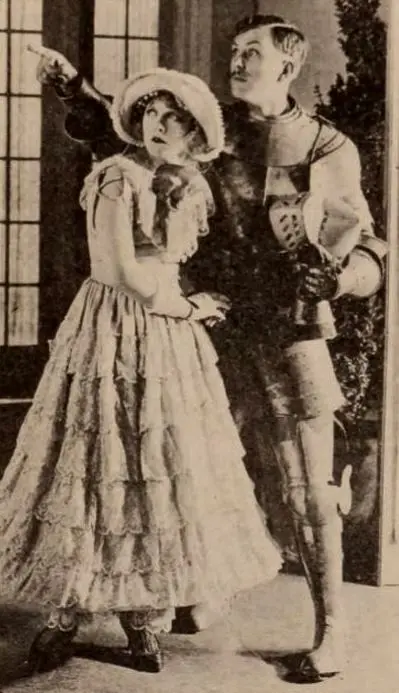
As Kent, Emory Johnson looks like someone who could sell you a war bond or a defective tennis racket with equal sincerity. Johnson was Paramount’s utility blade: good cheekbones, better timing. When he realizes the marriage was a ruse, his collapse is balletic—he slides down a doorframe like a man deflating, yet the gesture never begs for pity.
John Steppling, playing the counterfeit parson, deserves a silent-Oscar that never existed. With moth-eaten dignity he intones, “What therefore God hath not joined together, let no woman rent asunder,” a line so cheekily blasphemous it must have emerged from Fitzgerald’s personal notebook of epigrams.
Director Wallace Worsley (yes, the man who later shackled Lon Chaney in The Hunchback of Notre Dame) keeps the frames bustling. Note the repeated motif of mirrors: Myra checks her reflection in a ballroom mirror smeared with a rival’s glove-print; later, Kent stares into a cracked pier mirror that splinters his face like cubist guilt. Mirrors here aren’t vanity—they’re verdicts.
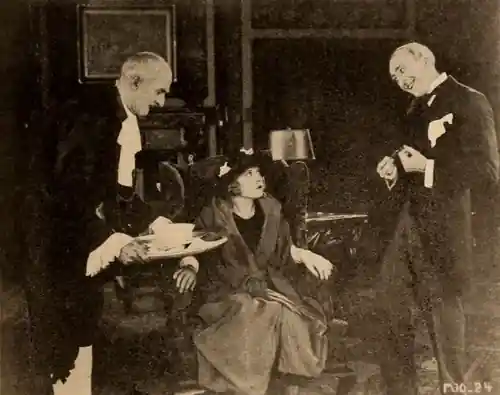
The budget was reportedly forty-two thousand dollars, half of which went to renting genuine Louis XVI chairs that Myra could sneer at. Cinematographer Charles E. Kaufman bathes night exteriors in mercury vapor, turning lawn shrubbery into pewter filigree. Interior scenes favor tungsten, so faces glow like cameos warmed by lamplight. The tonal swing—icy blues outside, honeyed ambers inside—mirrors the emotional whiplash between public façade and private chaos.
Scholars still bicker over how much prose Fitzgerald donated. Surviving production memos hint he penned a 1919 short story titled The Scandaliz—never published—that Paramount optioned for a pittance. Several intertitles carry his signature cadence: “She collected engagements the way some girls collect seashells—pretty, vacant, and soon to be forgotten.” That line alone sings with Gatsby-era melancholy.
Compare this acidic social arithmetic to Torchy’s Millions, where matrimony is a jackpot rather than a chess problem. Fitzgerald refuses to let money resolve tension; instead, he lets embarrassment do the heavy lifting—a crueler, funnier currency.
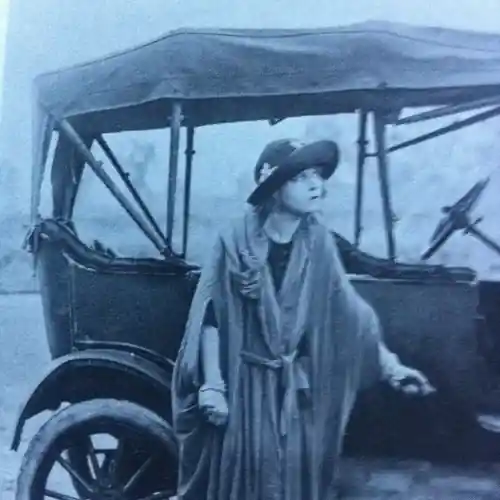
Released eight months after the Nineteenth Amendment, The Husband Hunter both cheers and fears the New Woman. Myra’s sexual entrepreneurship terrifies patriarchs, yet the narrative punishes her not for ambition but for fickleness. Meanwhile, Kent’s masculine pride is bruised more than his heart, aligning the film with other post-war comedies like The Talk of the Town that negotiate shifting gender power via screwball humiliation.
The picture also anticipates the coming collision between old money and new oil. Kent’s father is a glorified rigger who washed the right armpit of a Tulsa gusher; Myra’s set still sniff at the smell of petroleum beneath the eau de cologne. The film’s joke is that both tribes are equally vulgar—one cloaks it in cut-glass accents, the other in barnyard candor.
Original exhibitors received a cue sheet recommending “Whispering” for the courtship scenes and “Hindustan” for the sham wedding. Modern restorations commissioned a jaunty fox-trot arrangement that quotes Gershwin’s “Sweet and Low-down,” turning every pratfall into a syncopated hiccup. The juxtaposition—1920 hot jazz against Victorian drawing-room farce—feels like dropping a lit cigarette into a champagne flute.
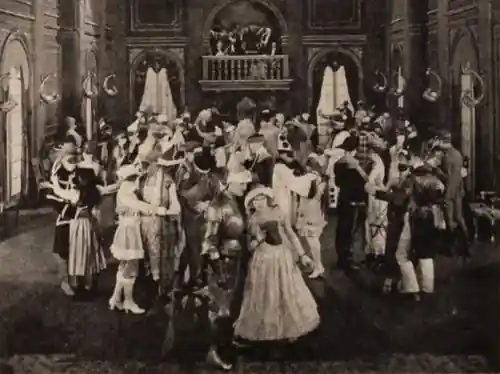
Trade papers adored it. Moving Picture World crowed: “A champagne cocktail spiked with strychnine—audiences guzzle and ask for seconds.” Yet by 1922 the negative was lost in the Famous Players fire, and only a 16mm abridgement surfaced in a Belgian convent archive in 1978. Most current prints run 52 minutes; the original was seven reels. Even truncated, its bite remains infectious.
Compare its fate to the more fortunate survival of Jack and Jill, whose moralizing melodrama feels quaint beside Husband Hunter’s flapper cynicism. History sometimes saves the wrong bridesmaid.
Because every dating app today is basically Myra’s ballroom—profiles curated, hearts swiped like credit cards. Because revenge fantasies staged via Instagram hoaxes echo Kent’s rustic takedown. Because Fitzgerald understood that the most lethal weapon in romance is not lust but embarrassment—the moment when your curated persona slips on a banana peel of truth.
Watch The Husband Hunter for its gallows wit, its mercury visuals, its willingness to let lovers wrestle in the mud they themselves stirred. And when the final iris closes, ask yourself: would you rather be conned by someone glamorous, or educated by someone vulgar? The film refuses to answer; it simply hands you the cracked mirror and walks away.
Verdict: A brittle, blazing curio that deserves revival houses, graduate seminars, and at least one reckless midnight screening accompanied by bootleg gin in paper cups.
IMDb 5.8
1920
Community
Log in to comment.