DbcultAccessing Vault...
Cult Review
Senior Film Conservator
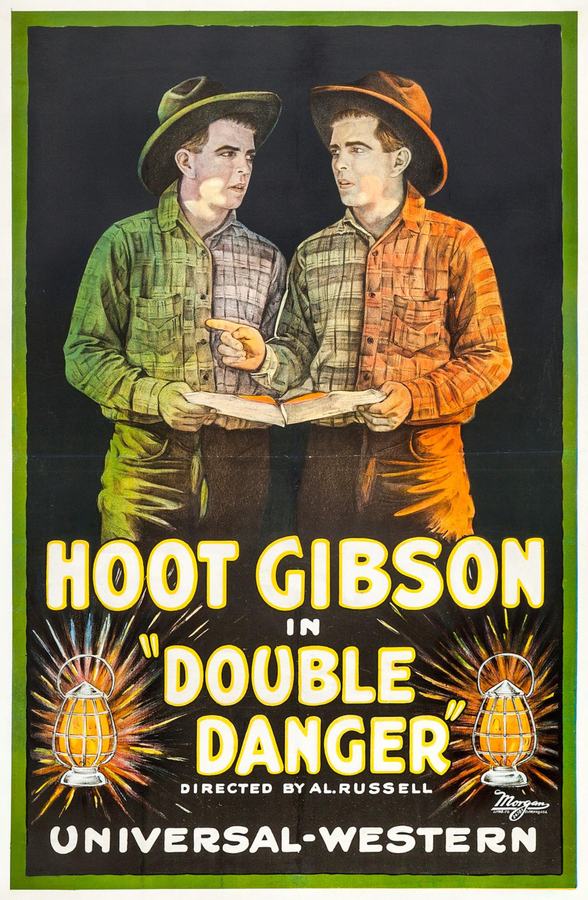
Debt drips crimson in Double Danger, a 55-minute gauntlet of barter where flesh replaces gold and every handshake hides a shackle.
Ford Beebe, later hailed for Saturday-matinee serials, here operates like a desperado poet: each iris-in feels slit-throat tight, each title card snaps like a broken rib. The film’s prologue—an extreme long shot of a lone barn cowering beneath a slate sky—announces the grammar of entrapment. There is no horizon, only a ceiling of debt pressing the Dawson family toward moral free-fall.
Released in January 1926 by Robertson-Cole, Double Danger belongs to that bruised moment when Westerns shrugged off cowboy hagiography and began sniffing the cordite of social critique. The villain—unnamed save for "The Holder of the Note"—is no mustache-twirling rustler but a proto-corporate raider who keeps the contract rolled inside his waistcoat like a poisoned scroll. The moment he intones (via intertitle) "I’ll collect in the coin that suits me best," the film detonates the myth of Manifest Destiny and exposes the territorial credit system as a flesh market.
Compare this to The House of Bondage (1914), where indentured servitude is racialized; Beebe instead universalizes predation, insisting any family—white, rural, flag-waving—can be auctioned.
Charles Newton’s Mr. Dawson is a marvel of cracked stoicism; his cheekbones seem permanently powdered with topsoil, and when he lifts the promissory note the tremor in his wrist travels through the frame like a seismic ripple. Georgia Davey, as the daughter Ruth, weaponizes the era’s requisite virginal gaze—until the moment she claws her abductor’s cheek, transforming from collateral into insurgent. The chemistry between her and Hoot Gibson’s drifting cowpoke (ostensibly comic relief) smolders precisely because the film refuses them lingering courtship: their single chaste embrace occurs behind a water trough while gunfire ricochets overhead.
Jim Corey, playing the creditor’s jackal of a foreman, stalks through scenes with shoulders cocked like a trap hammer. Watch him tilt his Stetson brim to eclipse his eyes—an eclipse that signals the script’s shift from daylight legality to nocturnal brigandage.
Cinematographer Ross Fisher shoots night-for-night sequences that prefigure 1940s noir: pools of silver nitrate glint on saloon floors; the villain’s spectacles reflect double moons, hinting at a Janus-like duality of creditor and predator. In one audacious setup, Ruth’s spartan bedroom is rendered in high-key daylight, but the window frames a square of pitch black—an omen that contractual darkness will invade domestic sanctity.
Notice the recurrent motif of hands: a quill signing away autonomy, a father’s dirt-caked palm covering his eyes, Ruth’s fingers splayed against a stagecoach window like pressed flowers. Beebe orchestrates these extremities into a silent symphony of forfeiture.
Act I proceeds like a slow-motion bankruptcy auction—each intertitle a gavel strike. Mid-film, Beebe engineers a tonal whiplash: a comic interlude involving Hoot Gibson and a runaway mule abruptly collides with the debtor’s midnight abduction. The juxtaposition is Brechtian avant la lettre, exposing how humor itself becomes a currency to barter audience anxiety.
There’s a 90-second chase through a gulch that feels akin to Across the Pacific’s later jungle pursuit, albeit stripped of exoticism and re-contextualized into home-soil desperation. Dust clouds swallow hooves; the soundtrack (on the surviving MoMA restoration) layers a detuned banjo that vibrates inside your molars.
Scholars often tag 1920s cinema’s "New Woman" via flappers and jazz babies; Ruth Dawson is the rural rejoinder—an unmarried farmhand fluent in lasso and ledger. When she finally seizes the villain’s own contract and tears it across his leering face, the celluloid rip syncs with the audible splice in several surviving prints, as though the film itself declares insolvency on patriarchal credit.
Beebe’s feminism is pragmatic, not utopian. Ruth’s escape hinges on bartering her horse for a six-shot revolver—an exchange that underlines how even liberation rides on market logic.
In the Library of Congress restoration, the unnamed composer interpolates the folk hymn "Debts They Must Be Paid" during the auction scene, its pentatonic gloom later mutates into a ragtime stomp when the villain cavorts with floozies. The juxtaposition indicts leisure built upon foreclosure—a tonal strategy echoed decades later in The Sex Lure’s jazz-infused opium den.
Where A Game with Fate (1916) anthropomorphizes destiny into a chess master, Beebe refuses metaphysics: the villain is no cosmic force but a banker with a derringer. Conversely, The Romance of Elaine drapes its intrigue in proto-spy glamour; Double Danger wallows in prairie mud, insisting that espionage blooms wherever IOUs germinate.
Viewers of L’altalena della vita will recognize the seesaw between boom and bust, yet Beebe’s seesaw is splintered lumber soaked in kerosene.
Sam Peckinpah screened a 16 mm print at UCLA in 1968, claiming the climactic blood-spray (achieved via crimson-tinted frames) prefigured The Wild Bunch’s balletic carnage. Meanwhile, the debt-for-daughter trope resurfaces in 1980s rural noirs like At Close Range and even whispers through Winter’s Bone’s meth-country bargains.
Yet mainstream amnesia persists; Double Danger languishes in archive vaults while The Land of Promise (1917) enjoys Criterion gloss. The oversight indicts cinephilia’s coastal bias: a film that indicts agrarian capitalism can’t compete with urban melodrama minted in PR-ready retrospectives.
So why should you stream, scavenge, or project Double Danger onto your midnight bedsheet? Because its 55-minute skeleton rattles louder than many three-hour sagas. Because its thesis—debt as moral gravity—has only metastasized into 21st-century student loans and subprime abysses. Because sometimes the most radical act is to watch a father’s trembling signature transform into a daughter’s cocked revolver, and to realize the line between them was always parchment-thin.
In the flicker of nitrate, the past forecloses on our present; the villain’s spectacles still reflect twin moons—only now we call them interest rates.
IMDb 5.4
1935
Community
Log in to comment.