DbcultAccessing Vault...
Cult Review
Senior Film Conservator
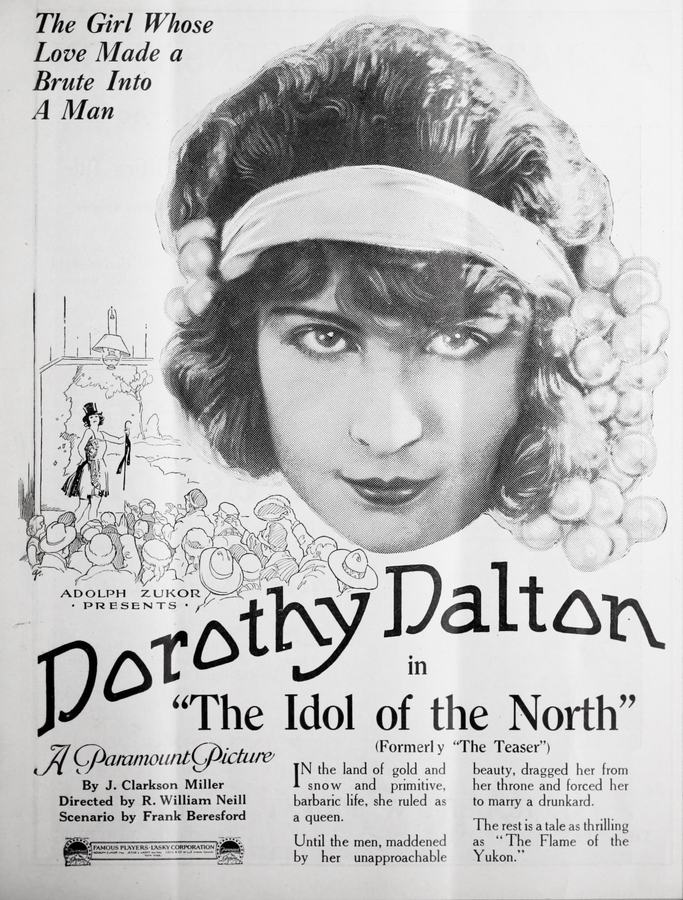
The Idol of the North
What distinguishes The Idol of the North from the glut of early 20th-century dramas is its unapologetic focus on the psychological underpinnings of its characters, set against a backdrop of desolate grandeur. This 1923 silent film—crafted by Frank S. Beresford, Tom McNamara, and J. Clarkson Miller—does not merely recount a story of romantic entanglements; it interrogates the societal and personal constraints that shape human behavior. Jessie Arnold’s portrayal of Colette Brissac is a masterclass in nonverbal storytelling, her eyes and gestures conveying a woman torn between survival and self-determination in a world that views her as a trophy or a burden.
The film’s opening act sets a tone of simmering tension. Colette, depicted as a magnetic yet vulnerable figure, exists in a liminal space between the raucous energy of the dance hall and the unforgiving silence of the Canadian Northwest. Her rejection of Lucky Folsom (Riley Hatch), a man offering both protection and patronage, is not just an assertion of independence but a rejection of dependency. Folsom’s subsequent marriage to Gloria Waldron (Marguerite Marsh), an ambitious woman whose affections for engineer Martin Bates (Edwin August) are as calculating as they are genuine, introduces a layer of class and gender politics that the film examines with brutal candor. The narrative pivots when Bates, a man adrift in his own grief and professional disillusionment, is thrust into a marriage with Colette—a union born of drunken chaos and economic desperation. This forced connection, however, becomes the crucible in which their mutual respect and unspoken love are forged.
What elevates The Idol of the North beyond its plot mechanics is its visual language. The cinematography, stark and unadorned, mirrors the characters’ inner landscapes. The mining town, with its flickering lamps and soot-stained buildings, feels like a character itself—a place where the earth’s raw resources are mined alongside human resilience. The contrast between the vibrant hues of the dance-hall scenes and the monochromatic bleakness of the miners’ lives underscores the film’s central dichotomy: the allure of artifice versus the grit of reality. One particularly striking sequence features Colette nursing Bates back to health, the camera lingering on the calloused hands of a woman accustomed to hardship and the fragile vulnerability of a man stripped of his professional pride.
The performances are uniformly compelling, with Edwin August’s portrayal of Martin Bates embodying the quiet dignity of a man grappling with his own complicity in the chaos around him. His scenes with Dorothy Dalton’s Gloria Waldron crackle with unspoken tension, the latter delivering a performance that is equal parts charm and menace. The chemistry between August and Jessie Arnold is understated yet electric, their slow-burning romance unfolding through glances and shared silences rather than overt declarations. This restraint is a narrative strength, allowing the audience to infer the emotional stakes rather than being told.
The film’s climax—a violent yet cathartic confrontation between Folsom and Bates—revels in its refusal to sanitize conflict. Colette’s decision to wound Folsom is not a mere plot twist but a narrative pivot that exposes the fragility of the social order. By disrupting the cycle of manipulation, she asserts her autonomy, a moment that resonates with the subversive spirit of the silent film era. The resolution, in which Folsom is forced to confront his own moral failings and Gloria’s ambitions are tempered by loss, is neither tidy nor sentimental. It is, instead, a testament to the film’s commitment to realism.
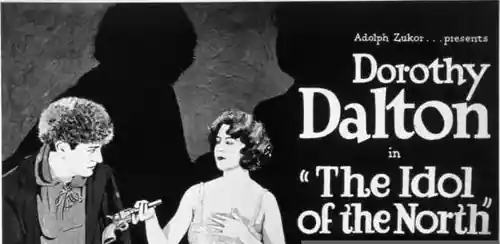
Thematically, The Idol of the North echoes the existential concerns of contemporary works like Wires Down and The Heart of a Lion, though it distinguishes itself through its focus on domestic tension rather than broader societal upheaval. The film’s critique of patriarchal structures and capitalist exploitation is implicit yet potent, particularly in scenes depicting the miners’ exploitation and Gloria’s manipulative maneuvers. The script, penned by Beresford, McNamara, and Miller, avoids melodramatic excess, opting instead for a taut, dialogue-sparse approach that prioritizes visual storytelling.
For modern audiences, the film’s pacing may feel deliberate to a fault. The absence of rapid cuts or overt dramatic cues demands patience, but this very quality invites reflection. The extended takes and meticulous framing reward viewers with a sense of immersion, transforming the Canadian Northwest from a setting into a psychological state. This deliberate pacing also allows the supporting cast—particularly Joe King as a cynical miner and Florence St. Leonard as a conflicted townsfolk—to shine in brief but impactful moments.
Technically, the film is a marvel of early cinema. The use of chiaroscuro lighting in Colette’s scenes with Bates creates a haunting intimacy, while the wide-angle shots of the mining town emphasize its claustrophobic, inescapable nature. The editing, though rudimentary by today’s standards, is precise and purposeful, with transitions that mirror the emotional arcs of the characters. The score, though not explicitly mentioned in historical records, likely complements the film’s mood with a sparse, melancholic resonance.
Comparisons to Beneath the Czar and The Isle of Conquest are inevitable given the film’s colonial and industrial themes, yet The Idol of the North diverges by centering the perspective of working-class women and marginalized communities. Its exploration of power dynamics within relationships—particularly the gendered expectations placed on Colette and Gloria—anticipates feminist critiques of the following decades.
In the pantheon of early 20th-century cinema, The Idol of the North occupies a unique space. It is neither a commercial spectacle nor a purely avant-garde experiment. Instead, it is a humanist work that balances narrative ambition with aesthetic restraint. For scholars of film history, it offers a window into the artistic possibilities of the silent era, while for general viewers, it is a gripping, emotionally resonant experience. Its legacy endures not merely as a relic of the past but as a testament to the enduring power of cinema to capture the complexities of the human condition.
The film’s final act, in which Colette and Bates walk away from the ruins of their tumultuous marriage, is a masterstroke of ambiguity. There is no triumphant resolution, no tidy reconciliation—only the suggestion that survival, not happiness, is the ultimate achievement. This refusal to offer easy answers is what cements The Idol of the North as more than a period piece. It is a work that challenges its audience to sit with discomfort, to find beauty in imperfection, and to recognize that love and conflict are often inseparable.
In an age where streaming platforms prioritize instant gratification, The Idol of the North reminds us of the value of patience in storytelling. Its quiet intensity, coupled with the raw power of its performances, creates an experience that lingers long after the credits roll. Whether viewed as a historical artifact or a standalone narrative, it remains a compelling exploration of the forces that shape—and unmake—human lives.
IMDb 5.5
1913
Community
Log in to comment.