DbcultAccessing Vault...
4.3/10
Senior Film Conservator
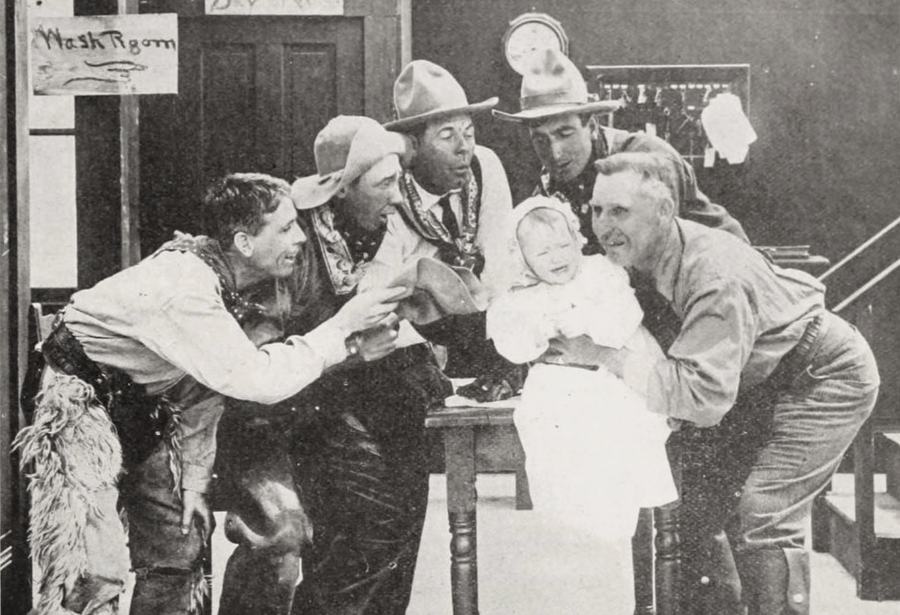
A definitive 4.3/10 rating for a film that redefined the boundaries of cult cinema. The Infant at Snakeville remains a cornerstone of transgressive art.
The reel unspools like a whiskey-stained lullaby: a prairie wind keens, a wheel rattles loose, and suddenly the West’s most implausible hostage situation is under way. The Infant at Snakeville—all dozen minutes of it—treats maternity as the most breakneck chase this side of the Union Pacific, then flips the genre on its Stetson by handing the hero’s reins to a toothless cherub who can’t even crawl.
Gilbert M. “Broncho Billy” Anderson understood something the Griffiths and deMilles were still groping toward in 1911: comedy is cruelty softened by affection, and the frontier is at its funniest when forced to behave like a nursery. The film’s gag architecture is as lean as a coyote—every shot either propels the separation or milks the chaos of reunion. Anderson the writer plants the inciting mishap in plain daylight: a mother’s skirt brushes a hitching post, the coach lurches, the camera holds on the void where her silhouette had been. No intertitle howls “MELODRAMA!”; the dust cloud does all the shrieking.
Once Bumps reaches Snakeville, the mise-en-scène pivots from open-range anxiety to claustrophobic farce. The hotel’s balustrades become prison bars; swinging saloon doors pump like lungs. Anderson the actor lets his shoulders droop in a gesture that predates Keaton’s deadpan by nearly a decade—here is a cowboy who would rather wrestle a steer than rock a cradle, yet the badge of temporary fatherhood is pinned on him by communal acclamation. The resulting tension between macho posturing and infantile entropy fuels every frame.
Visually, the short belongs to that primitive Eden where depth of field is mythic and shadows fall like axe cuts. The camera never budges; it stares, as if the lens itself were too stunned to breathe. Yet within that static rectangle, Anderson choreographs a symphony of off-screen noise—piano rags, ricocheting curses, the wet glug of milk hitting tin. The soundtrack lives in your head, a hallucination triggered by the flicker.
Comparative cinephiles will detect echoes of Birmingham’s urban disquiet and even the pugilistic balletics of The Corbett-Fitzsimmons Fight. But where those films externalize violence, Snakeville weaponizes cuteness; the knockout blow comes from dimpled fists.
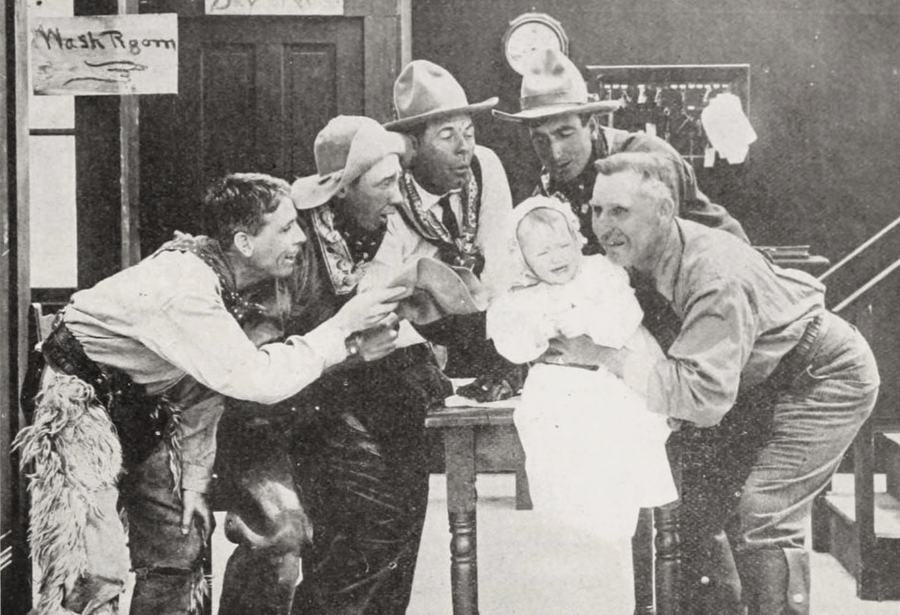
Gender politics, meanwhile, lurk beneath the slapstick. Mrs. Graham’s climactic tirade—delivered in a single, unforgiving close-up—reclaims moral authority from the swaggering phalanx of cowhands. The West, traditionally a frat house on horseback, is scolded back into civility by a woman who has crossed a desert for the sole purpose of re-centering domestic order. In 1911, that was near-revolutionary.
The film’s satire of frontier self-sufficiency is delicious: these men who brand cattle and outdraw outlaws are reduced to quivering husks by a creature that weighs ten pounds and cannot speak. Broncho Bill’s psychological arc—from alpha to omega in the presence of spit-up—prefigures every future bromantic cradle-rocking scene Hollywood would recycle for the next century.
Restoration-wise, surviving prints bear the scars of their travels: emulsion gouges that look like bullet holes, nitrate shrinkage that warps the horizon. Yet those wounds amplify the authenticity; they remind us the film itself barely outran oblivion. Watching it today on digital scrub feels almost disrespectful—like putting a Remington bronze under neon. Seek out the 35 mm dupes if you can; let the gate weave breathe.
In the cyclopedia of early Westerns, most entries catalogue hold-ups, posses, and sagebrush carnage. The Infant at Snakeville alone proposes that salvation may arrive swaddled, burping, and blissfully unaware of the Fourth Amendment. It’s a footnote that refuses to stay footnoted, a twelve-minute miracle that still makes modern comedies look like they’re crawling instead of running.
So here’s to Bumps, the first cowboy who ever conquered the West without firing a shot—only a gurgle.
IMDb 7.2
1931
Community
Log in to comment.