DbcultAccessing Vault...
Cult Review
Senior Film Conservator
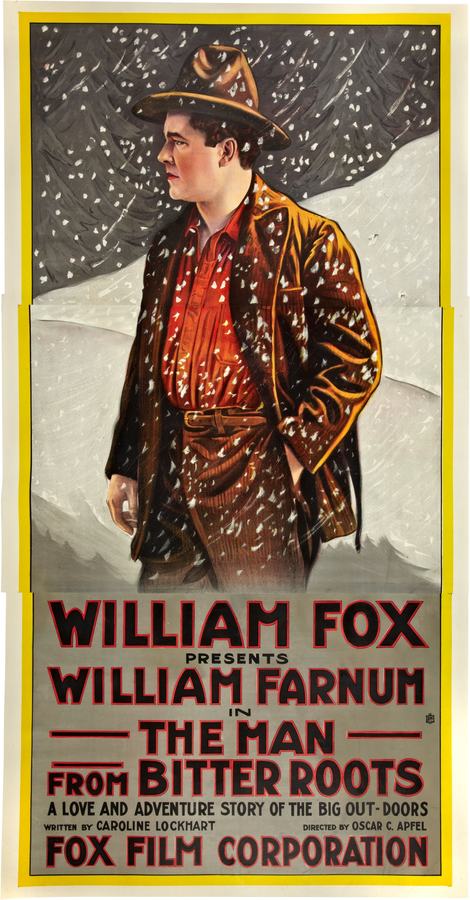
The year 1916 was a watershed moment for the cinematic medium, a period where the primitive grammar of silent film began to coalesce into a sophisticated language of narrative and shadow. Among the artifacts of this era, The Man from Bitter Roots stands as a towering testament to the visceral power of the frontier mythos. Directed by the prolific Oscar Apfel, a collaborator of Cecil B. DeMille, this film transcends the rudimentary tropes of the early Western to explore the darker, more labyrinthine corridors of human guilt and industrial avarice. It is not merely a story of gold; it is a dissection of the soul under the pressure of isolation and the corrupting influence of unearned wealth.
At the center of this tectonic narrative is William Farnum, an actor whose physical presence in the 1910s was nothing short of monumental. In an era where many performers relied on the exaggerated gestures of the stage, Farnum brought a grounded, almost subterranean intensity to Bruce Burt. His portrayal of a man haunted by a killing—even one committed in self-defense—is rendered with a startling lack of artifice. When Burt confronts the reality of Slim Naudain’s death, the camera lingers on his face, capturing a flicker of existential dread that feels remarkably modern. This isn't the swashbuckling heroism found in The Puppet Crown; rather, it is a performance rooted in the heavy, silty reality of the earth itself.
Farnum’s Burt is a character defined by his labor. The opening sequences, depicting the grueling process of prospecting, are shot with a documentary-like reverence for the physical toll of the frontier. The chemistry between Farnum and Ogden Crane (as Slim) is fraught with a tension that mirrors the jagged topography of their surroundings. When the inevitable explosion occurs, it feels less like a plot point and more like a geological event—an unavoidable fracturing of a partnership that could no longer sustain its own weight.
The introduction of Victor Sprudell, played with a chillingly suave opportunism by Willard Louis, shifts the film from a survivalist drama into a proto-noir exploration of identity theft and corporate malfeasance. The blizzard sequence is a technical marvel for 1916, utilizing the stark contrast of the silent frame to emphasize the vulnerability of the human form against the elements. It is here that the film’s moral core is tested. Bruce Burt, in an act of profound vulnerability, shares his secret of restitution with Sprudell, only for the latter to treat this confession as a commodity to be exploited.
Sprudell’s subsequent migration to Indiana and the establishment of the Bitter Root Mining Company represents the shift from the individualist ethos of the prospector to the impersonal, predatory nature of 20th-century capitalism. This transition is handled with more nuance than one might expect. Unlike the overt villainy in The Caillaux Case, Sprudell’s evil is quiet, bureaucratic, and deeply insulting. His attempt to buy off Helen Dunbar with a mere five hundred dollars—a pittance compared to the gold her brother was owed—is a masterful depiction of the arrogance of the newly monied elite.
Betty Harte’s Helen Dunbar is a revelation. In many contemporary films, such as Enlighten Thy Daughter, female characters were often relegated to didactic moralizing or passive suffering. However, as a reporter, Helen possesses an investigative agency that drives the second half of the film. She is the bridge between the rugged honesty of the mountains and the deceptive polish of the city. Her realization that Slim was her half-brother isn't played for cheap sentimentality; it serves as the catalyst for a systematic dismantling of Sprudell’s façade.
The dynamic between Helen and the returned Bruce Burt is one of mutual necessity rather than simple romance. They are two individuals who have been robbed—one of a brother, the other of a legacy—and their alliance is built on the cold, hard logic of justice. This partnership feels more substantial than the ethereal romances found in Where Love Is, providing the film with a grounded emotional stakes that resonate through the decades.
The climax of The Man from Bitter Roots pivots on a fascinatingly technical conflict: water rights. This plot point anticipates the great California water wars that would later inspire films like *Chinatown*. By controlling the water, Bruce Burt exerts a chokehold on Sprudell’s mining operations, turning the very environment that once nearly killed him into a weapon of economic warfare. This is a sophisticated narrative turn that elevates the film above the standard "good guy vs. bad guy" shootout. It is a battle of intellect and legal maneuvering.
The subsequent arson of Bruce’s water plant is a visual highlight, the flickering flames against the night sky providing a stark, expressionistic backdrop for the film’s final resolution. The confession of the workman and the intervention of Bruce’s estranged father add layers of Shakespearean complexity to the finale. The theme of paternal reconciliation—a recurring motif in silent cinema, also seen in works like What Happened to Father—is handled here with a rugged dignity that avoids the saccharine pitfalls of the era.
When comparing this film to its peers, such as the Australian epic The Silence of Dean Maitland, one notices a distinct difference in the treatment of guilt. While the latter focuses on the spiritual and social repercussions of a hidden sin, The Man from Bitter Roots externalizes that guilt into a physical struggle for justice. It is a quintessentially American approach—redemption through action and the reclamation of property.
The film also shares a certain thematic DNA with Shame, particularly in its exploration of how past actions dictate future social standing. However, Oscar Apfel’s direction provides a more kinetic energy than the stagier productions of the time. His use of locations—the Bitter Root mountains themselves—gives the film a scale that rivals international productions like La crociata degli innocenti, though it remains firmly rooted in the grit of the American West.
Oscar Apfel’s direction is characterized by a remarkable clarity. In an age where the concept of the "close-up" was still being refined, Apfel uses it with surgical precision to highlight the psychological state of his characters. The pacing of the film, particularly the transition from the isolation of the mountains to the bustling corporate offices of Indiana, shows a keen understanding of narrative rhythm. This is far more sophisticated than the episodic nature of The Bushranger's Bride or the melodramatic flourishes of The Wax Model.
The screenplay, penned by Caroline Lockhart and Oscar Apfel, avoids the pitfalls of excessive intertitles. The story is told through action and atmosphere, allowing the viewer to inhabit the world of the characters. This visual storytelling is particularly evident in the scenes involving the wealthy rancher (Bruce’s father). The opulence of his estate is contrasted sharply with the "bitter roots" of Bruce’s origins, creating a visual shorthand for the class struggle that underpins the narrative.
In the final analysis, The Man from Bitter Roots is much more than a historical curiosity. It is a powerful, evocative piece of filmmaking that addresses themes of honor, theft, and the resilience of the human spirit. While it may lack the whimsical charm of How Could You, Jean? or the swashbuckling adventure of Prudence, the Pirate, it offers something far more substantial: a look into the rugged heart of a developing nation and the moral complexities of those who sought to tame it.
For the modern viewer, the film serves as a reminder of the sheer physicality of early cinema. Every frame feels earned, every drop of sweat on Farnum’s brow a testament to a style of filmmaking that was as demanding as the lives it sought to depict. It stands alongside other explorations of frontier justice like The Sundowner or historical dramas like Wolfe; or, the Conquest of Quebec, yet it maintains a unique psychological depth that is entirely its own. The Man from Bitter Roots is a cinematic journey from the depths of a gold mine to the heights of moral clarity, and it remains essential viewing for anyone seeking to understand the foundations of American narrative film.
The resolution, where Bruce and Helen join forces with the wealthy rancher to reclaim what was lost, is not just a happy ending—it is a restoration of the natural order. The usurper Sprudell is cast out, not by a bullet, but by the combined weight of truth and legitimate capital. It is a sophisticated conclusion to a film that begins with a single, desperate act of violence in the middle of nowhere. It suggests that while our roots may be bitter, the fruit of justice, when properly tended, can be sweet indeed.

IMDb —
1916
Community
Log in to comment.