DbcultAccessing Vault...
Cult Review
Senior Film Conservator
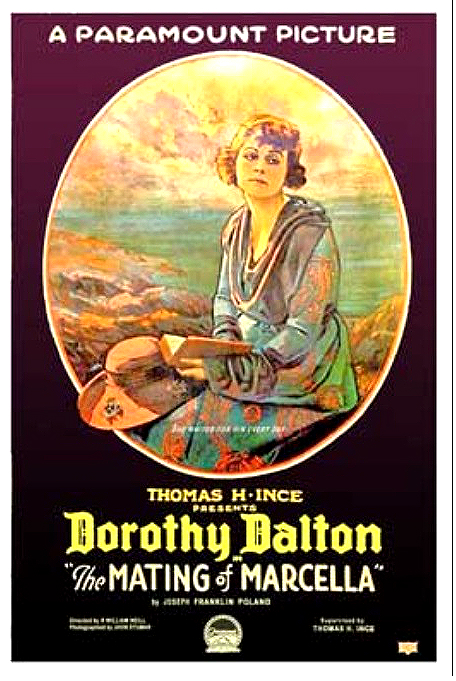
There is something uniquely haunting about the moral landscapes of 1918 cinema. In The Mating of Marcella, directed by the often-underappreciated Raymond B. West, we are treated to a melodrama that feels both archaic and startlingly modern in its cynical view of wealth. As I sat down to digest this silent relic, I was struck by how the film treats the concept of identity as a commodity—a theme that resonates as loudly today as it did when the ink was still wet on the script by Joseph F. Poland and R. Cecil Smith.
The film introduces us to Marcella Duranzo, portrayed with a delicate yet steely resolve by Dorothy Dalton. Unlike the lighthearted protagonists of The Marriage Speculation, Marcella is a woman backed into a corner by the cruel realities of early 20th-century labor. She is a clothing store fashion model—a role that requires her to be a blank canvas for others' desires—which makes her eventual transition into a literal stand-in for Lois Underwood a poetic, if tragic, progression.
The narrative hinge of the film is the "Reno Divorce," a cultural phenomenon that silent cinema exploited with voracious appetite. When Lois Underwood (the delightfully vapid Juanita Hansen) offers Marcella a thousand dollars to impersonate her in Nevada, the film pivots into a fascinating study of class performance. Marcella isn't just playing a role; she is inhabiting a tax bracket. The contrast between her genuine concern for her ailing father (Spottiswoode Aitken) and the frivolous escapades of the wealthy is a recurring motif that elevates the film above standard soap opera fare.
I found the sequence in the fashionable Reno hotel to be particularly evocative. The cinematography captures the sterile luxury of the setting, a gilded cage where Marcella must navigate the prying eyes of high society. It reminded me somewhat of the tension found in Phantom Fortunes, where the fragility of one's social standing is always a single revelation away from collapse. When Robert Underwood (Thurston Hall) arrives, the film shifts gears from a comedy of errors into a high-stakes drama of the heart.
"In the silent era, the eyes did the work that dialogue often failed to capture. Dalton’s gaze during the nursing sequences conveys more about maternal instinct and class-based guilt than a thousand intertitles ever could."
The turning point of The Mating of Marcella occurs in the hushed, shadowed confines of a child's bedroom. Bobby, Robert's son, becomes the bridge between the two disparate worlds of the film. While Lois is off chasing the thrill of the new with Count Louis Le Favri (Milton Ross), Marcella finds her true calling not in the gowns of a model, but in the selfless devotion of a caregiver. This thematic shift is handled with a sincerity that avoids the saccharine traps of later Hollywood productions.
There is a profound irony in the fact that Robert falls in love with the woman his wife is pretending to be, only to realize that the 'fake' wife is the only 'real' person in his life. The film explores this paradox with a deft hand. Thurston Hall plays Robert with a weary dignity, a man who has clearly been hollowed out by his wife's infidelity and the superficiality of his social circle. His discovery of Marcella's true identity doesn't lead to the expected explosion of anger, but rather a somber realization of what he has been missing. This nuanced approach to character motivation is something I also admired in The Suspect, where morality is rarely a binary choice.
Every great melodrama requires a villain who is as captivating as they are contemptible. Juanita Hansen’s Lois is a masterclass in bored aristocratic cruelty. Her decision to name Marcella as a co-respondent in the divorce suit is a move of calculated malice, designed to destroy the woman who dared to occupy her space with more grace than she ever could. It’s a classic trope of the era—the 'fallen woman' vs. the 'pure woman'—but here it’s complicated by the economic power dynamic.
Then there is Count Louis Le Favri. Milton Ross brings a sinister, continental flair to the role. The Count is not merely a lover; he is a predator who finds himself eclipsed by Lois’s latest whim, Jack Porter. The descent into jealousy that leads to the film's climax is foreshadowed with subtle cues that suggest a mind fraying at the edges. This psychological depth is a hallmark of the better films of 1918, such as Babbling Tongues, where the consequences of one's actions ripple outward in unexpected ways.
The technical execution of the film’s climax is nothing short of breathtaking for its time. The sequence involving the Count posing as a chauffeur and driving into an oncoming train is a visceral piece of filmmaking. It serves as a literal 'deus ex machina' that cleanses the narrative of its impurities. The train, a symbol of industrial progress and unstoppable fate, acts as the arbiter of justice, removing the obstacles to Marcella and Robert’s happiness in one violent stroke.
I was particularly impressed by the editing in this final act. The cross-cutting between the speeding car and the approaching locomotive builds a genuine sense of dread. It lacks the primitive feel of many 1910s shorts, showing a maturity in visual storytelling that rivals the better-known works of the era like The Midnight Man. The wreckage is not just physical; it is the total destruction of the old, decadent order to make way for a new, merit-based union.
Reflecting on The Mating of Marcella, I am struck by how it balances its sensationalist plot points with a genuine empathy for its lead character. Marcella is never judged for her deception; the film understands that her survival depends on it. This empathetic lens is what makes the film endure. It isn't just a story about a rich man marrying a poor girl; it’s a story about the inherent dignity of the working class and the spiritual bankruptcy of the elite.
The performances across the board are excellent. William Conklin and Donald MacDonald provide solid support, but the film belongs to Dorothy Dalton. Her transition from the artificial world of the fashion runway to the raw emotionality of the sickroom is the heart of the movie. While some might find the ending too convenient, it fits the moral logic of the period perfectly. In a world as chaotic as 1918—with the Great War raging and social structures shifting—audiences craved a resolution where the good were rewarded and the wicked were punished with cinematic flair.
Comparing this to something like According to Law, one sees a similar preoccupation with the intersection of legality and morality. However, The Mating of Marcella feels more intimate, more focused on the personal cost of these legal maneuvers. It is a film that deserves to be seen by more than just silent film scholars; it is a vital piece of social history wrapped in a compelling, high-stakes drama.
While it may utilize the tropes of its era, The Mating of Marcella transcends them through a combination of Dalton's luminous performance and a screenplay that isn't afraid to look at the ugly side of wealth. It is a haunting, beautifully staged production that remains a testament to the power of silent storytelling. If you have the chance to see a restored print, do not hesitate. It is a masterclass in how to turn a simple melodrama into a profound exploration of the human condition.
For those interested in more from this period, I also recommend checking out Sands of Sacrifice for a different take on the themes of redemption and social standing.
IMDb 6.4
1919
Community
Log in to comment.