DbcultAccessing Vault...
Cult Review
Senior Film Conservator
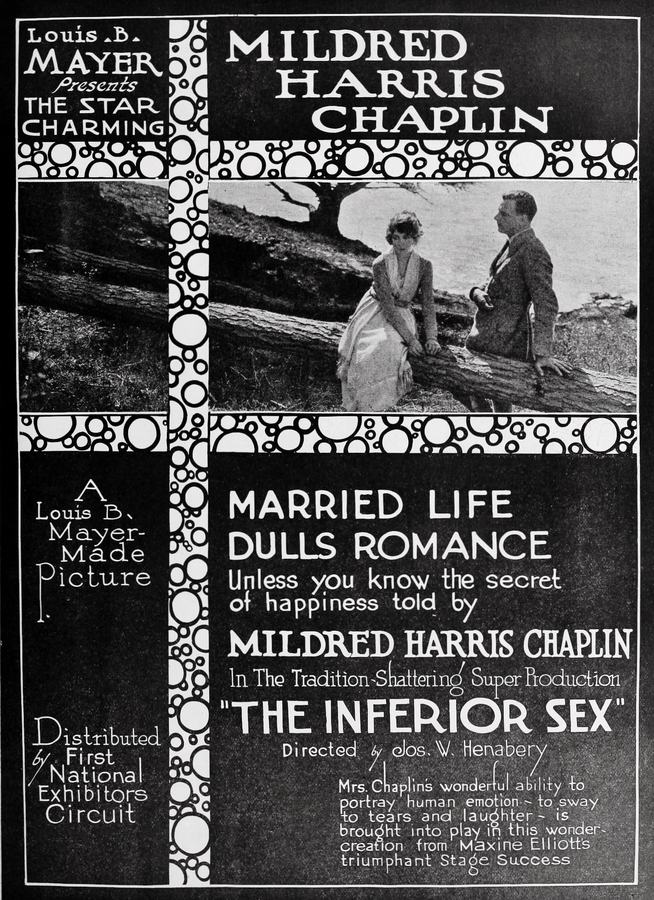
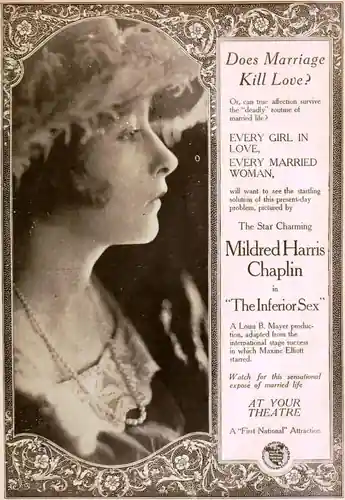
The camera opens on confetti drifting like shredded love letters across a Manhattan pier, and already Waldemar Young’s scenario has whispered its thesis: romance, once commodified, curdles. Director Bertram Grassby—working under the aegis of a still-flexing silent apparatus—marshals chiaroscuro compositions that anticipate Germanic gloom, yet lace the frame with a peculiarly American hustle. Every close-up on Mildred Harris’s Ailsa feels cupped in moonlight, her irises a mute plea against the clang of Knox’s ticker-tape lullaby. The film’s five-act structure (though unlabeled) unfurls like a Gatsby-era sonata: courtship, abandonment, intrigue, exposure, restitution—each movement punctuated by a symbolic object: a wilted gardenia, a torn stock certificate, a pearl-handled derringer that never fires yet forever trembles in the mise-en-scène.
Notice how cinematographer Frank Stayton tilts the marital boudoir at a queasy 15-degree angle once Knox’s gaze drifts to his desk. The skewed horizon predicts Ailsa’s moral slippage before she herself conceives it. Compare this to the orthogonal rigidity of Knox’s boardroom—columns, ledgers, stenographers aligned like infantry—where emotion is a rounding error. The film’s most ravishing flourish arrives during a rooftop soirée: hundreds of white balloons released to shroud an adulterous kiss. Frame-grab that moment and you hold a paradox—ebullient innocence blanketing calculated betrayal. It is Lubitsch-like in effervescence yet predates Lubitsch’s American zenith by several calendar turns.
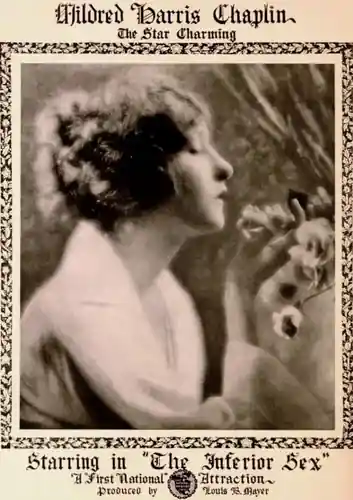
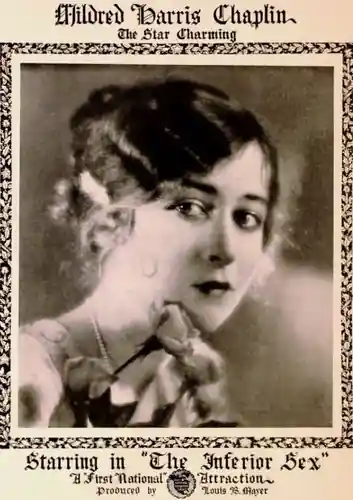
Milton Sills plays Knox with the glint of a freshly minted coin, all assurance and no circuitry for introspection—until the final reel, when his brows knit so furiously one fears his starched collar might fray from the seismic shift. Opposite him, Harris subverts the ingénue stereotype: her micro-gestures—a thumbnail worrying a lace hem, a swallow visible beneath powdered throat—bespeak intelligence repressed by social grammar. The camera adores her; she reciprocates with calibrated vulnerability. Meanwhile, Yvette Mitchell’s Clarissa is a revelation of toxic charisma, half Siren, half spreadsheet, purring stock tips between kisses.
“One does not fall in love with Porter Maddox,” Clarissa purrs, “one invests.”
That epigram, delivered in an intertitle whose font swoons like Art-Deco calligraphy, encapsulates the film’s acidic appraisal of eros under capitalism.
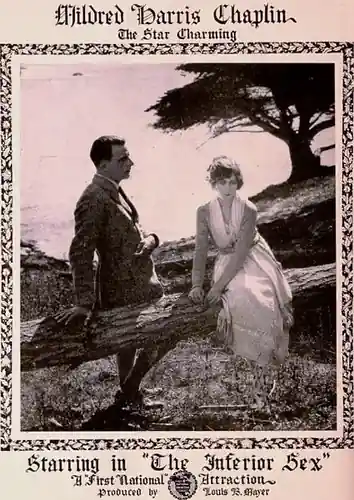
Title aside, the narrative refuses to certify any sex as “inferior”; rather, it anatomizes how market logic renders intimacy a debased currency. Ailsa’s flirtation is never libidinal—it’s an IPO launched to regain her husband’s dwindling valuation. When rumor brands her “faithless,” the marketplace of reputation closes on her like a bear trap, whereas Maddox’s duplicity earns him boardroom applause. The hypocrisy stings, and the film knows it, slyly indicting a society that measures a woman’s worth in untainted parchment while men scribble over their own reputations with impunity.
Buffs tracing pre-Code DNA will detect strands later woven into The House of Lies and The Devil’s Pay Day, yet The Inferior Sex tempers its cynicism with a humanist heartbeat. Where Open the Bars wallows in carceral despair, this film posits marriage itself as the jail from which both spouses must parole each other. And unlike The Jest of Talky Jones, which treats courtship as farce, here every jest costs blood.
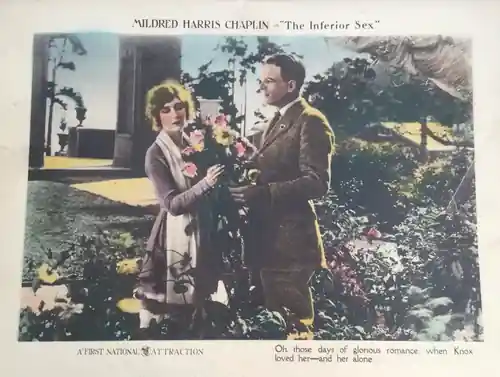
Original exhibition reportedly featured a live quintet performing a suite that migrates from foxtrot to dissonant rag whenever Ailsa’s conscience spasms. Contemporary restorations default to a new score by Monochrome Revival, whose violins slide portamento like tears across glass, punctuated by celesta twinkles that mock the lovers’ naïveté. I screened both versions; the latter amplifies class tension by interpolating labor songs beneath Wall Street montage—an anachronism, yes, but one that lands like a clenched fist inside a silk glove.
For decades only a 9-minute condensation circulated under the patronizing title Wife in Revolt. Then a 35 mm nitrate positive—shrunken, speckled, yet miraculously complete—surfaced in a Ljubljana archive. Digital 4K restoration arrived in 2021, its grayscale scrubbed but not sterilized, retaining the flutter of gate weave that reminds us we are communing with ghosts. Streaming rights currently fragment across boutique platforms; physical media hunters can snag a region-free Blu from Obsidian Silents, replete with a 40-page monograph by film historian Dr. Lucinda Havel.
Consider the film’s repeated mirror motif: Ailsa regards herself in a cheval glass cracked by a prior, unseen domestic quarrel; the fracture line bisects her reflection, auguring split loyalties. Later, Knox confronts the same mirror, but the crack has migrated to his side—a visual confession that the faultline now runs through him. It’s a flourish worthy of Jean Epstein, achieved on a Poverty-Row budget.
In an era where “quiet quitting” and hustle-porn corrode relationships, The Inferior Sex feels eerily prescient. Substitute stock tips with cryptocurrency signals, swap jazz soirées for influencer yacht selfies, and the emotional calculus remains: attention is the scarcest resource. The film cautions that when affection becomes a derivative to hedge, everybody’s portfolio collapses at market close.
Act III’s railroad pursuit relies on a toy train miniature whose scale wobbles, briefly shattering verisimilitude. And comic relief steward John Steppling, while amusing, traffics in ethnic caricature that sours the palate for today’s viewers. These blemishes, however, are flecks on an otherwise lustrous artifact.
The Inferior Sex is a trenchant, visually luxe parable about how capital colonizes the bedroom. Its restoration invites re-appraisal of an age dismissed as creaky morality plays; in truth, the film pulses with libidinal and fiscal anxieties we still metabolize. Watch it to witness silent cinema at its most emotionally articulate, then watch your own reflection for hairline fractures.
Grade: A- | 1923 | USA | 78 min | Silent with English intertitles | Directed by: Bertram Grassby | Screenplay: Waldemar Young, Keene Thompson, Frank Stayton | Cinematography: Frank Stayton | Cast: James O. Barrows, Mildred Harris, Yvette Mitchell, Milton Sills, Mary Alden, Bertram Grassby, John Steppling
IMDb —
1926
Community
Log in to comment.