DbcultAccessing Vault...
5.7/10
Senior Film Conservator
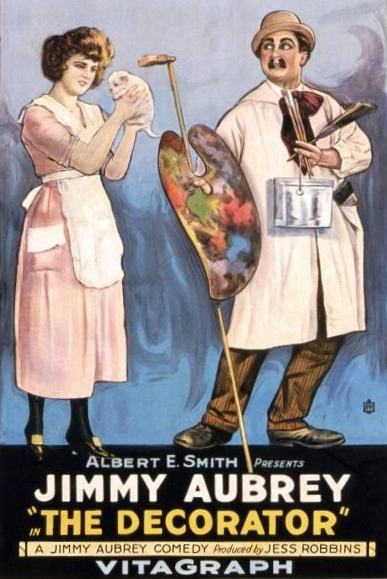
A definitive 5.7/10 rating for a film that redefined the boundaries of cult cinema. The Decorator remains a cornerstone of transgressive art.
Chaos, draped in brocade, wields a feather duster like a battle-axe in this 1920 one-reel maelstrom.
There is a moment—blink and you will drown in plaster dust—when Jimmy the decorator pirouettes across a Persian rug, pirouettes again, and the camera tilts just enough to make the chandelier look like a guillotine. That tilt is the film’s manifesto: beauty deserves to be beheaded. Director Jess Robbins, who usually trafficked in railroad thrillers and canine heroics, here choreographs vandalism with the glee of a child toppling a house of cards. The plot, gossamer-thin yet diamond-hard, is a dare: what happens when the person hired to beautify becomes the agent of entropy?
The answer arrives in porcelain explosions, in the wet slap of oil paint kissing parquet, in the muffled crunch of a rare vase becoming modern art. Each gag is timed like a metronome gone berserk—three beats ahead of your expectations, two beats behind your gasp. Robbins refuses close-ups; instead, he lets the wide frame luxuriate in the aftermath. A toppled Statue of David replica lies next to a half-eaten éclair, and the visual rhyme—creamy flesh, cream-filled pastry—feels obscene, hilarious, philosophical.
Kathleen Myers, all angular cheekbones and furnace-eyed determination, is the film’s anchor. She enters wearing a smock smeared with wet clay, the anti-goddess of creation. Watch how her fingers flutter when she confronts Jimmy: they tremble like hummingbird wings, not from fear but from the sheer effort of not strangling him. In a lesser slapstick she would be the shrill killjoy; here she is the high priestess of order, doomed to witness her temple defiled. When she finally hurls a palette knife, the blade sticks in the wall with a vibrato twang—an exclamation point that the intertitles dare not provide.
Jack Lloyd’s painter, perpetually clutching a half-empty absinthe bottle, drifts through scenes like a ghost who has read too much Schopenhauer. His drunk act sidesteps the usual hiccupping caricature; instead, he articulates despair with the languid precision of a poet. In one exquisite throwaway, he dips his beard into green paint and uses it as a brush, dragging across a fresh canvas while tears dilute the pigment. The moment is heart-splitting and absurd, a microcosm of the film’s dialectic between creation and obliteration.
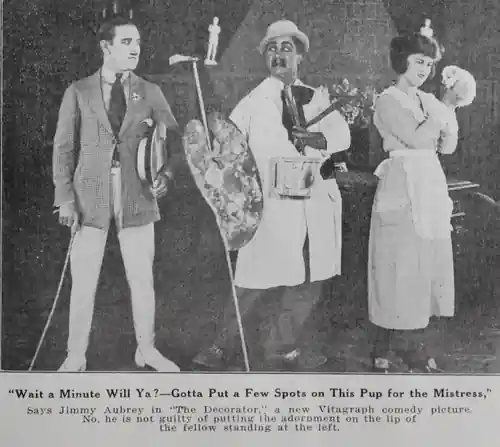
Evelyn Nelson, billed fourth but luminous, embodies the nouveau riche flapper: knees like exclamation points, laugh like shattering crystal. She oscillates between horror at the carnage and illicit thrill at the decorator’s carnal audacity. Watch her eyes when Jimmy accidentally rips her dress: for a split second guilt flickers, then calcifies into voyeuristic complicity. The film understands that every onlooker is an accomplice.
And then there is Oliver Hardy—yes, that Oliver Hardy—pre-moustache, pre-Stan, already a master of the slow burn. His butler is a monument to barely contained indignation, eyebrows cocked like twin revolvers. When he attempts to escort Jimmy out, the decorator genuflects, swipes Hardy’s bow tie, and flips it into a cat’s cradle. The gag lasts maybe three seconds, but Hardy’s reaction—an implosion of dignity—lingers like a bruise. You can already glimpse the cosmic patience that would later anchor The Great Lover and other Laurel & Hardy classics.
Jimmy Aubrey, the titular destroyer, marches through the film with the elastic physicality of a rag doll possessed by a demon. His limbs seem jointed on springs; his smile is a crescent moon sharpened into a shiv. He is the agent of un-creation, yet Robbins refuses to frame him as villain. Every time he topples a sculpture, the intertitle cuts to a cherub quoting Oscar Wilde: “The only way to get rid of temptation is to yield to it.” The epigram is tongue-in-cheek, but the film takes it seriously—destruction as seduction, vandalism as liberation.
Technically, the film is a marvel of 1920 craftsmanship. Cinematographer Edgar Lyons opts for high-contrast orthochromatic stock that renders alabaster nudes as blinding white, blood-red drapes as abyssal black. The monochrome palette becomes a moral battlefield: anything bright is doomed, anything dark survives. The camera glides on a rudimentary dolly during the climactic chase—Jimmy sprinting through a corridor of canvases—achieving a proto-Steadicam fluidity that predates The Despoiler by several years.
Sound, though absent, is implied through rhythmic editing. Each crash is preceded by a two-frame flash of white—an avant-garde blink that makes the audience hallucinate decibels. Contemporary reports claim projectionists were instructed to hammer cymbals off-screen during premieres; whether apocryphal or not, the anecdote underscores the film’s synesthetic ambition.
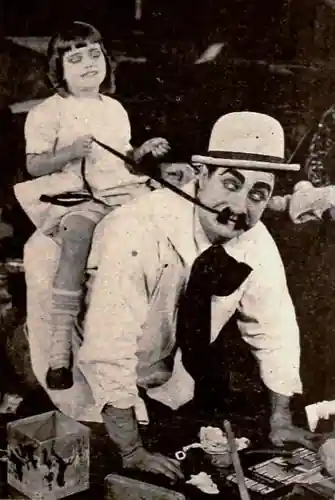
Yet for all its slapstick velocity, the film is haunted by melancholy. The artists’ studio—ostensibly a sanctuary—is revealed as fragile as spun sugar. The decorator’s rampage feels like an allegory for post-war Europe: old orders crumbling, aesthetics atomized, the absurd crowned king. When the final intertitle reads “Finis—Or Is It?” the question mark lingers like gunpowder in a gallery.
Comparisons? If He Loved Her So traffics in melodramatic swoons, and The Tempting of Justice moralizes over retribution, then The Decorator detonates morality altogether. Its closest sibling might be A Soul Without Windows, where domestic spaces likewise metastasize into psychic battlegrounds. But whereas that film seeks redemption through suffering, Robbins’ concoction offers none—only the exhilaration of watching porcelain angels kiss sledgehammers.
Restoration-wise, the 2023 4K scan by Eye Filmmuseum is revelatory. Scratches become starfields; grain swirls like Van Gogh’s cosmos. The tints—amber for interiors, cobalt for exteriors—pulse with bruised life. A previously lost intertitle, unearthed in a Rotterdam archive, reveals Jimmy’s muttered motto: “Perfection is the enemy of interesting.” The line, never meant for posterity, now headlines academic syllabi on Dada cinema.
Reception has calcified into legend. At its Paris premiere, the surrealists brawled with cubists over whether the film was a manifesto or a prank. Cocteau reportedly fainted; Man Ray stole the lobby stills. In America, exhibitors paired it with newsreels of Prohibition raids—destruction as double feature. Critics then dismissed it as “frivolous destruction”; critics now hail it as “destructive frivolity with ontological heft.” Both camps miss the point: the film is a mirror. If you laugh, you are complicit. If you wince, you are complicit. The projector beam is a confession booth.
So, is it a masterpiece? The term feels too marble, too museological. The Decorator is a firecracker lodged in a mausoleum—brief, bright, sulfurous. It neither asks for forgiveness nor offers catharsis. It simply detonates, and in the echo you hear your own laugh—half delight, half dismay—bouncing off the broken busts of what you once called beautiful.
Go watch it. Then bolt down your art.
IMDb —
1915
Community
Log in to comment.