DbcultAccessing Vault...
Cult Review
Senior Film Conservator
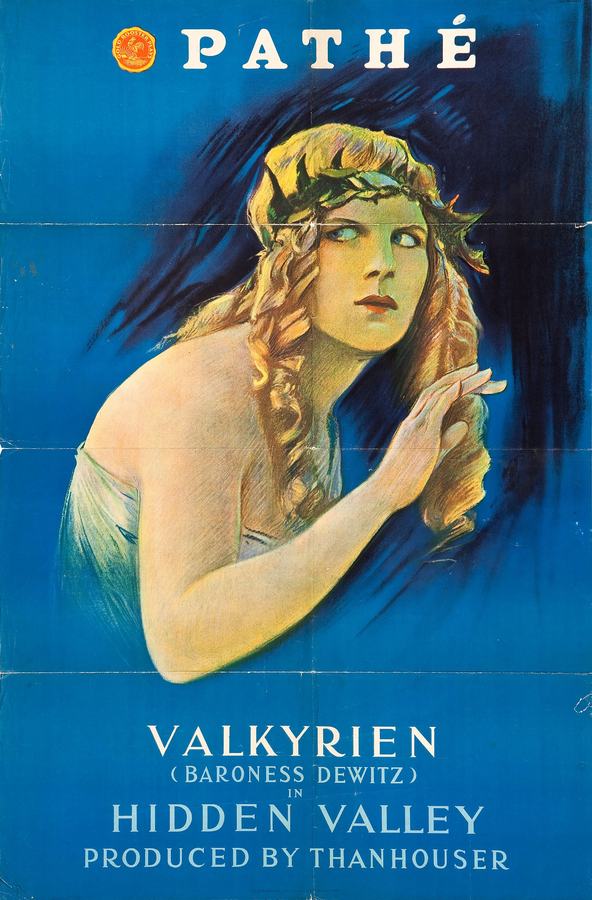
Stepping back into the cinematic archives of 1916, one encounters Hidden Valley, a silent film that, even through the veil of time, radiates a potent, albeit deeply unsettling, cultural resonance. Directed by Ernest C. Warde and penned by Emmett Mixx, this production is less a mere narrative and more a cultural artifact, a vivid snapshot of early 20th-century sensibilities, anxieties, and the nascent medium’s struggle with representation. It’s a film that demands a contemporary lens, not merely for its historical value, but for the profound questions it inadvertently raises about perception, power, and the problematic allure of the 'exotic' in popular entertainment.
The plot, as sparse as it is sensational, introduces us to Valkyrien, portrayed by the captivating Valda Valkyrien herself—a performer whose very name evokes a certain mythic quality. She is not just any woman; she is, rather explicitly, described as the 'most perfectly formed girl in Denmark,' a title bestowed upon her by a government competition, imbuing her with an almost divine status even before her perilous journey begins. This detail is crucial, setting her apart as an emblem of Western ideal beauty and purity, a stark contrast to the 'savage blacks' of South Africa who, in the film's narrative, have captured her. Her predicament is dire: she is slated for sacrifice upon an altar, a fate designed to evoke maximum horror and sympathy from the contemporary audience. This narrative device, while common in early adventure serials and melodramas, here takes on a particularly charged racial dimension.
Enter Boyd Marshall, playing a young missionary, the archetypal white savior whose moral imperative drives the film's rescue mission. His journey into the 'Hidden Valley' is not just a physical one; it’s a symbolic penetration into the heart of perceived darkness, a quest to reclaim purity from what the film unmistakably frames as barbarism. The tension between Valkyrien’s vulnerability and Marshall’s heroic resolve forms the emotional backbone of the story, a familiar trope that resonates with other adventure narratives of the era, such as The Conquest of Canaan or even the more overtly racialized themes present in The Aryan. Yet, Hidden Valley distinguishes itself, or perhaps indicts itself, through its explicit portrayal of racialized danger and the subsequent, almost inevitable, 'rescue' by Western virtue.
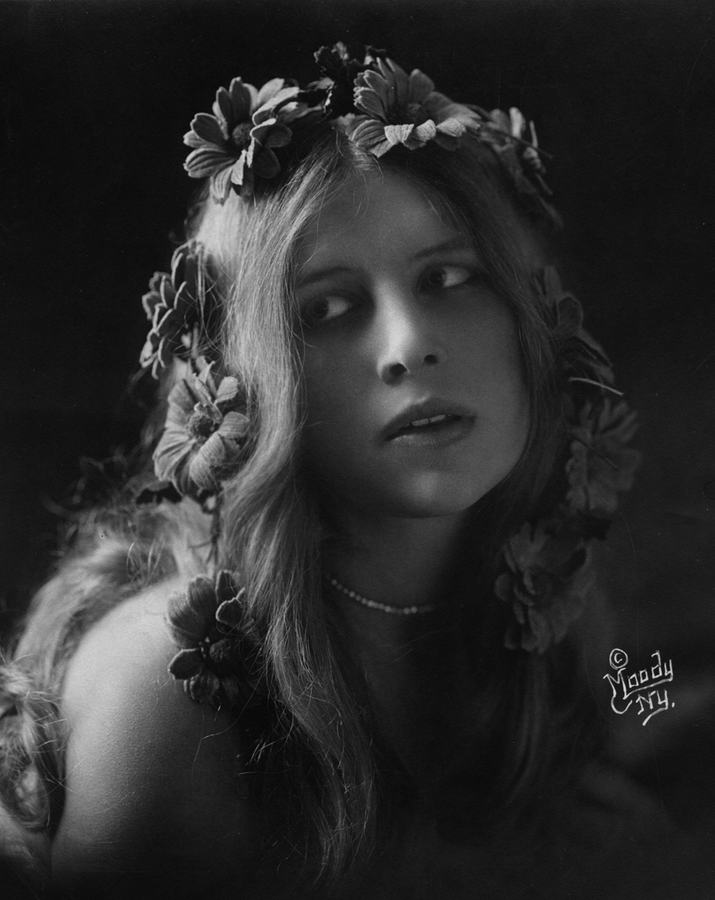
The film’s most celebrated, and indeed most problematic, sequence is the 'dance of the white goddess before the natives.' This scene, highlighted by contemporary critics as one of the production's most beautiful, is a masterclass in early cinematic exoticism and racial fetishization. One can only imagine the visual impact: Valkyrien, a vision of European grace, performing for her supposed captors, her movements likely intended to convey a mixture of fear, defiance, and perhaps an almost hypnotic allure. This dance is not merely a plot point; it is a spectacle designed to reinforce the 'otherness' of the native population while simultaneously elevating Valkyrien to a near-mythological status. It plays into a long tradition of colonial art that simultaneously demonized and romanticized indigenous cultures, often using the female body as a site of both vulnerability and exotic fascination. The scene would have been pivotal in shaping audience perceptions, solidifying the film’s narrative of a clash between advanced civilization and primitive savagery.
Performances in silent film, particularly those from the mid-1910s, often relied on exaggerated gestures and facial expressions to convey emotion, a necessity given the absence of spoken dialogue. Valda Valkyrien, with her striking beauty and background as a celebrated figure, would have been perfectly cast for the role of the 'white goddess.' Her portrayal would have needed to balance the fragility of a captive with the inherent dignity implied by her 'perfectly formed' status. Boyd Marshall, as the missionary, would have embodied a more active, resolute heroism. His performance would have been about conveying determination, moral righteousness, and physical courage, a stark contrast to Valkyrien's more passive, yet visually central, role. The supporting cast, including Ernest C. Warde, Maud Traveller, Jack Doolittle, Arthur Bauer, and Pauline Taylor, would have contributed to the film’s broader tapestry, likely filling roles that furthered the dramatic tension and thematic elements, though details of their specific contributions remain largely unrecorded in the surviving plot synopsis.
Emmett Mixx, as the writer, crafted a narrative that, while simplistic by modern standards, was undoubtedly potent for its time. The story taps into deep-seated fears and fascinations, playing on anxieties about the unknown, the 'uncivilized,' and the perceived threat to Western ideals. It’s a narrative framework that aligns with other adventure tales of the period, often set in far-flung, 'untamed' lands, where European protagonists encounter and overcome indigenous challenges. One might draw parallels to the sensational serials like Zigomar contre Nick Carter, though Hidden Valley leans more heavily into racialized melodrama. The choice of South Africa as a setting is also significant, given its history of colonial conflict, famously explored in films like The Boer War, though Hidden Valley opts for a more generalized, exoticized backdrop rather than a specific historical conflict.
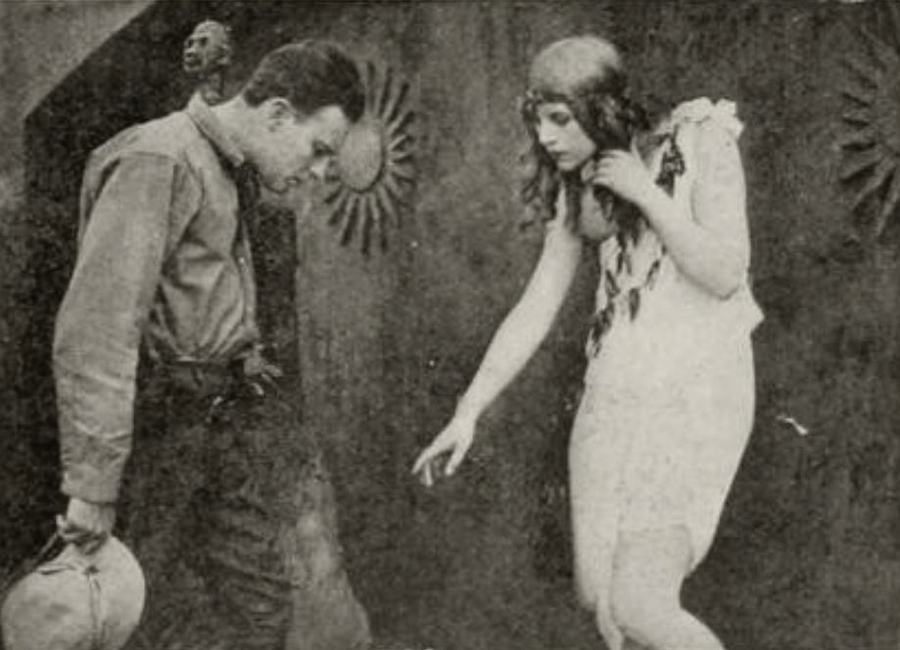
From a directorial standpoint, Ernest C. Warde would have faced the challenge of translating Mixx's dramatic premise into compelling visual storytelling. Silent film direction often involved careful staging, effective use of intertitles to convey dialogue and exposition, and the nascent exploration of cinematic techniques. Given the emphasis on the 'dance' as a beautiful scene, Warde likely focused on composition and perhaps rudimentary camera movement to enhance its impact. The depiction of the 'savage blacks' would have relied heavily on costuming, set design, and stereotypical portrayals, which, while deeply problematic today, were common tropes in early cinema’s lexicon of visual shorthand. The rescue sequence, too, would have demanded a sense of urgency and thrilling action, essential ingredients for audience engagement in the era.
The thematic landscape of Hidden Valley is rich, if ethically thorny. At its heart lies the pervasive 'white savior' trope, a narrative structure that positions non-white populations as helpless or dangerous, requiring intervention from a benevolent white protagonist. This trope, unfortunately, pervaded much of early Western cinema and literature, serving to justify colonial expansion and cultural hegemony. The film also explores themes of purity and danger, civilization versus savagery, and the inherent tension between the known and the unknown. Valkyrien’s status as a 'white goddess' elevates her beyond mere mortal, making her not just a damsel in distress, but a sacred object whose rescue signifies the triumph of one ideology over another. It’s a narrative that, while entertaining for its contemporary audience, carries a heavy burden of historical prejudice.
Comparing Hidden Valley to other films of its period reveals both its typicality and its particular excesses. While films like The Governor's Lady or East Lynne focused on domestic dramas and moral quandaries within Western society, Hidden Valley, much like The Aryan, ventured into more overtly racialized and exoticized territories. It shares a certain adventurous spirit with films like The Extraordinary Adventures of Saturnino Farandola, but its central conflict is rooted in a more troubling cultural clash. The emphasis on Valkyrien's beauty and her 'perfectly formed' status also hints at the burgeoning objectification of women in cinema, a theme that would continue to evolve, and sometimes regress, throughout the medium's history. Films like The Truth About Helen, while perhaps not dealing with such overt racial themes, certainly explored the societal pressures and perceptions placed upon women.
The historical context of 1916 cannot be overstated. The world was embroiled in the Great War, and cinema, still in its infancy, often served as a means of escapism, propaganda, and cultural reinforcement. Films set in exotic locales, featuring brave Western heroes and damsels in distress, provided a thrilling diversion from the grim realities of wartime. Hidden Valley fits squarely into this paradigm, offering audiences a sensational adventure that reinforced prevailing colonial attitudes and racial hierarchies. It’s a product of its time, reflecting the biases and limited perspectives that characterized much of early 20th-century Western thought regarding non-European cultures. To view it today is to confront these biases head-on, to understand how deeply entrenched certain stereotypes were, and how powerfully they were disseminated through the burgeoning medium of film.
Ultimately, Hidden Valley is a film that demands critical engagement rather than simple consumption. It serves as a potent reminder of cinema's past, its capacity for both wonder and profound misrepresentation. While its 'beauty' in scenes like Valkyrien’s dance might have captivated audiences a century ago, today it compels us to scrutinize the gaze, the power dynamics, and the underlying assumptions that shaped its creation. It is a film that, despite its age, continues to speak, albeit in a language that requires careful translation and a willingness to confront uncomfortable truths about the origins of popular entertainment and its role in shaping cultural perceptions. Its legacy lies not just in its narrative, but in its ability to spark dialogue about the evolution of film and society's understanding of itself and 'the other.'
IMDb 5.8
1928
Community
Log in to comment.