DbcultAccessing Vault...
Cult Review
Senior Film Conservator
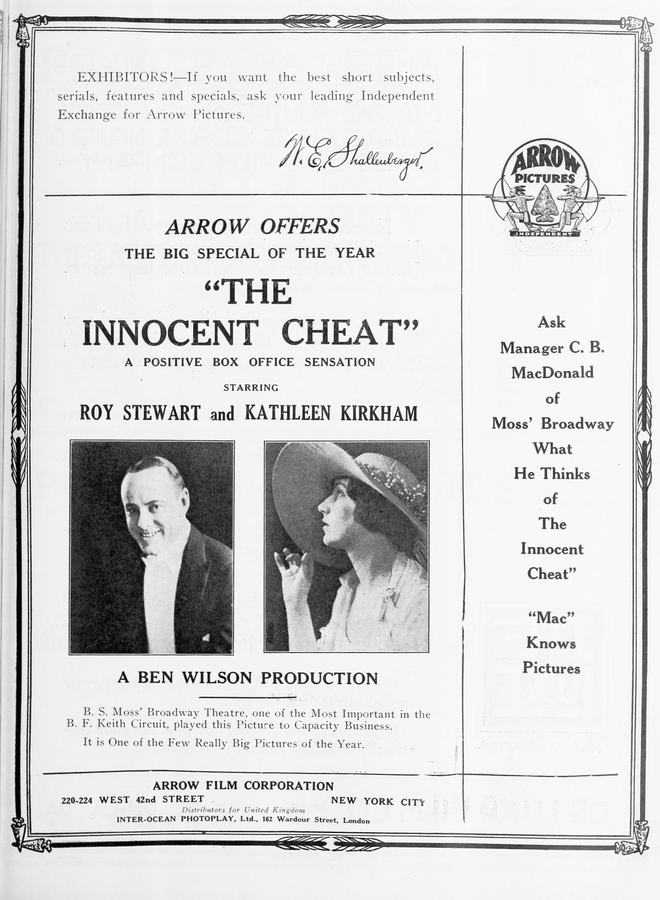
The Innocent Cheat unfolds like a charcoal sketch gradually revealing its monochrome brilliance, a silent film that transcends its era through the raw emotional candor of its storytelling. Peter B. Kyne and J. Grubb Alexander’s screenplay is a masterclass in narrative economy, compressing decades of psychological theory into a mere 75 minutes of dialogue-free poetry. The film’s opening sequence, with John Murdock’s gaunt figure silhouetted against the smoky backdrop of a train yard, immediately establishes a man whose soul has been corroded by love’s unrequited shadow.
Director Roy Stewart, who also portrays the tormented engineer, demonstrates an intuitive grasp of visual metaphor. The train wreck that serves as John’s professional epitaph isn’t merely an accident—it’s a carefully constructed visual allegory. The shuddering locomotive, its metal groaning under the weight of unseen forces, becomes a mechanical echo of John’s fraying mental state. In one particularly striking sequence, the camera lingers on a cracked watch face in John’s hand, its hands frozen at the exact moment he realized his love was unreciprocated. This device, recurring throughout the film, becomes a silent metronome for his descent into despair.
Rhea Mitchell’s portrayal of Mary Stanhope is a revelation, especially when compared to her later roles in Shadows from the Past or The Beloved Vagabond. Her courtroom confrontation with her abusive husband is a silent performance tour de force, with Mitchell using micro-expressions to convey a lifetime of suppressed anguish. When the judge initially rules against her, the slump of her shoulders is so precise it could be a punctuation mark in the film’s narrative syntax. The reversal of custody decision isn’t just a legal victory—it’s a cathartic rupture of silence that reverberates through the film’s second act.
The Adirondack setting becomes a character in its own right, with the filmmakers using the mountainous landscape to mirror the emotional terrain of their protagonists. The transition from the urban claustrophobia of New York to the wilderness isolation of the mountains is rendered through subtle shifts in cinematography—wide-angle shots of the city give way to close-ups of falling leaves and distant thunder. When John and Mary first meet, the camera circles them slowly, creating a visual stasis that suggests the film is at a narrative crossroads, unsure which direction to take.
It is in the film’s third act that The Innocent Cheat truly finds its emotional spine. The revelation that Mary’s child is John’s biological son is handled with remarkable subtlety. There’s no cheap dramatic music, no overwrought close-ups—just the lingering look between Mitchell and Stewart as the truth dawns on them. This moment, occurring against the backdrop of a crackling campfire, feels less like a plot device and more like a biological inevitability. The child’s presence becomes the emotional keystone that reorients both characters, transforming their mutual suspicion into tentative reconciliation.
Technically, the film deserves analysis for its innovative use of title cards. Unlike many silent films that rely on text to explain plot points, Kyne and Alexander use their intertitles as philosophical musings. One particularly memorable card, reading “Love is a mirror that reflects the soul’s truest form,” appears during a scene where John is staring at his own reflection in a river. This visual-literary technique elevates the film beyond mere melodrama into the realm of artistic introspection.
The film’s exploration of paternal identity is remarkably progressive for its time. John’s initial attempt to harm the child—a moment that could have been played for cheap shock value—is instead framed as a tragic outgrowth of his self-loathing. The subsequent redemption arc isn’t a deus ex machina but a gradual unfolding of empathy, catalyzed by the child’s innocent affection. This transformation is poignantly visualized in a sequence where John, for the first time, smiles genuinely while teaching the boy how to build a snowman.
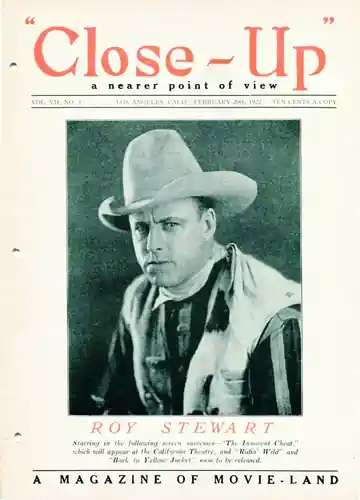
Comparisons to High Play are inevitable given the similar themes of redemption through parenthood. However, The Innocent Cheat distinguishes itself through its darker tone and more psychologically complex characters. Unlike the operatic gestures of In the Palace of the King, this film’s power lies in its restraint. The absence of a final wedding scene—a common silent film trope—is a conscious decision that preserves the fragile realism the story has cultivated.
Technically, the film’s score (though not listed in the credits) deserves special mention. The use of discordant strings during John’s darkest moments contrasts with the gentle woodwinds that accompany his moments of clarity. This auditory counterpoint creates a rich emotional texture that complements the visual storytelling. The sound of a train whistle echoing through the mountains in the final scene becomes a haunting leitmotif for the journey both characters have undertaken.
What elevates The Innocent Cheat from a mere studio picture to a minor masterpiece is its unflinching examination of moral ambiguity. Neither character is wholly virtuous—John’s initial obsession is as much a prison as his later guilt. Mary’s courtroom confession, while brave, also contains elements of performative catharsis. These nuanced portrayals prevent the film from descending into the hectoring moralizing that plagues many of its contemporaries.
The supporting cast—particularly George Hernandez as the sympathetic bartender and Sidney De Gray as Mary’s abusive ex-husband—add depth to what could have been a two-hander. De Gray’s villainy is particularly noteworthy for its understated menace; his presence on screen doesn’t require heavy-handed acting to convey threat. This restraint is a welcome contrast to the over-the-top performances in Witch’s Lure from the same period.
Visually, the film’s use of negative space is striking. In the early scenes of John’s despair, he is often framed in the corner of the screen, with vast empty spaces around him. This visual isolation mirrors his emotional state until, in the final act, the framing tightens to focus exclusively on his interactions with the child. The evolution of his positioning in the frame becomes a silent commentary on his emotional journey.
While the film does have its limitations—particularly in the rushed resolution of its final ten minutes—it remains a fascinating artifact of early 20th-century cinema’s grappling with complex emotions. The decision to leave certain plot threads unresolved (notably the fate of Mary’s husband) speaks to a confidence in the audience’s ability to find meaning in ambiguity.
In the pantheon of silent film melodramas, The Innocent Cheat occupies a unique space. It is neither as technically polished as Das Modell nor as philosophically dense as Hamlet, but its emotional honesty sets it apart. The film’s enduring power lies in its ability to make us feel the weight of its characters’ emotional gravity, even as it resists easy resolution.
For modern viewers, the film offers more than just historical curiosity. Its exploration of how love can both destroy and redeem remains startlingly relevant. In an age of instant gratification and digital relationships, The Innocent Cheat serves as a reminder that the most profound connections often require the most difficult journeys. The final image of John and Mary walking away from the camera, their silhouettes merging with the mountainous horizon, lingers not as a conclusion but as an invitation to ponder the complexities of the human heart.
IMDb —
1937
Community
Log in to comment.