DbcultAccessing Vault...
Cult Review
Senior Film Conservator
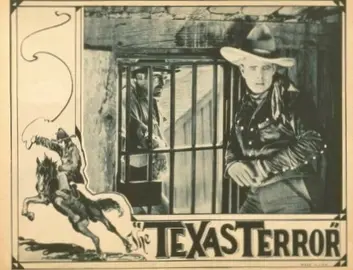
Is The Texas Terror a lost masterpiece of the silent era? Short answer: No, it is a functional, dusty artifact of the B-western assembly line that serves better as a historical curiosity than a gripping thriller. This film is strictly for silent cinema completionists and those obsessed with the evolution of the Western genre; it is definitely not for anyone who requires a fast-paced narrative or high-definition spectacle.
To understand this film, one must understand the environment in which it was birthed. In 1925, the Western was the bread and butter of the American film industry, and stars like Al Hoxie were the workhorses of the 'Poverty Row' studios. This wasn't high art. It was a product. But even products can have a soul, and there is a primitive, raw energy in this film that modern, sanitized Westerns often lack.
1) This film works because it captures the genuine physical prowess of Al Hoxie, who brought an athletic authenticity to his stunts that felt far more dangerous than anything produced in a modern CGI lab.
2) This film fails because its narrative is paper-thin, relying on tired tropes that were already becoming clichés by the mid-1920s, leaving the audience with little to chew on between action sequences.
3) You should watch it if you are a fan of early Western iconography and want to see how the 'silent hero' archetype was constructed before the arrival of John Ford’s more complex visions.
Al Hoxie wasn't a great actor in the traditional sense. He didn't have the expressive range of a Chaplin or the brooding intensity of a William S. Hart. However, he had a presence. In The Texas Terror, Hoxie moves with a deliberate, heavy grace. He is a man of action, and in the silent era, action was the only language that truly mattered. Unlike the more polished performances in A Small Town Idol, Hoxie’s work here is unvarnished.
There is a specific scene where Hoxie confronts a group of rustlers near a rocky outcrop. The way he handles his horse and the economy of his movements tell you everything you need to know about his character. He doesn't need intertitles to explain his intent. His body is the script. It’s a blunt performance. It works. But it’s limited.
Toy Gallagher, playing the female lead, provides a necessary counterpoint to Hoxie’s stoicism. While the role is largely that of the 'damsel in distress,' Gallagher manages to inject a sense of agency into her scenes. Her reactions to the villainous Bob Fleming are heightened, as was the style of the time, but they ground the film’s stakes in a way that the action alone cannot.
The direction in The Texas Terror is efficient, if entirely uninspired. The filmmaker (often uncredited or working under a pseudonym in these low-budget affairs) understands one thing: keep the camera moving and the horses running. The pacing is frantic, which helps hide the gaps in the logic of the plot. It lacks the lyrical beauty found in a film like Evangeline, opting instead for a gritty, almost documentary-like look at the California hills pretending to be Texas.
The cinematography relies heavily on natural lighting. This creates some striking moments during the high-noon sequences where the shadows are harsh and the landscape looks genuinely inhospitable. There is no romanticism here. The West looks hot, dirty, and exhausting. This realism is the film's greatest strength. When a character falls into the dirt, you can almost feel the grit in your own teeth.
However, the editing is often jarring. Transitions between scenes feel like an afterthought, and the placement of intertitles sometimes disrupts the flow of the action. Compared to the more sophisticated editing in Flashing Steeds, this film feels like it was assembled in a weekend. It was. And it shows.
The plot of The Texas Terror is a collection of Western 'Greatest Hits.' You have the corrupt boss, the hidden identity, the climactic shootout, and the romantic resolution. It is predictable from the first five minutes. While predictability isn't always a death knell for a film—many great Westerns are built on familiar bones—this film lacks the thematic depth to make those tropes feel fresh.
There is a glaring lack of moral ambiguity. The good guys are saintly, and the bad guys are irredeemably evil. This binary worldview was common in 1925, but it makes the film feel archaic compared to something like The Dream Cheater, which played with darker, more psychological themes. The Texas Terror is a hammer. It hits the same nail repeatedly until the movie ends.
One surprising observation: the film’s treatment of 'the terror' itself. The title suggests a monstrous presence, but the reality is much more mundane. The 'terror' is simply human greed. There is something brutally simple about that. No monsters, no ghosts—just men with guns wanting what isn't theirs.
If you are looking for a casual Friday night movie, the answer is a resounding no. The Texas Terror requires a level of patience and historical context that the average viewer likely won't possess. However, if you are a student of film history, it is a fascinating look at the 'B-movie' ecosystem of the 1920s. It shows what was possible on a shoestring budget and how much the genre relied on the physical charisma of its stars rather than the strength of its writing.
Pros:
Cons:
The Texas Terror is a rough-hewn plank of wood in the house of cinema. It isn't pretty, it isn't polished, but it serves its purpose. It is a testament to an era where movies were made fast and cheap for an audience that just wanted to see a hero win. It lacks the artistic ambition of Kindred of the Dust, but it possesses a certain blue-collar honesty. It’s a relic. A dusty one. But for those willing to look past the scratches on the film stock, there is a small, flickering flame of pure frontier energy still burning within it. It’s honest, if a bit stupid. And sometimes, that’s enough.
IMDb 6.5
1936
Community
Log in to comment.