DbcultAccessing Vault...
Cult Review
Senior Film Conservator
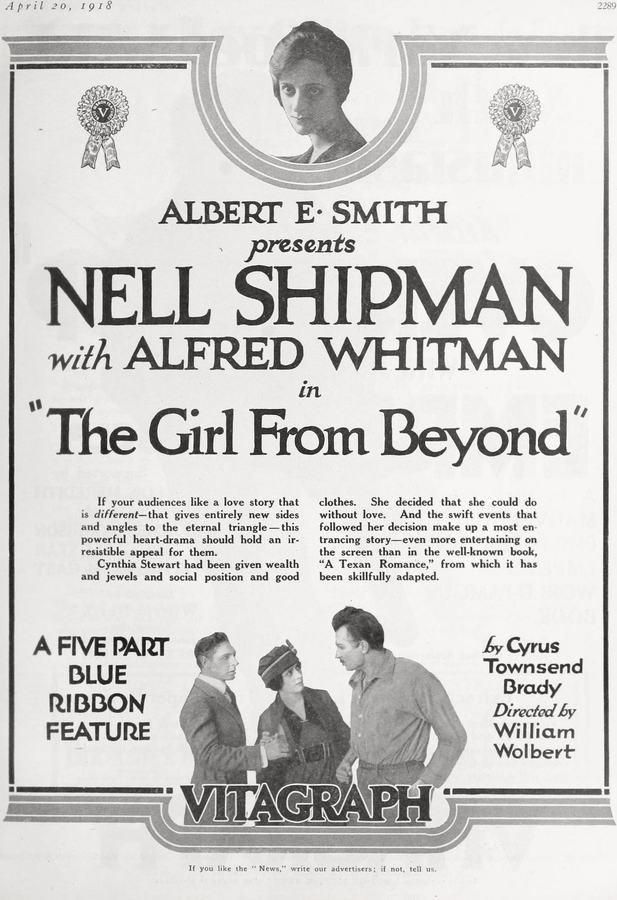
In the often-overlooked tapestry of early 20th-century cinema, there occasionally emerges a narrative so rich in human drama and intricate plotting that it demands renewed attention. Such is the case with The Girl from Beyond, a film that, despite its vintage, resonates with a timeless exploration of revenge, identity, and the convoluted path to redemption. Crafted by the pens of Donald I. Buchanan and Cyrus Townsend Brady, this cinematic endeavor plunges viewers into a world where personal vendettas intertwine with the caprices of fate, leading characters through a gauntlet of moral quandaries and unforeseen consequences. It's a testament to the power of silent storytelling, where every gesture, every flicker of an eye, and every carefully composed frame had to convey the weight of a complex emotional landscape.
At the heart of this intricate drama is Geoffrey Hampden, portrayed with a compelling intensity that belies the era's often broad acting styles. Hampden, a Texas oil millionaire, is introduced to us not in the throes of his prosperity, but at the precipice of a consuming grief. The suicide of his sister, a tragic event he lays squarely at the feet of the manipulative Philip Armond, ignites within him a burning desire for retribution. This isn't a simple, impulsive act of anger; it's a calculated, all-encompassing obsession that dictates his every move. His initial attempt to extract justice, however, proves disastrous, landing him in prison for a half-decade. This period of incarceration is crucial, serving as a crucible that refines and reshapes his character. It strips away the superficial trappings of wealth and forces a profound introspection, culminating in his emergence as George Hammond. This name change isn't merely a disguise; it symbolizes a psychological metamorphosis, a shedding of his old identity, yet the core of his quest for justice, albeit muted, persists beneath the surface. The film masterfully uses this transformation to explore themes of rebirth and the enduring weight of past actions, reminiscent of the profound personal reinventions seen in literary works like Dostoevsky's Prestuplenie i nakazanie, where characters grapple with the aftermath of their transgressions.
Upon his return to Texas, now as George Hammond, a new chapter unfolds, one that inadvertently intertwines his destiny with that of Dick Stewart, his business partner, and Dick's sister, Cynthia. The screenplay expertly uses a sudden, violent event – Cynthia's abduction by business rivals – to propel the narrative forward and forge an unlikely bond. Dick Stewart's heroic but ultimately fatal attempt to rescue his sister leaves him mortally wounded. In a scene charged with poignant emotion, Dick, on his deathbed, extracts a solemn promise from George: to protect Cynthia. This moment is a pivotal turning point, shifting George's focus from his singular pursuit of revenge to a new, unexpected responsibility. It introduces a moral imperative that complicates his already fractured existence, forcing him to consider another's welfare above his own deep-seated grievances. Nell Shipman, portraying Cynthia, imbues her character with a blend of vulnerability and ambition that becomes central to the film's later developments. Her initial agreement to marry George is a pragmatic decision, devoid of genuine affection, a reflection of the societal pressures and limited options faced by women in that era, echoing themes of transactional relationships explored in films like A World Without Men.
Cynthia's decision to marry George, fueled by a desire for financial security rather than love, sets in motion a chain of events that highlights the film's astute commentary on societal ambition and the deceptive allure of wealth. Immediately after the ceremony, she departs for New York, leveraging her new husband's money to penetrate the upper echelons of society. This segment of the film offers a glimpse into the glittering, yet often superficial, world of the urban elite, a stark contrast to the rugged Texas landscape. It's here that the narrative's intricate web truly begins to tighten. In a twist of dramatic irony that feels almost predestined, Cynthia becomes engaged to none other than Philip Armond, the very man who set Geoffrey Hampden's tragic journey in motion. This convergence of paths, orchestrated by fate's cruel hand, elevates the tension to a palpable degree. The writers, Buchanan and Brady, demonstrate a masterful understanding of how to build suspense, allowing the audience to anticipate the inevitable collision of these disparate lives. The film explores the idea that escape from one's past, especially when intertwined with another's destiny, is often an illusion, a sentiment powerfully conveyed in stories like The Last Sentence where past deeds persistently haunt the present.
The narrative reaches its dramatic zenith when Cynthia and Philip Armond return to Texas, intending to secure a divorce from George. The stage is set for a confrontation laden with years of unspoken history and simmering resentment. The recognition scene is handled with a delicate intensity characteristic of silent film's best moments. Philip Armond, faced with the man he wronged years ago, disguised yet unmistakably present, suffers a fatal heart failure. This sudden, almost poetic justice, avoids the typical violent climax, opting instead for a more psychologically impactful resolution to the revenge plot. It's a moment that speaks volumes about the enduring power of guilt and fear, and the unexpected ways in which the past can reassert itself. Patricia Palmer, though not the central figure, plays a crucial role in the narrative's emotional core, adding depth to the supporting cast. Cynthia, witnessing this dramatic unraveling, is thrust into a brutal reckoning. The truth about Philip Armond’s past, and by extension, George’s true identity and his sister’s tragedy, is laid bare. This revelation shatters her illusions, forcing her to confront the moral complexities of her choices and the man she married. Her subsequent return to George is not a surrender, but a profound act of acceptance, perhaps even the dawning of a genuine affection forged in the crucible of shared truth and tragic circumstance. It’s a journey of self-discovery, where superficial desires give way to a deeper understanding of love and commitment, much like the transformative experiences seen in The Christian.
The performances in The Girl from Beyond, while adhering to the dramatic conventions of the silent era, manage to convey a surprising depth of character. Nell Shipman, as Cynthia, navigates a complex emotional arc, transitioning from a woman driven by social climbing to one grappling with profound moral revelation. Her portrayal captures the nuanced internal struggle of a character caught between ambition and integrity. Bob Burns, often known for his comedic roles, here takes on a more serious demeanor, effectively portraying the stoic yet conflicted George Hammond. The supporting cast, including Hattie Buskirk, Edward Alexander, Gayne Whitman, and Ah Wing, contribute to the film's rich tapestry, each playing their part in the unfolding drama. The film's thematic depth is particularly striking. It delves into the destructive nature of revenge, illustrating how it can consume an individual, yet also how its pursuit can inadvertently lead to unforeseen responsibilities and, ultimately, a form of redemption. The exploration of identity, both assumed and true, is another powerful thread, asking what truly defines a person beyond their name or social standing. Moreover, the film subtly critiques the societal pressures that drive individuals like Cynthia to seek wealth and status, often at the expense of genuine connection. The silent film format, far from being a limitation, enhances these themes, relying on visual storytelling and the expressive power of the actors to communicate complex emotions and moral dilemmas.
While the director's name may not be readily available in all historical records, the execution of The Girl from Beyond speaks to a skilled hand behind the camera. The film demonstrates a keen understanding of visual narrative, employing expressive close-ups to highlight emotional states and wider shots to establish the contrasting environments of rural Texas and bustling New York. The pacing is deliberate, allowing the audience to absorb the unfolding drama and the characters' internal conflicts. The use of intertitles is effective, providing crucial dialogue and exposition without disrupting the visual flow. The cinematography, typical of the period, relies on stark contrasts and evocative lighting to create atmosphere, whether it's the harsh sunlight of the Texas plains or the shadowed interiors where secrets are revealed. The film's ability to maintain tension and emotional engagement purely through visual means is a testament to the artistry of silent cinema. It's a masterclass in conveying complex plot points and character motivations without spoken words, a skill that modern filmmakers could still learn from. Comparisons to other films of the era, such as The Charmer or Love Aflame, reveal similar commitments to dramatic tension and character-driven plots, but The Girl from Beyond distinguishes itself with its particularly intricate web of revenge and mistaken identity.
The Girl from Beyond, though not as widely celebrated as some of its contemporaries, holds a significant place in the history of silent film. Its intricate plot, compelling characters, and exploration of universal themes ensure its enduring appeal to those who delve into the rich archives of cinematic history. The collaboration between Donald I. Buchanan and Cyrus Townsend Brady resulted in a screenplay that is both ambitious and emotionally resonant, weaving together elements of melodrama, suspense, and romance. The film serves as a reminder of the creativity and storytelling prowess that flourished during the silent era, a period often underestimated for its narrative sophistication. It's a film that asks profound questions about justice, forgiveness, and the unpredictable nature of human connection. The journey of Geoffrey Hampden from vengeful millionaire to a man finding unexpected purpose, and Cynthia's transformation from social climber to a woman of true understanding, provides a deeply satisfying arc. This narrative complexity is a hallmark of strong writing, allowing the silent medium to transcend its perceived limitations and deliver a story that feels as relevant today as it did a century ago. It stands shoulder to shoulder with other meticulously crafted narratives of its time, such as The Frame-Up or even the dramatic flair of The Explosion of Fort B 2, showcasing the era's capacity for intricate plotting beyond simple action.
Ultimately, The Girl from Beyond is more than just a period piece; it's a profound human drama that explores the intricate dance between destiny and free will. It posits that while individuals may strive to control their paths, fate often intercedes, drawing them into unexpected alliances and confrontations. The film’s resolution, where Cynthia returns to George, is not merely a convenient plot device but a powerful statement on the possibility of redemption and the unexpected places where true love can be found. It suggests that genuine connection can blossom even from the ashes of deceit and tragedy, offering a glimmer of hope amidst the darkness of revenge. This narrative arc, from bitter vengeance to a reluctant, yet genuine, reconciliation, makes The Girl from Beyond a compelling and thought-provoking experience. It’s a film that deserves to be rediscovered, appreciated for its intricate storytelling, strong performances, and its timeless message about the complexities of the human heart and the winding road to true understanding. The film’s ability to weave such a complex tapestry of emotions and events without the aid of spoken dialogue is a powerful reminder of the universal language of cinema and the enduring power of a well-told story, leaving an impression akin to the lasting impact of a classic like Hamlet, Prince of Denmark, albeit in a different narrative style.

IMDb 7.1
1926
Community
Log in to comment.